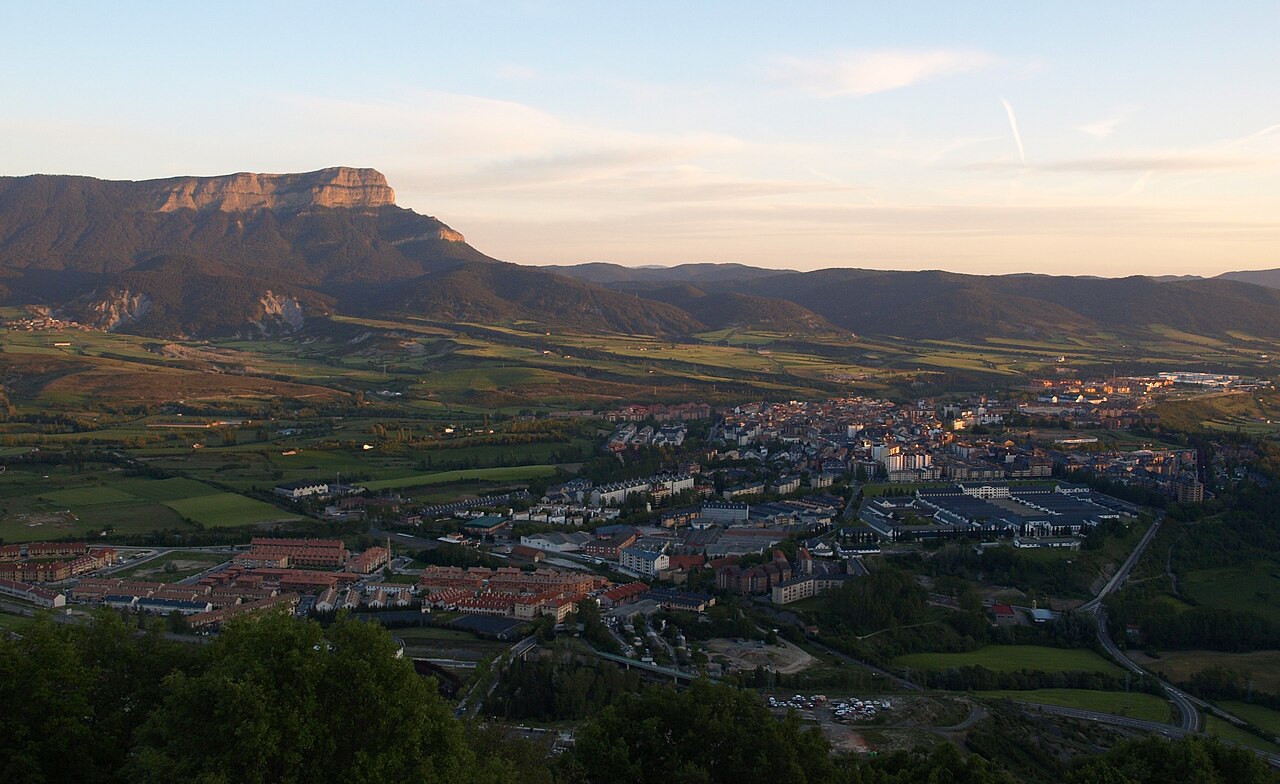
Jaca
©
Jaca

Jaca

Pyrenean Aragonese town and former kingdom capital, with a Romanesque cathedral and star-shaped citadel.

Jaca is a small Aragonese town at the foot of the Pyrenees, historically the first capital of the Kingdom of Aragon and an important stop on the Camino de Santiago. It is most often reached from Huesca, the provincial capital, by bus or train, but it also provides one of the easiest entrances to Spain over the Pyrenees from Oloron-Sainte-Marie in France via Canfranc.

The town has an 11th-century Romanesque cathedral — one of the oldest in Spain — and an extensive star-shaped citadel from the 16th century. The Monastery of San Juan de la Peña, built into a cliff face about 20km from town, is one of the most remarkable medieval sites in the Pyrenees. Jaca lies a short distance from the high mountains, which means it works best as a base for hiking for those with a car. For those relying on public transport, the villages deeper in the valleys may be more convenient, but Jaca has the best services, shops, and restaurants in the area. In winter, the nearby ski resorts of Astún and Candanchú draw a different crowd.

Guide

Day Trips

The obvious day trip for those using public transport is across the French border and out to Oleron Ste Marie and back. This is easily achieved by first getting a train or bus to Canfranc, near the border. From outside the station SNCF [French Railways] runs a bus to Oleron Ste Marie through fine wooded mountain slopes and valleys.

NB There are also local buses from Canfranc to Jaca which can be caught at the stop in view a little ABOVE the station

Guide

Getting Around

The bus out from Jaca to the delightful villages of Hecho [sometimes called Echo] and Ansó only runs in the evening and returns in the morning, meaning that they don't make convenient day trips unless with private transport. However they may well be thought to merit an overnight stay [or more.] Each is situated in its own valley some way south of the mountains which grace the French frontier. Just up-valley from Hecho, which is the first reached from Jaca, is Siresia, a small village with a ninth century monastery. Hecho itself is nowhere near as old as its winding streets and different depth steps would suggest but it really has a feeling of antiquity. Its few shops have an astonishing assortment of goods. Casa Blasquico, near the bus stop, is a very friendly place to stay with excellent food.

Ansó is the base for Alto Aragón holidays so more non-Spanish speech is to be heard. Again it is a well situated village though again it is a fair walk to the mountains. To compensate for this with those using public transport, which does not go up into the mountains, it seems much easier to hitch a lift here than in Spain generally.

NB Public transport users can get to Oleron Ste Marie first by train and bus and be back in Jaca in easy time to get the evening bus to either of these villages. When leaving on the morning bus it is easy to get buses on the same day from Jaca to Sabañanigo and then on to Torla for Ordesa National Park

Guide

Getting There

Jaca is connected to Huesca and Zaragoza by bus and by train, though the rail journey is slow — the line runs through difficult mountain terrain and takes about two and a half hours from Zaragoza. Buses are faster and more frequent; the journey from Huesca takes about an hour.

From France, the most straightforward approach is via the N-330 road from Oloron-Sainte-Marie over the Somport Pass (1,632m), passing through the Canfranc railway station before dropping into Jaca. The pass is generally open year-round but chains or winter tyres may be required in bad conditions. The road route from Pau takes about 90 minutes.

The nearest airports are Zaragoza (about 2 hours south) and Pamplona (about 1.5 hours west).