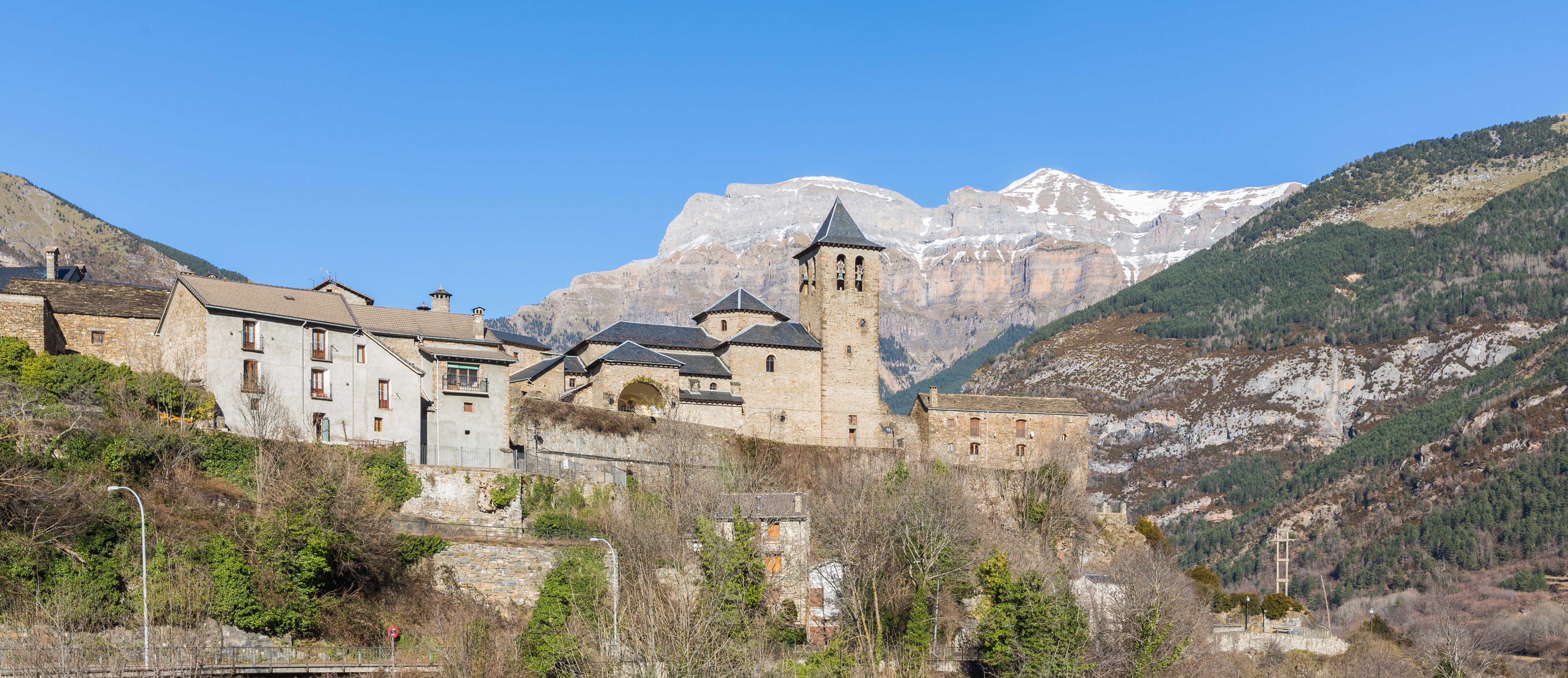
Stone Pyrenean gateway village below Ordesa, with slate roofs and limestone walls rising behind it.
Torla-Ordesa is the stone-built gateway village for Ordesa National Park, set at the mouth of the Ordesa valley with limestone walls and Pyrenean peaks rising behind it. It is small, handsome, and practical in exactly the way a mountain base should be: enough food, beds, maps, and buses, without pretending to be a resort.
The village itself is worth a slow wander before or after the park. Slate roofs, narrow lanes, carved stone doorways, and the Church of San Salvador give Torla a tougher mountain character than the white towns of southern Spain. The old streets are not grand, but they feel lived in and weather-tested.
Most visitors come for the Ordesa valley. In peak season, the Ordesa shuttle runs from below Torla to the Pradera de Ordesa trailhead, replacing private cars on the valley road. That system can feel bureaucratic until you see how narrow and fragile the valley is; then it makes sense.
Torla also opens the way to the Bujaruelo valley, a wilder-feeling side valley with mountain tracks, river pools, and routes toward the French border. Stay at least one night if you can. Ordesa deserves an early start, and Torla is much better at dawn than it is as a rushed stop from the plains.
Guide
Getting Around
Torla village is walkable, though the lanes climb and the stone paving can be slick in bad weather. The park access rules matter more than the village transport.
From late June to mid-September, and often during busy holiday periods, private cars are restricted on the road into the Ordesa valley. Use the shuttle from the car park below Torla to reach the Pradera de Ordesa trailhead.
For Bujaruelo, a car is useful, though the road is rougher and more mountain-like than the main approach to Torla. Drive slowly and expect walkers, cyclists, and livestock.
Guide
Getting There
Torla sits north of Broto in the province of Huesca, at the road entrance to the Ordesa valley. The nearest larger service towns are Aínsa, Sabiñánigo, and Jaca.
By car: Driving is the simplest way to reach Torla. From Aínsa, follow the A-138 and then the N-260/A-135 corridor toward Broto and Torla. From Sabiñánigo or Jaca, approach through Biescas and the upper Gállego valley.
By bus: Bus services exist but are limited and seasonal patterns matter. Check current timetables carefully, especially if you need to connect onward after a hike.
By train: There is no train to Torla. The closest practical rail access is Sabiñánigo, with road or bus connections onward.
Guide
When to Go
Torla's seasons are mountain seasons, not the general Spanish calendar. Late spring brings snowmelt waterfalls and green valleys, while early autumn gives clear air, cooler walking, and fewer crowds.
July and August are busy but practical, with the shuttle running and most services open. Winter can be beautiful, but access, snow, and short days make it a different kind of trip.