Aínsa
©
Aínsa

Aínsa

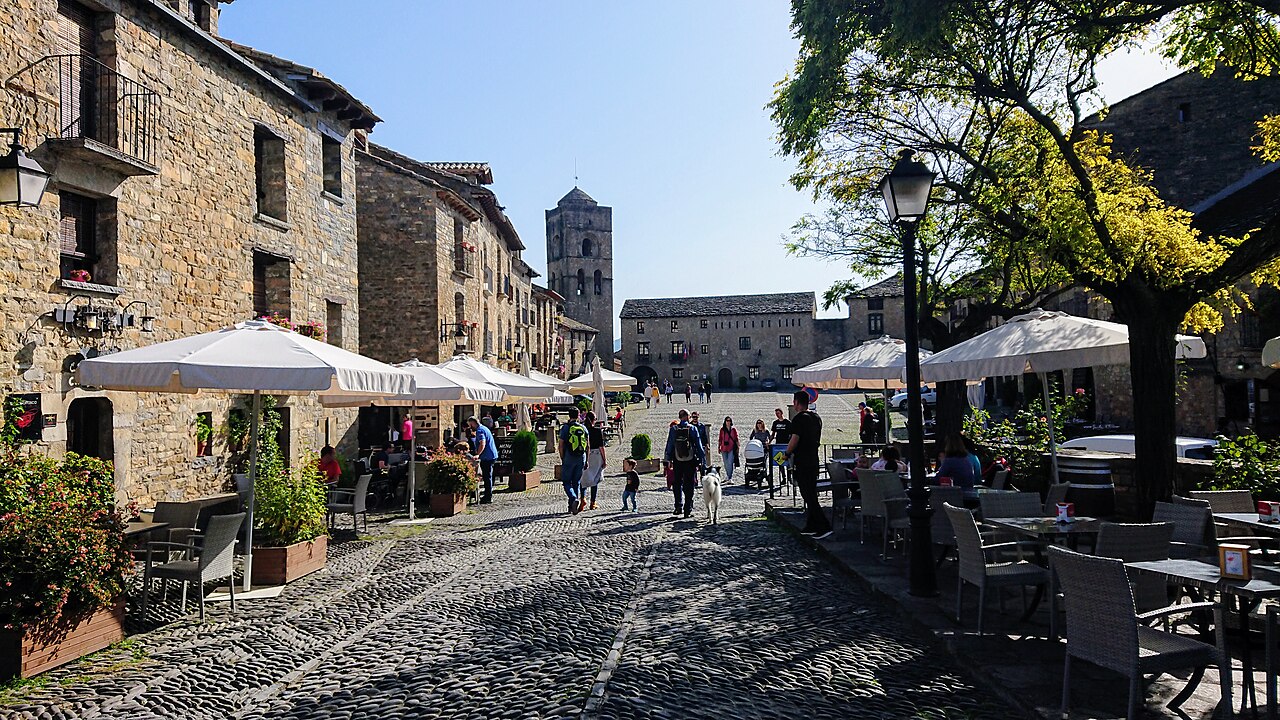
Medieval village in the Aragón Pyrenees, perched above the Cinca and Ara rivers around a vast arcaded square.

Aínsa is one of the most beautiful medieval villages in the Spanish Pyrenees, perched on a hilltop above the confluence of the Cinca and Ara rivers in the Sobrarbe comarca of Aragón. The lower, modern part of town is unremarkable, but climb the hill and you arrive in one of the finest old quarters in northern Spain.

The Plaza Mayor is enormous — a vast, arcaded square of honey-coloured stone surrounded by cloister-like porticoes, with the Romanesque church of Santa María at one end and the castle at the other. Two steep parallel lanes lead down from the square through the old town, and the views from the castle ramparts extend across the river valleys to the snow-capped peaks beyond. Aínsa makes a natural base for visiting the Ordesa y Monte Perdido National Park, one of the great mountain parks of Europe, which lies a short drive to the north. The Cañón del Añisclo and Valle de Pineta — two of the park's four main valleys — are both more easily reached from Aínsa than from the northern approach via Torla.

Guide

Day Trips

Ordesa y Monte Perdido National Park is the obvious day trip from Aínsa — and the main reason most visitors are here at all. The park's four valleys each offer different terrain and different levels of commitment. The Añisclo canyon and Pineta valley are both accessible from Aínsa without going through Torla, which means less driving and far fewer people in summer. The main Ordesa valley, north of Broto, is the most spectacular and the most crowded; go on a weekday in June or September if you can.

The high Pyrenees villages north of Aínsa — Broto, Fiscal, Sarvisé — are worth an hour or two each. Broto is a typical Aragonese mountain village with a Romanesque church and a small square; Sarvisé, a few kilometres further up, is even quieter and has views of Monte Perdido on clear days. The road between them, the A-138, is one of the better drives in the Pyrenees.

South of Aínsa, the Collegata de Alquézar is about 45 km away — a stunning Romanesque village above a limestone canyon with its own good hiking. If you're making the drive back toward Huesca or Zaragoza, it's worth a stop.

Guide

Getting There

Aínsa is in the heart of the Aragonese Pyrenees and has no rail connection. The nearest train stations are at Huesca (90 km south) and Zaragoza (160 km south). From either city you need a car or a bus.

By car is the practical choice. From Huesca, take the A-138 north through Barbastro and Ainsa — about 90 minutes. From Zaragoza, allow two to two and a half hours via the A-22 to Huesca and then north on the A-138. The road through the Sobrabe comarca is well-maintained and scenic; the final approach to Aínsa from the south is particularly good, with the hilltop old town coming into view above the river confluence.

By bus, Alosa runs a limited service between Huesca and Aínsa, with one or two departures daily depending on the season. The journey takes around two hours. There is no direct bus from Zaragoza; you change at Huesca or Barbastro. The timetable is infrequent enough that a car is strongly recommended for anyone planning to visit Ordesa or the surrounding valleys.

From Aínsa, the A-138 continues north toward Broto and the entrance to Ordesa y Monte Perdido National Park, about 35 km away.

Guide

When to Go

May to June and September to October are the best months. The Pyrenees are green, the trails are open, and the crowds of July and August are absent. Late May can still see snow on the high passes, but the lower valleys and Aínsa itself are warm and walkable.

July and August are the peak season. The old town fills with Spanish and French tourists; the Ordesa valley requires the shuttle bus and advance planning for parking. Aínsa itself is not unpleasant in summer — the old town stays cool in the evenings — but expect competition for tables and rooms.

November to March is quiet. Aínsa has a year-round population and the restaurants stay open, but many of the surrounding villages and mountain roads operate on reduced schedules. Snow above 1,500 m is common from December. The Añisclo canyon is walkable in mild winters; the high routes into Ordesa are not.

The Semana Santa (Easter) week brings a surge of Spanish visitors. The Sobrarbe Pyrenaica fair in Aínsa, usually held in late summer, celebrates mountain culture and traditional skills.