Palma de Mallorca presents itself first and most dramatically from the sea. Arriving by ferry or approaching along the coastal road, the city reveals itself as a long arc of pale stone buildings above a harbor, dominated by the cathedral rising directly from the waterfront on its platform of ancient walls. La Seu is one of the great Gothic buildings of the Mediterranean: begun in the fourteenth century, its sheer bulk and the extraordinary verticality of its nave — the second tallest in Europe — make it unlike anything else on the island. Gaudí worked on the interior in the early twentieth century and his modifications, which some find eccentric and others find brilliant, add another layer to a building that repays multiple visits.
The Almudaina Palace sits immediately beside the cathedral, the former residence of the Mallorcan kings and now a royal residence used by the Spanish crown on official visits. The old town spreading north and east from these two monuments — the quarter known as La Calatrava — is the best place to spend a morning on foot. Arabic baths survive in a private garden open to visitors, Baroque mansions with carved stone facades line the narrow streets, and the Arab quarter gives way gradually to a tangle of medieval alleys. The Passeig des Born, once the site of medieval jousting, is the town's most elegant thoroughfare: lined with cafés and expensive shops, shaded by plane trees, and connecting the old town to the harbor.
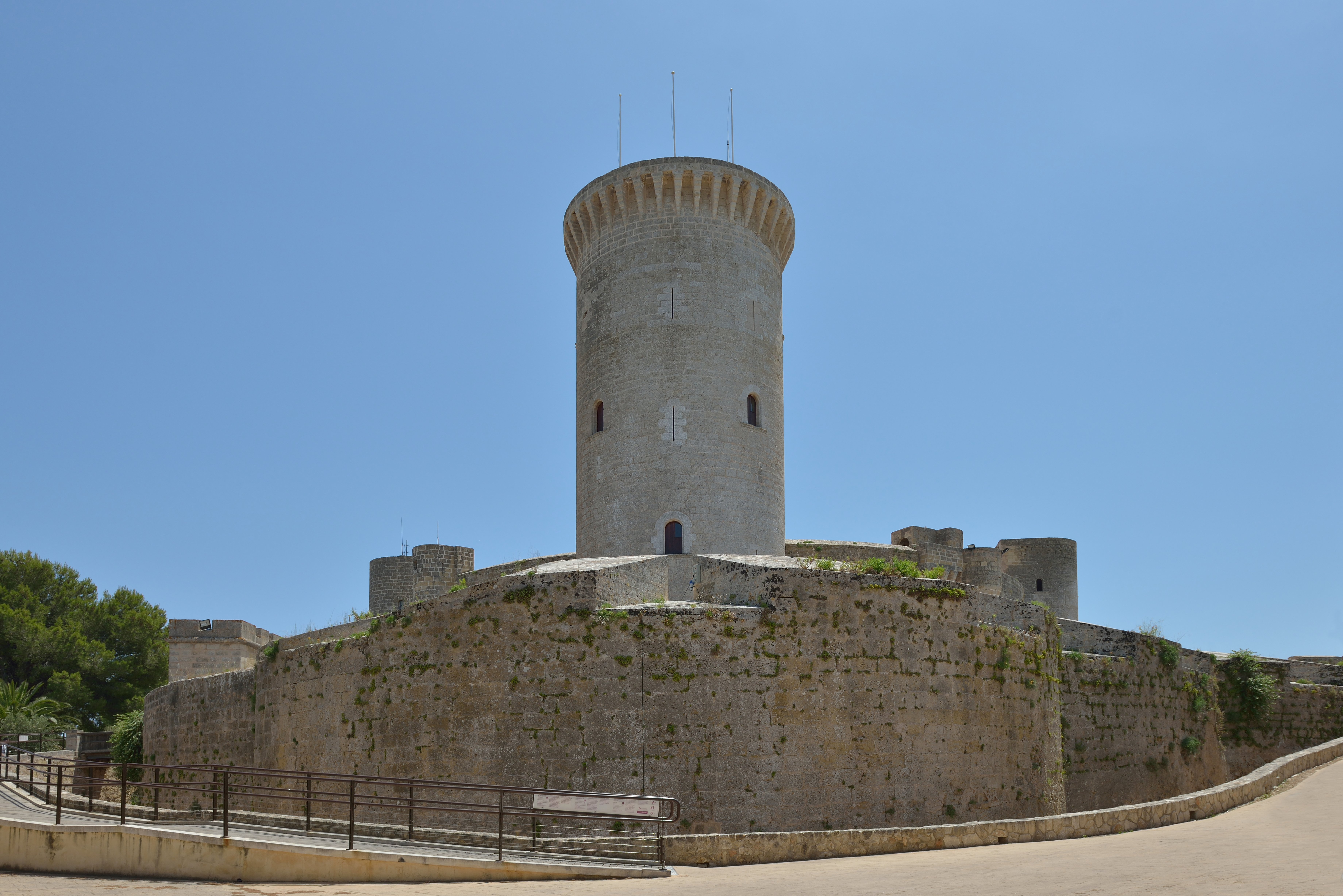
Es Baluard, Palma's contemporary art museum, occupies a dramatically restored section of the sixteenth-century sea walls and contains a good collection of twentieth-century Spanish and Mallorcan art, with a terrace offering views over the bay. The restaurant scene in Palma is serious and increasingly sophisticated, with a strong emphasis on local produce: Mallorcan sobrasada, ensaïmada, local olive oil, and fish from the surrounding waters. The Llotja — the fifteenth-century Gothic exchange — is one of the finest secular Gothic buildings in Spain. Bellver Castle, a circular Gothic fortress from the fourteenth century standing on a pine-covered hill three kilometers west of the center, offers the best panoramic view of the city and bay.
Palma is separated from the package-holiday coast by a clear boundary — the resorts are distant enough that the city retains its own character entirely. It is a place with a substantial year-round population, a functioning cultural life, and an old quarter that can hold its own against any city in Spain.