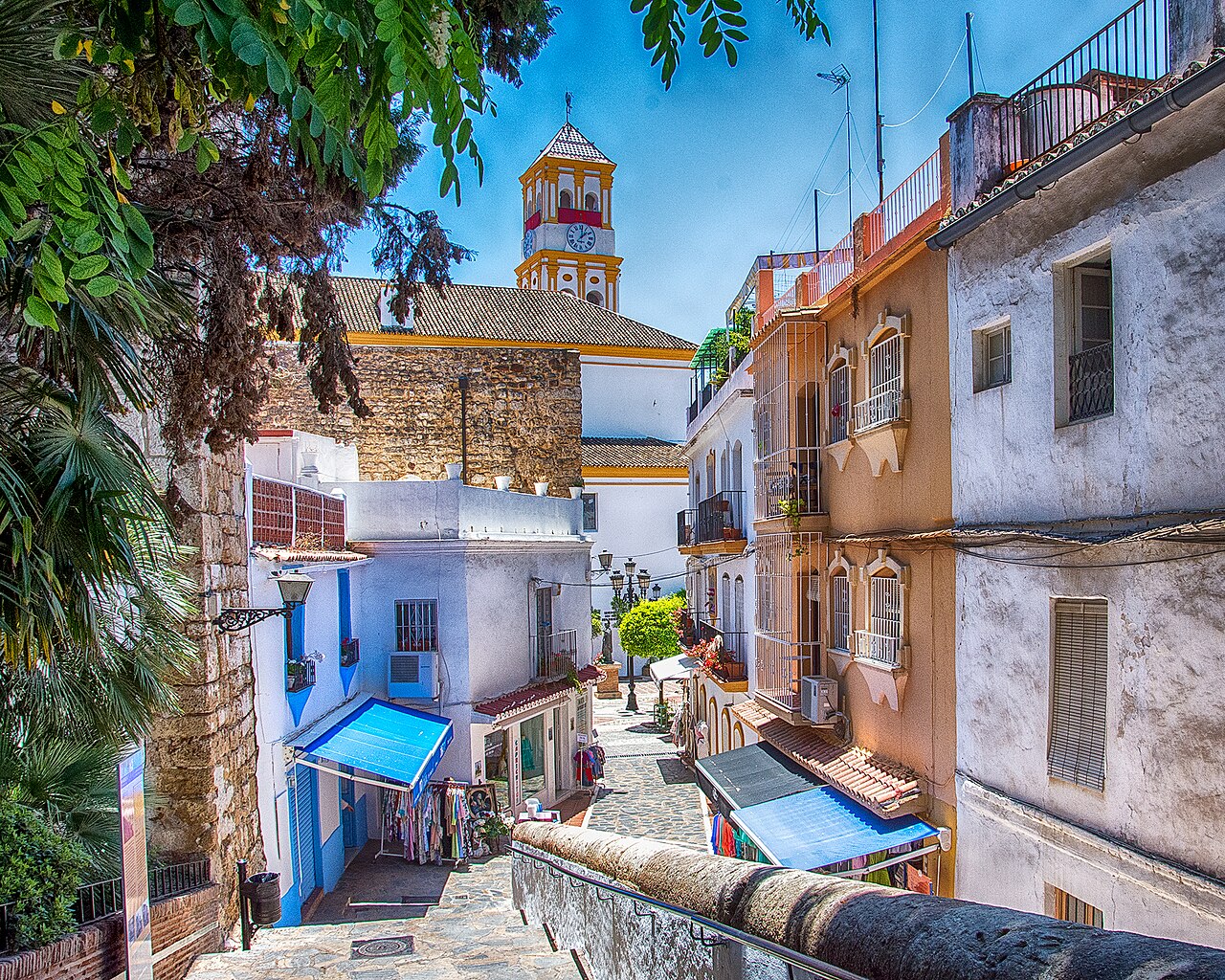
Marbella is the flashy end of the Costa del Sol — a resort town of about 150,000 people on the south coast of Spain, backed by the jagged La Concha mountain and looking out across the Mediterranean to Africa. For most of its history it was a quiet fishing village; the jet-set discovery in the 1950s and the property boom that followed turned it into what it is today.
Two Marbellas sit side by side. The old town, a warren of whitewashed streets around the Plaza de los Naranjos, still feels Andalusian — orange trees, tiled fountains, and the 16th-century Iglesia de la Encarnación. The Muralla Urbana — sections of 10th-century Moorish walls — runs along the north edge of the casco antiguo. A short walk to the seafront is the tree-lined Avenida del Mar, lined with Dalí sculptures, leading onto the Paseo Marítimo and the beaches. Seven kilometres west, Puerto Banús is the other Marbella: a marina of super-yachts, designer boutiques, and Ferraris circling at walking pace.
The coastline has around 30 kilometres of beach, from Playa de la Fontanilla near the old town to quieter coves further east around Elviria and Cabopino. Inland, the mountain village of Ojén is a short drive away, Ronda is a dramatic day trip, and the whole Costa del Sol — Málaga, Mijas, Gibraltar — is an easy run along the coast.
Marbella works best out of peak summer. August is hot and packed; April to June and September to October bring the same sunshine with room to breathe.