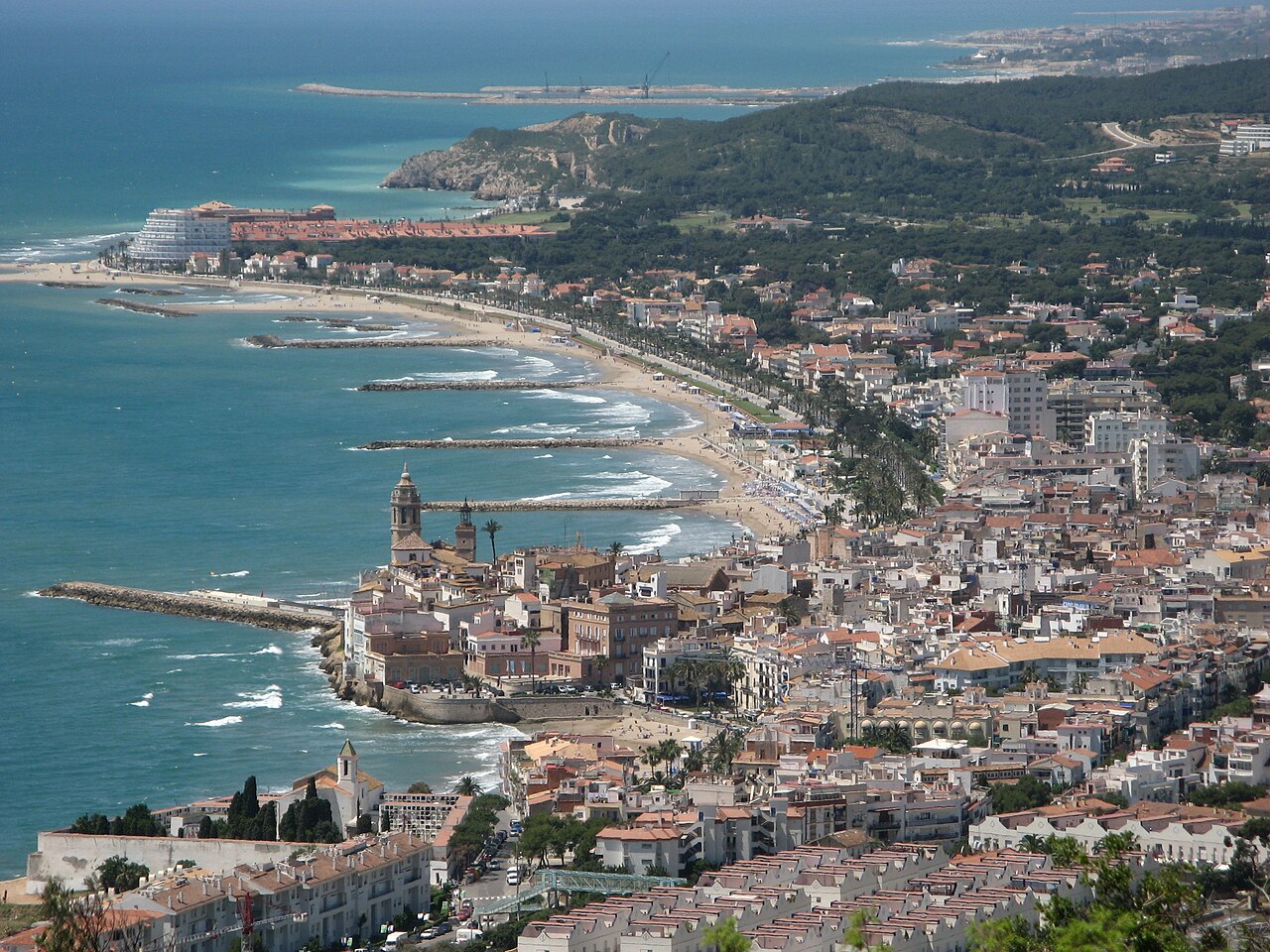
Sitges is a small seaside town about 35 km south-west of Barcelona on the coast of the Garraf, and it has been drawing visitors since the late 19th century, when the Catalan modernista artist Santiago Rusiñol made it a centre for artists and writers and gave it the bohemian reputation it has never quite lost. Today it is Barcelona's favourite beach escape, a glamorous and LGBTQ+-friendly resort of whitewashed houses, palm-lined promenades, and long, clean sandy beaches that stretch south from the old town for kilometres.
The old quarter is built on a low headland above the sea, centred on the 17th-century Church of Sant Bartomeu i Santa Tecla — the postcard view of Sitges, dramatically lit up at night. Below the church, the Museu Cau Ferrat occupies the former studio of Rusiñol and holds works by El Greco, Picasso, and Rusiñol himself, alongside a collection of decorative ironwork. Next door, the Museu de Maricel has Gothic art, ceramics, and sea views from its terraces. Both were renovated in 2014 and together make up one of the best small museum complexes on the Catalan coast.
The beaches are the main draw for most visitors. There are seventeen of them, ranging from the busy town beaches (Platja de la Ribera, Platja de Sant Sebastià) to quieter stretches further south. Several beaches are nudist-friendly, and the stretch in front of the Terramar neighbourhood has been a meeting point for Barcelona's gay community since the 1980s. Sitges is one of the most welcoming LGBTQ+ destinations in southern Europe, and the annual Carnival in February — six days of parades, costumes, and street parties — is legendary and draws visitors from across the continent. The Sitges Film Festival in October is the major international event in fantasy and horror cinema.
Sitges is a 30-minute train ride from Barcelona Passeig de Gràcia station (the Rodalies commuter train runs every 15–20 minutes), which makes it an easy day trip or weekend escape. The town also sits at the edge of the Garraf Natural Park, a limestone massif that drops into the Mediterranean along dramatic cliff roads. Come in June or September for warm seas and fewer crowds than the peak months of July and August.