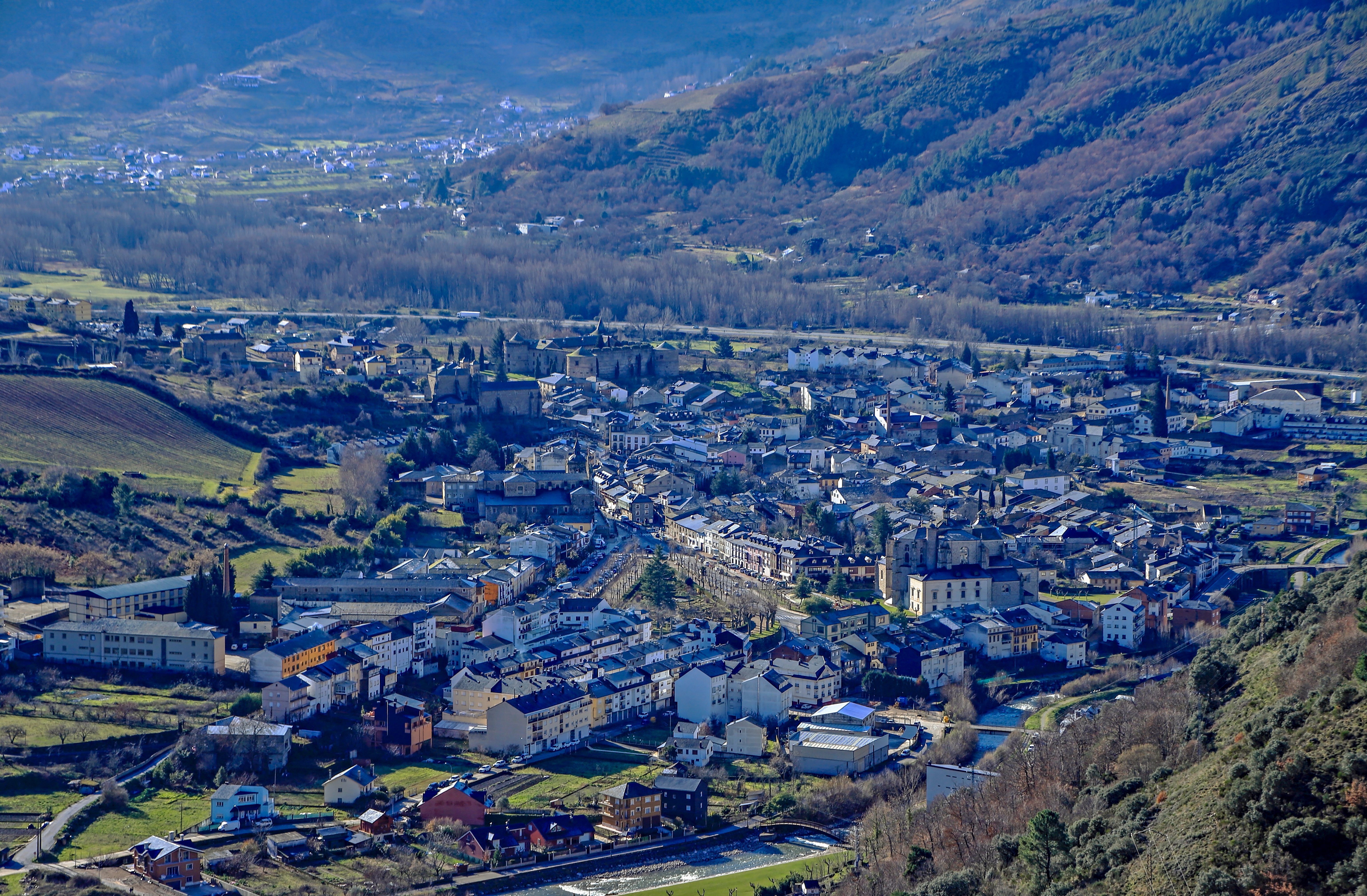
Vilafranca del Bierzo
©
Vilafranca del Bierzo

Vilafranca del Bierzo

Camino town in El Bierzo, with medieval pilgrim streets before the route climbs into Galicia.

Vilafranca del Bierzo is the last major stop on the Camino de Santiago before pilgrims enter Galicia. The town grew from the pilgrim traffic — its name comes from the Franks who settled here — and it retains a medieval atmosphere, particularly along the Calle del Agua, a narrow street of stone houses dropping down to the bridge over the River Burbia.

The town's most significant building is the 12th-century Church of Santiago, at the entrance to the borough. Its northern door, the Puerta del Perdón (Door of Forgiveness), is the only place on the entire Camino other than Santiago de Compostela cathedral where sick or injured pilgrims who could go no further were granted the same spiritual indulgence as completing the full pilgrimage. It remains a powerful moment for walkers arriving after weeks on the trail.

The surrounding El Bierzo region is wine country — the local Mencía grape produces increasingly respected reds. The Bodega Palacio de Arganza, a winery housed in a beautiful stone palace, has been producing wine since 1805 and is worth a visit for tastings.

Guide

Day Trips

Six kilometres south of Vilafranca, the village of Corullón sits on a hillside above the Selmo valley with two Romanesque churches — San Esteban and San Miguel — that would draw visitors from across Europe if they were better known. San Esteban in particular has a carved Romanesque portal of genuine quality, dating from the 12th century, tucked into a village of perhaps a few hundred people. The drive or walk up through the vineyards is part of the pleasure; Corullón sits in one of the best Mencía-growing sub-zones of El Bierzo, and the hillside terraces around the village produce some of the appellation's finest wines.

Further out, Las Médulas — roughly 20 kilometres southwest — is one of the most dramatic landscapes in northern Spain and a UNESCO World Heritage Site. The Romans hydraulically mined the hillsides here for gold using a technique called ruina montium, collapsing entire hills with redirected water to expose the ore-bearing rock. The result is an alien terrain of collapsed red cliffs, deep gullies, and chestnut forest growing through the ruins. A short walk up to the viewpoint at the village of Las Médulas takes about 30 minutes and is straightforward. Las Médulas is not yet in our guide hierarchy, but it is absolutely worth the detour if you have half a day and a car.

Guide

Eating Out

El Bierzo has its own protected gastronomic identity, and Vilafranca is the right place to eat your way into it. The dish to seek out is botillo del Bierzo, a smoked and cured pork product with its own Denominación de Origen Protegida — a tight parcel of ribs, tail, and offcuts seasoned with paprika and garlic, packed into a thick gut casing and slow-cooked until it falls apart. It is served with potatoes and boiled greens, and it is deeply, unapologetically rustic. Order it in the colder months when it is at its best; most restaurants in town keep it on the menu from autumn through spring.

Trout from the cold mountain streams that drain into the Burbia and its tributaries appears on menus throughout the region. The local preparation — pan-fried with garlic, olive oil, and cured ham — is straightforward and correct. Pimientos del Bierzo, the long red peppers grown on the valley floor, turn up roasted and dressed with oil as a starter, or stuffed with rice and pork. Both are worth ordering wherever you see them. The restaurants along and around Calle del Agua cater heavily to pilgrims and have adapted accordingly: large portions, reasonable prices, and the kind of set pilgrims' menus (menú del peregrino) that run to a first course, main, dessert, and wine for around twelve euros. The quality varies, but the better ones are genuinely good.

The local Mencía wines from the El Bierzo DO are the obvious choice with any of this. A glass of young Mencía with the botillo is a combination that makes a strong case for staying an extra night in town. Some of the smaller bars off the main streets pour house wines from the surrounding vineyards by the glass — ask for vino de la zona and see what appears.

Guide

Things to Do

Vilafranca del Bierzo punches well above its size for sights. The medieval core is compact and walkable, with the Church of Santiago at its entrance, the Calle del Agua running through the heart of it, and the castle ruins looming above the valley. A winery, a ruined fortress, and one of the most theologically significant doorways on the entire Camino are all within a few minutes of each other.

Use the filters below to browse by type.

Guide

When to Go

April through June and September through October are the best months for Vilafranca and the Camino Frances. Temperatures in the valley are mild — warm enough to walk in shirtsleeves, cool enough to sleep without difficulty — and the light in the mornings is remarkable. Spring brings the chestnuts and oaks into leaf along the mountain approaches; autumn turns the vineyards gold just before the harvest. The hostels have space, the restaurants are open, and the town feels alive without being overwhelmed.

July and August are hot in the valley — temperatures regularly reach 32°C or above — and the Camino is at its most crowded. The final stage from Vilafranca over the O Cebreiro pass into Galicia is hard work in summer heat, and the albergues in town fill early. If you are walking, start before 7am and be in your bunk by early afternoon. September brings relief: the harvest begins in the vineyards around town, the Fiesta del Cristo de la Esperanza fills the streets with the town's own celebration rather than purely pilgrim traffic, and the mountain light turns copper and clear. October is the wine harvest proper — the bodegas are busy, the air smells of fermenting must, and the Camino returns to something closer to its older, quieter self.