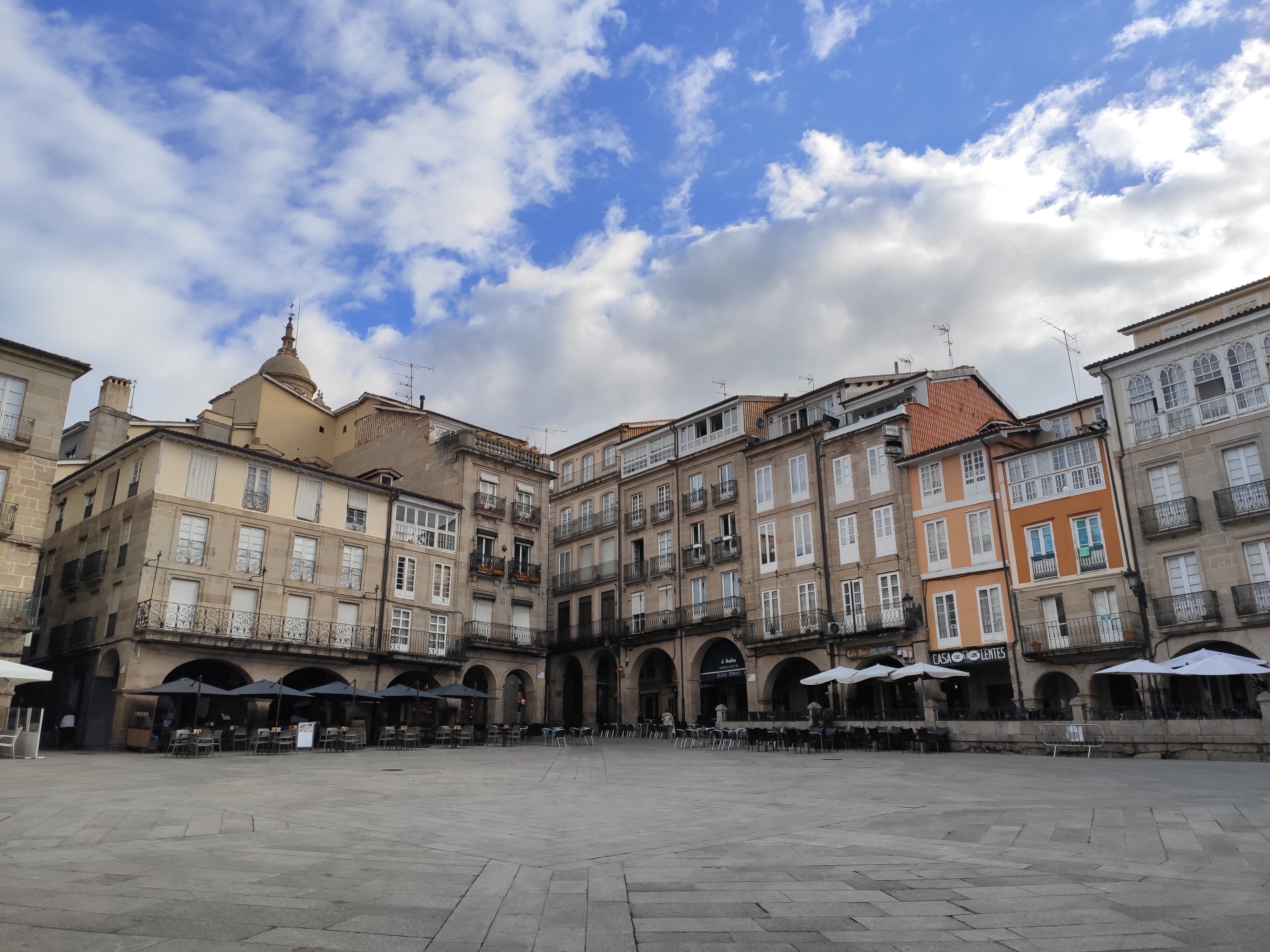
Ourense is Galicia's inland city, and the one most visitors skip — which is a mistake. Sitting on the banks of the Río Miño, it has a handsome medieval old town, a remarkable Roman bridge, and something you won't find in Santiago or Vigo: natural hot springs bubbling up right in the middle of the city.
The old quarter — declared a National Historic-Artistic Monument in its entirety — centres on the Cathedral, begun in the 12th century and bearing centuries of additions from Romanesque through to Gothic. The gilded Pórtico del Paraíso inside is modelled on Santiago's famous Pórtico de la Gloria. Flanking streets are lined with the stone arcades, noble palaces, and carved facades typical of Galician urban architecture, including the former jail of the Corona and the house-palaces of the Boanes and Oca-Valladares families. The pleasant Posio gardens, shaded by horse chestnut trees, connect the old town to the main square.
The Ponte Vella (Old Bridge) crossing the Miño is one of the oldest and most beautiful in Europe — Roman in origin, rebuilt in medieval times, and still carrying pedestrians today. Below it, free thermal pools along the riverbank are popular with locals year-round. The hot springs, known as As Burgas, have been flowing since at least Roman times; the city may even take its name from them.
Ourense is an honest city rather than a polished tourist destination. Eat and drink in the streets around Cervantes and San Miguel: this is where you find the tapas bars and the good Ribeiro wine, the crisp white that Galicians drink from ceramic cups. For shopping, the main commercial street is Avenida de La Habana.