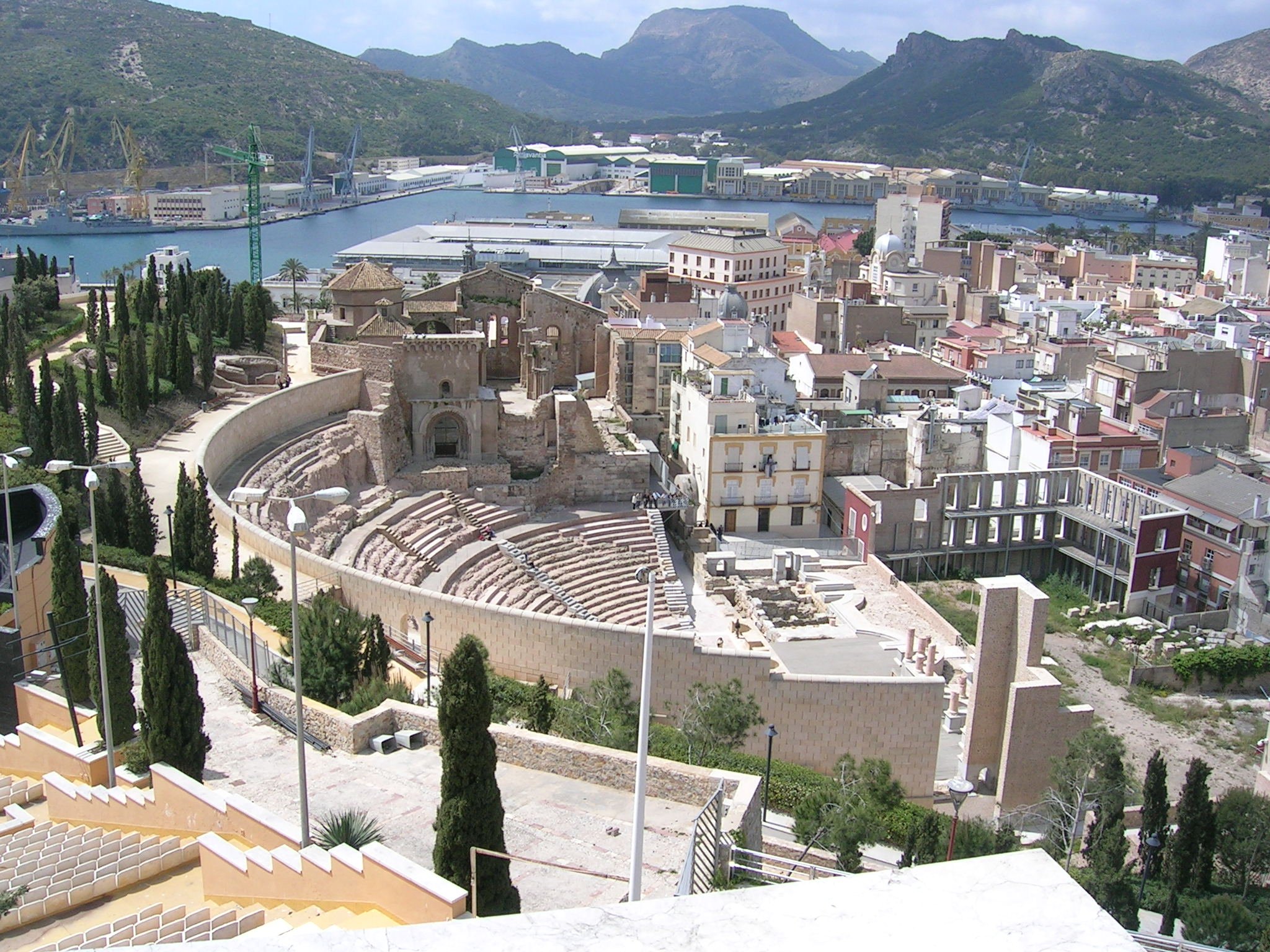
Cartagena is the coastal surprise of Murcia: a working naval port with an old centre built on top of Phoenician, Carthaginian, Roman, Byzantine, and modern layers. It is not polished in the way Spain's obvious city-break names are polished, and that is part of the appeal. Ships, cranes, archaeological sites, modernist facades, and cafe terraces all press into the same small bowl of harbour.
The city was founded as Qart Hadasht, "New City", by the Carthaginians, then taken by Rome and remade as Carthago Nova. That history is not abstract here. The Roman Theatre sits in the middle of town, the Punic Wall marks an even older defensive line, and the hill of the old Cartagena Cathedral still carries the scars of war and abandonment.
Cartagena also has one of Spain's best museum clusters for maritime history. The National Museum of Subaquatic Archaeology explains what was found under the Mediterranean, while the Naval Museum and the Peral Submarine tell the story of the navy and early underwater engineering. Stay a night if you can; cruise visitors get the theatre and leave, but Cartagena is better after the harbour lights come on.