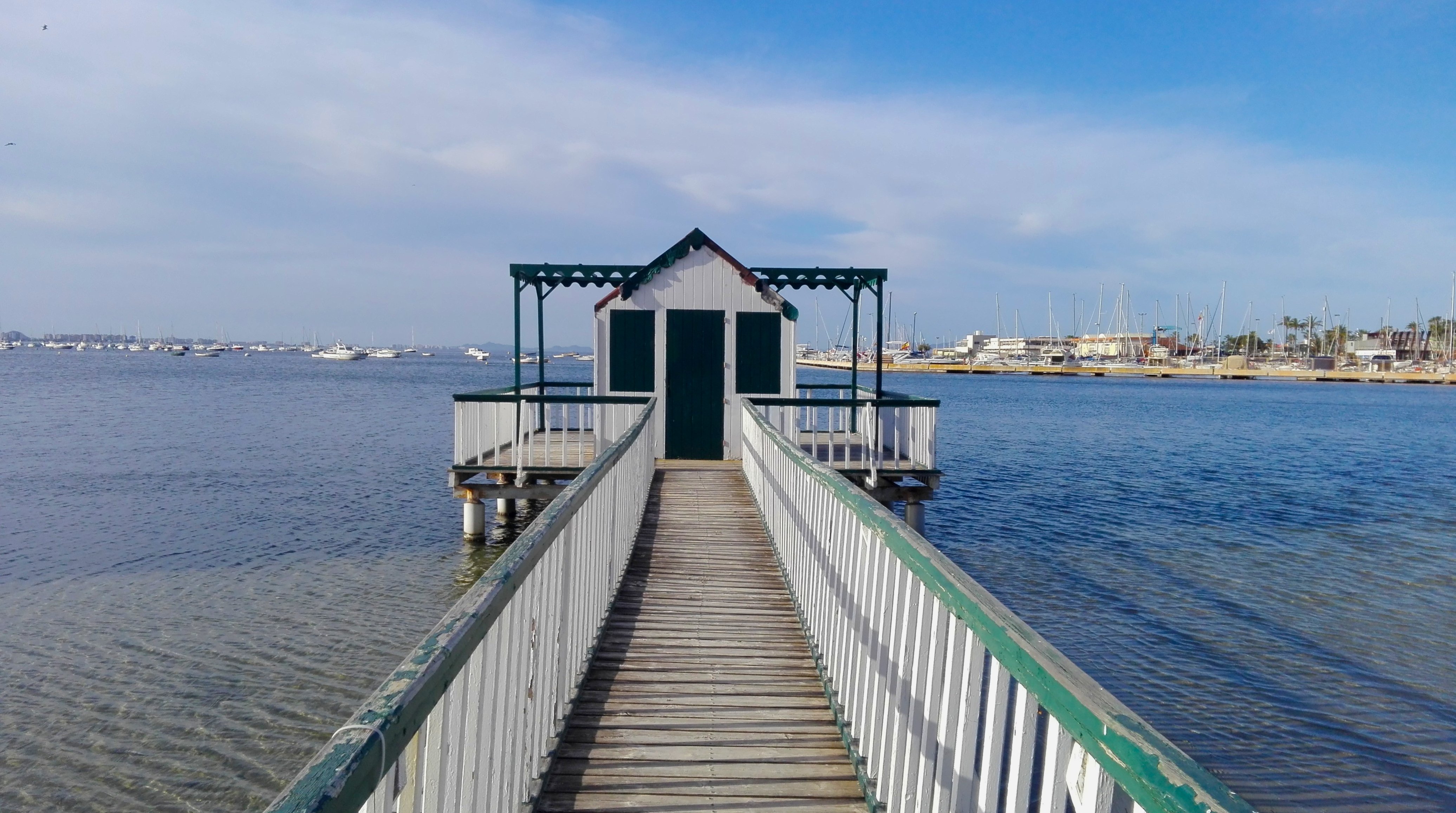
Mar Menor resort town known for calm lagoon water, mud baths, and Spanish seaside routines.
Lo Pagán is a small resort town on the northern shore of the Mar Menor, the large saltwater lagoon that separates the La Manga strip from the Murcia mainland. The Mar Menor is one of the warmest and calmest bodies of water in Europe — shallow, sheltered, and with a salt concentration that makes floating effortless. Locals have long valued its mud baths for their supposed therapeutic properties, and you will see people caked in dark mud along the waterfront.
The town is low-key and predominantly Spanish in character, without the high-rise tourism of La Manga across the lagoon. The promenade along the water is pleasant for an evening stroll, with the Quintín Windmill marking the southern entrance. The seafood restaurants serve fresh fish from both the lagoon and the Mediterranean — caldero rice stew is the dish to order. The San Pedro del Pinatar nature reserve, just north of town, is a protected wetland and an important stopping point for flamingos and other migratory birds.
Lo Pagán is the kind of place where Spanish families come for unpretentious summer holidays — which is exactly what makes it appealing.
Guide
Eating Out
Lo Pagán's restaurant scene is built around the Mar Menor's distinctive seafood. The lagoon produces excellent sea bass (lubina), sea bream (dorada), and grey mullet (mujol), as well as prawns and small clams. The most characteristic dish is caldero, a rice stew cooked in fish broth that is the signature preparation of the whole Mar Menor coast. The promenade is lined with restaurants, most of them decent and reasonably priced by Spanish resort standards.
Guide
When to Go
Lo Pagán is a summer resort and is best visited from June to September, when the Mar Menor reaches its peak temperature of 28–30°C — warmer than the Mediterranean by several degrees because of the lagoon's shallow depth and sheltered position. July and August are the busiest months and the town fills with Spanish families; if you prefer it quieter, early June or September offer good weather with fewer crowds.
Winter is mild by northern European standards — rarely below 10°C — and the flamingos are more numerous in the salt pans. The promenade is pleasant for a walk at any time of year. The Fiestas de la Virgen del Carmen, held in mid-July, feature a maritime procession where the patron saint of fishermen is carried by boat across the Mar Menor.