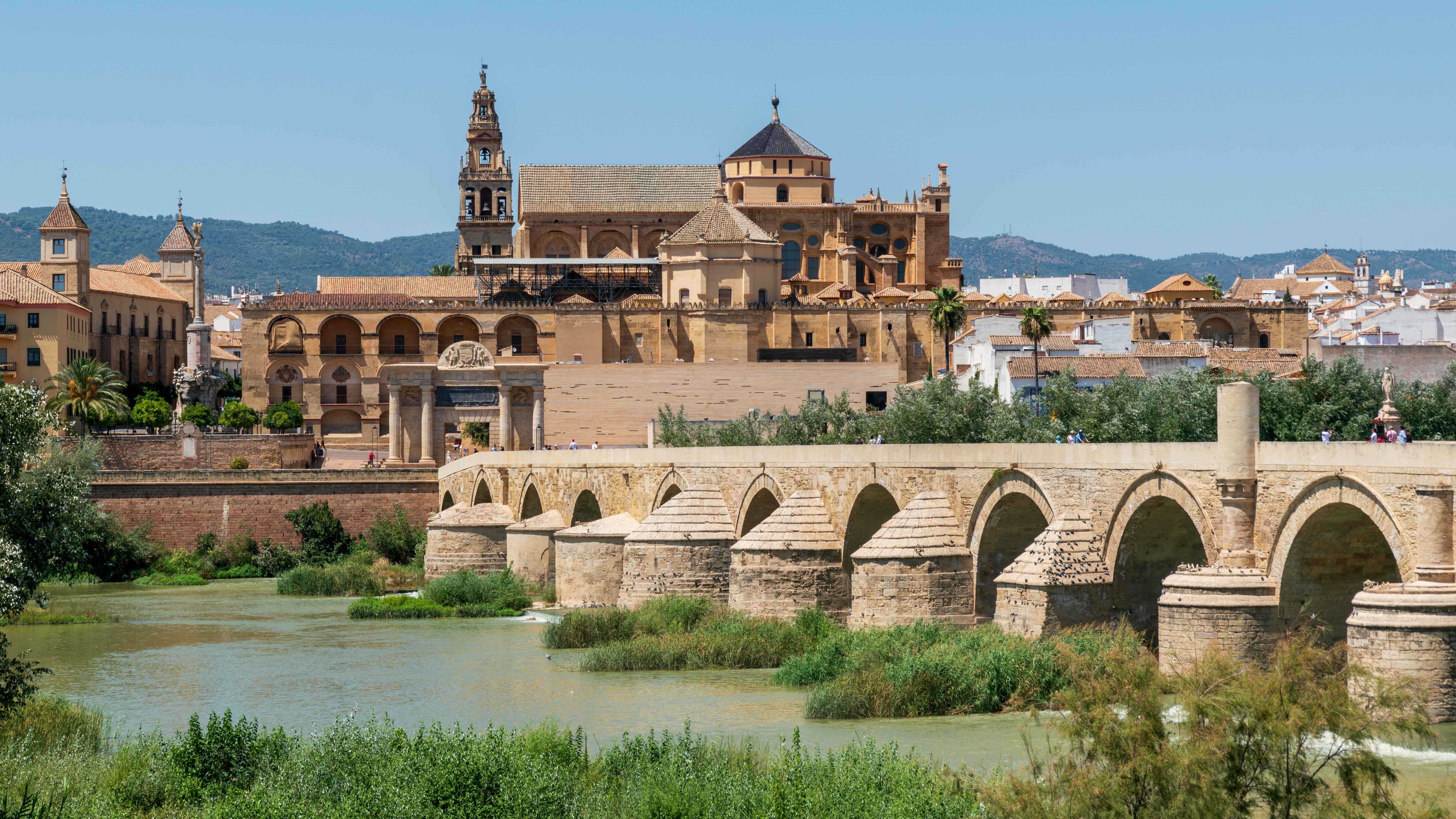
At its peak in the 10th century, Córdoba was the largest city in western Europe — the capital of the Umayyad caliphate, dubbed the "Athens of the West" by contemporaries who marvelled at its libraries, running water, and religious coexistence. The city's modern population is a fraction of its medieval size, but the historic centre is still one of the finest in Andalusia.
The Mezquita-Catedral is the centrepiece — an extraordinary 8th-century mosque where a Gothic cathedral was rammed into the heart of the prayer hall in the 16th century, provoking Charles V to famously condemn his own bishops. Around it, the Judería (Jewish Quarter) spills through whitewashed lanes and flower-hung patios, with the tiny medieval Synagogue and the birthplace of the philosopher Maimonides. The Alcázar de los Reyes Cristianos, with its long reflecting pools and tiered gardens, is where Columbus pitched his westward voyage — and was turned down.
Eight kilometres west of the city, the ruins of Medina Azahara are among the most atmospheric in Spain — a UNESCO-listed palace city that rose and fell within a single century. Cross the Roman Bridge at sunset, eat salmorejo in a tiled bodega, and let the pace slow down. Córdoba rewards those who stay more than a day.