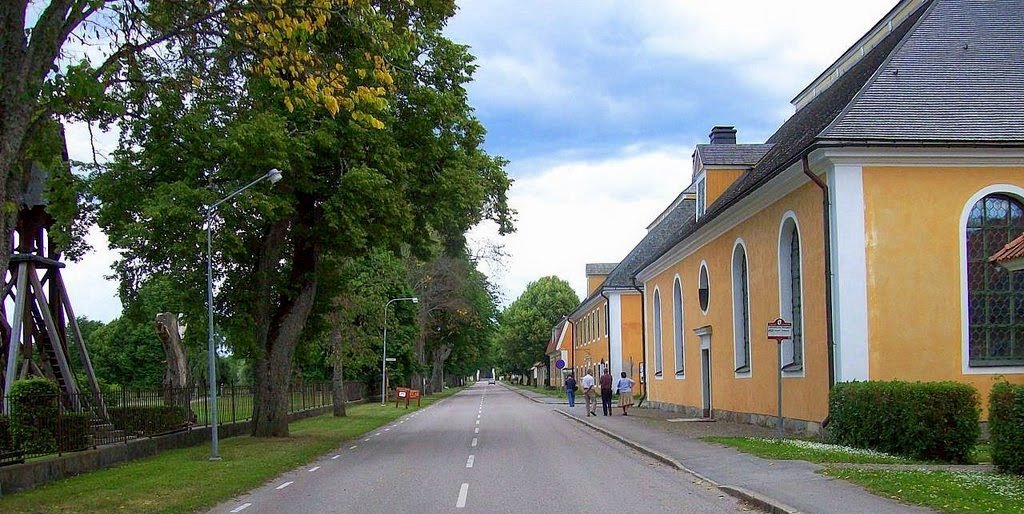
Lövstabruk (also written Leufsta bruk) is a former ironworks village in northern Uppland, about 150 kilometres north of Stockholm. Once one of the most important iron-producing sites in the world, it is now a remarkably well-preserved example of Sweden's industrial heritage — part open-air museum, part living village.
The works were founded in 1596 and sold to the Dutch industrialist Louis De Geer in 1641. De Geer imported skilled workers from Wallonia, particularly around Liège, and their French family names are still common in the area even though the language disappeared generations ago. After Russian raiders destroyed the settlement in 1719, the De Geer family rebuilt on a grand scale: a mansion so impressive that the future King Gustaf III reportedly wrote to his mother that "if she had not seen Lövsta, she had seen nothing."
The ironworks closed in 1926, but the village survives almost intact. The De Geer mansion houses a significant 18th-century library. The church, also 18th century, contains a Cahman organ that is still played and is considered one of the finest surviving baroque instruments in Scandinavia. The workers' houses, arranged in architectural harmony around the industrial core, illustrate how Sweden's ironworks owners provided housing, medical care, and pensions — an early model of industrial welfare that is internationally unique in its preservation.