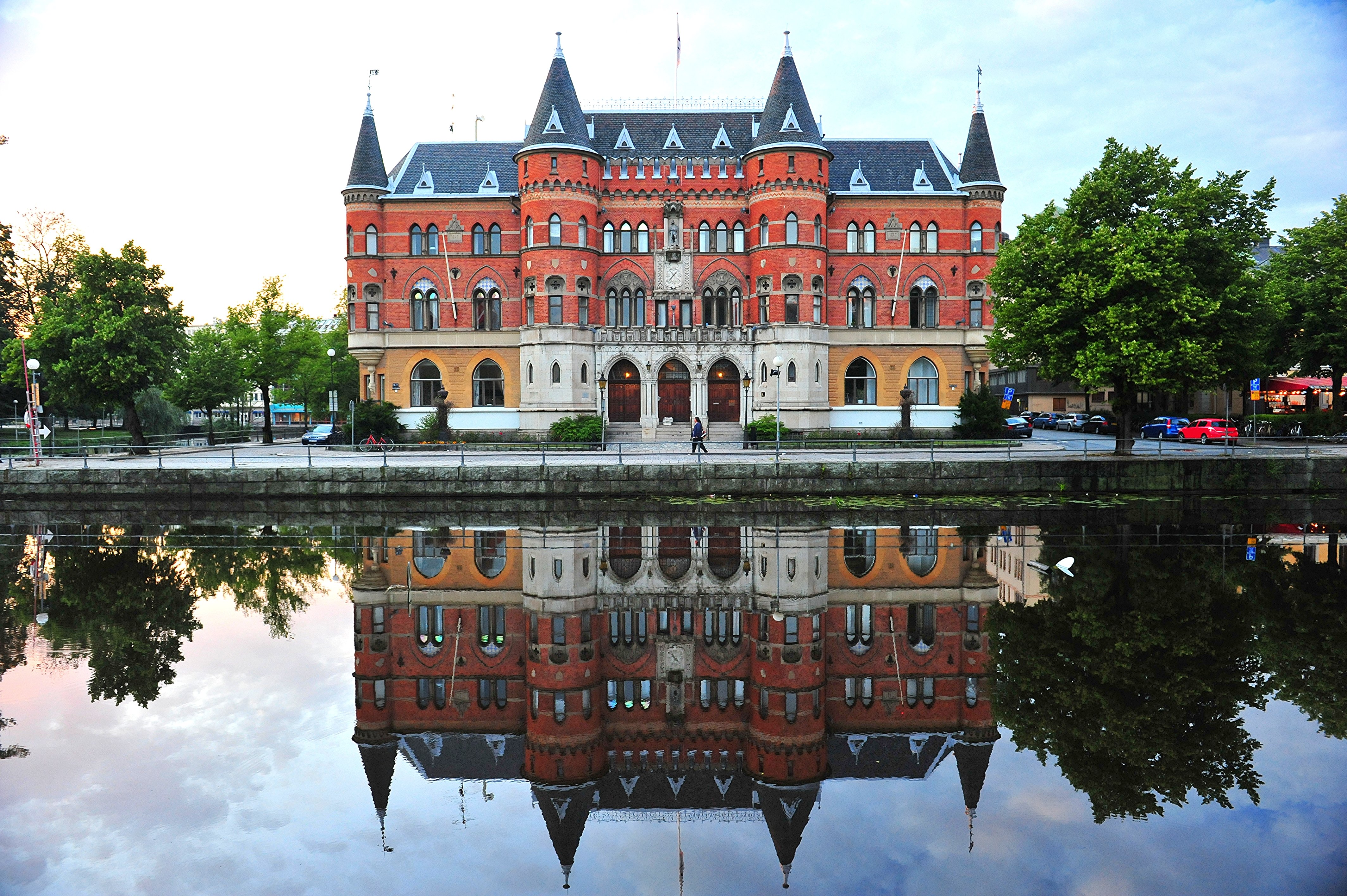
Örebro sits roughly halfway between Stockholm and Gothenburg, at a crossroads that has made it a market town since at least the 13th century. The east-west water route across the great lakes met the north-south land road here, and the town grew up around the traffic.
Örebro Castle is the centrepiece — a medieval fortress on an island in the River Svartån, expanded into a grand Renaissance castle in the 16th century. It still dominates the city centre and is open for guided tours. Along the river, Wadköping is an open-air quarter of old wooden houses saved from demolition in the 1960s and reassembled here, named after the fictional town in Hjalmar Bergman's novels.
Örebro is now a university town with a pleasant, walkable centre. The shoe factories that defined the city for a century are all gone. An oddity worth knowing: Svampen, the world's first mushroom-shaped water tower, was built here in 1958 — there is a copy in Riyadh — and is open for views from the top. The Saint Nicholas Church is the 13th-century heart of the old town.
Birdwatchers should head to Oset and Rynningeviken, the marshes where the Svartån flows into Lake Hjälmaren. It is one of Sweden's best urban birding sites, with hides and boardwalks through the wetlands and over 230 recorded species.