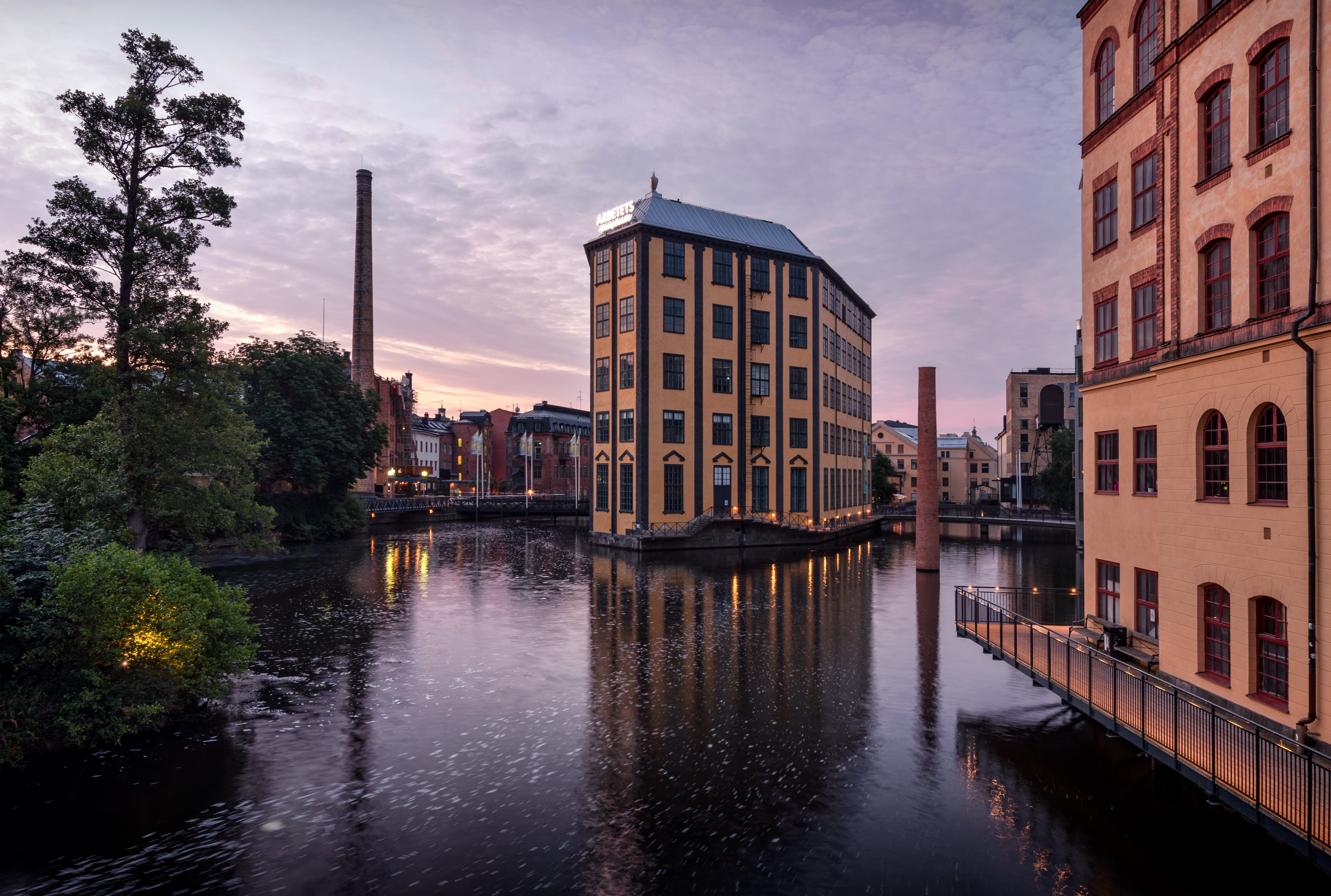
Norrköping is a former textile and manufacturing city on Sweden's east coast, about 160 kilometres south of Stockholm. Its defining feature is the Industrilandskapet — a cluster of 19th-century factories along the Motala Ström river, beautifully repurposed into a university campus, concert halls, and museums. The old industrial buildings give the city centre a character quite different from other mid-sized Swedish towns.
The city earned its charter in 1384 and owes much of its industrial heritage to Walloon immigrants, most notably the 17th-century industrialist Louis de Geer. Textile mills powered the economy for centuries, though the industry collapsed in the 1970s. Norrköping reinvented itself around education and tech, anchored by a campus of Linköping University right in the old factory district.
Beyond the centre, the surroundings offer genuine variety. Kolmården Zoo, one of the largest in Europe, sits in deep forest northeast of town. The Bronze Age rock carvings at Himmelstalund are among the finest in Scandinavia, with hundreds of figures carved into flat rock surfaces some 3,000 years ago. For outdoor pursuits, the archipelagos of Sankt Anna and Gryt to the east provide excellent kayaking and island-hopping.
Norrköping is also a strong cultural centre for the Östergötland region. The Norrköping Symphony Orchestra has an international reputation, and the Östgötateatern is one of Sweden's most respected regional theatres. The City Museum and Art Museum both occupy mill buildings in the Industrilandskapet. Recurring events worth timing a visit around include the Night of Culture in late September and the "City of Light" illuminations around Christmas.