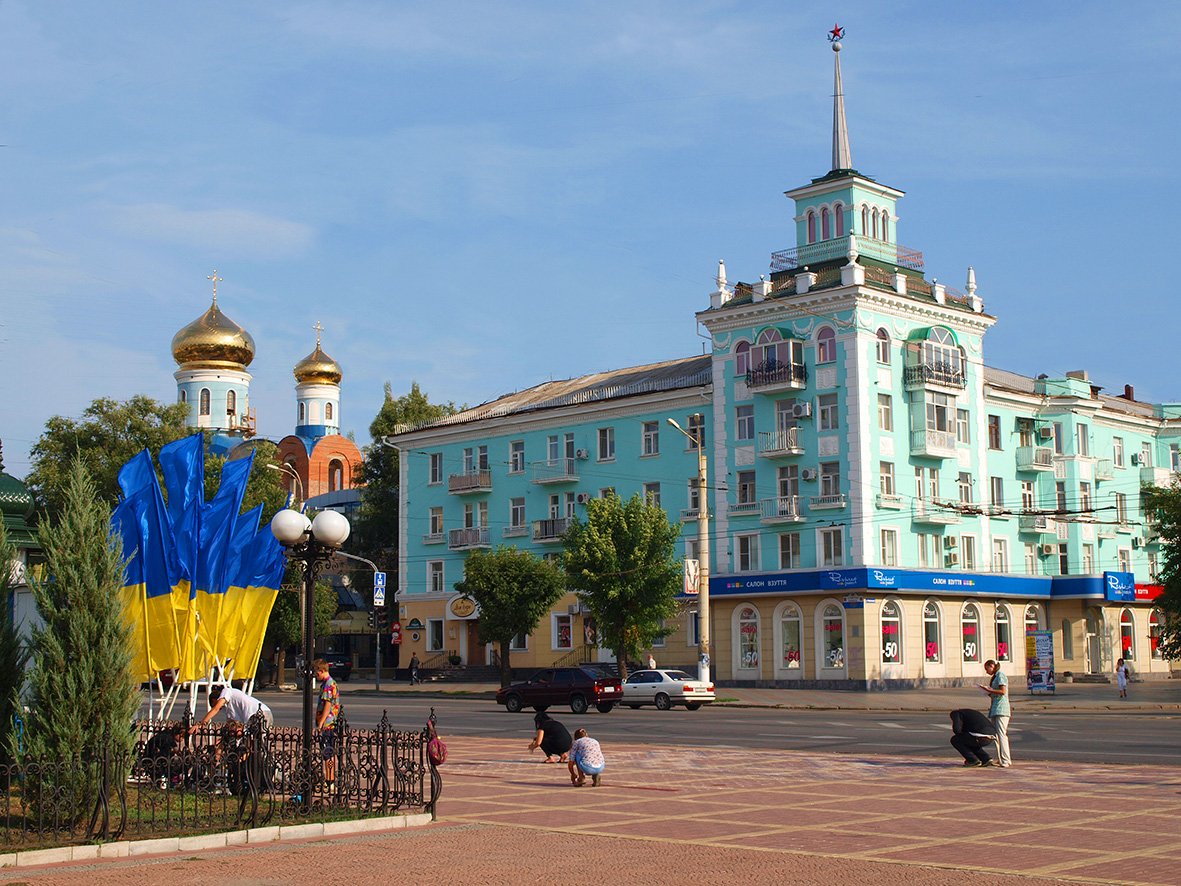
Lugansk (also known as Luhansk) is an industrial city in eastern Ukraine, sitting in the Donets Basin coalfield region near the Russian border. Founded in 1795 as a cannon-foundry settlement on the river Lugan, it grew into one of Ukraine's major industrial and cultural centres over the following centuries. The city's working-class character — shaped by generations of ironworkers, miners, and factory hands from a dozen nationalities — gives it a distinct identity unlike the more touristic parts of Ukraine.
The city centre along Sovetskaya Street retains some of its pre-Soviet grandeur, with two-storey merchant houses and remnants of the old street plan laid out by a Scottish engineer in the early 1800s. The Gorky Library, with its imposing white colonnade, is one of the finest buildings in town and holds over a million volumes. The Petropavlovskaya Church in the Stone Ford district survived the Soviet demolitions and has been restored — one of the few pre-revolutionary sacred buildings still standing.
Beyond the city, the Mergeleva Ridge lies about 30 kilometres out: an archaeological site with Bronze Age burial mounds and the ruins of ancient temples, discovered by students on an expedition and dating back to around 4000 BC. Heroes Square, on Sovetskaya Street, honours those who fell in the Second World War with a row of life-sized monuments and an obelisk.
Note: Lugansk has been affected by ongoing conflict since 2014 and is not accessible to most travellers at the time of writing. This page reflects the city as it was before hostilities began.