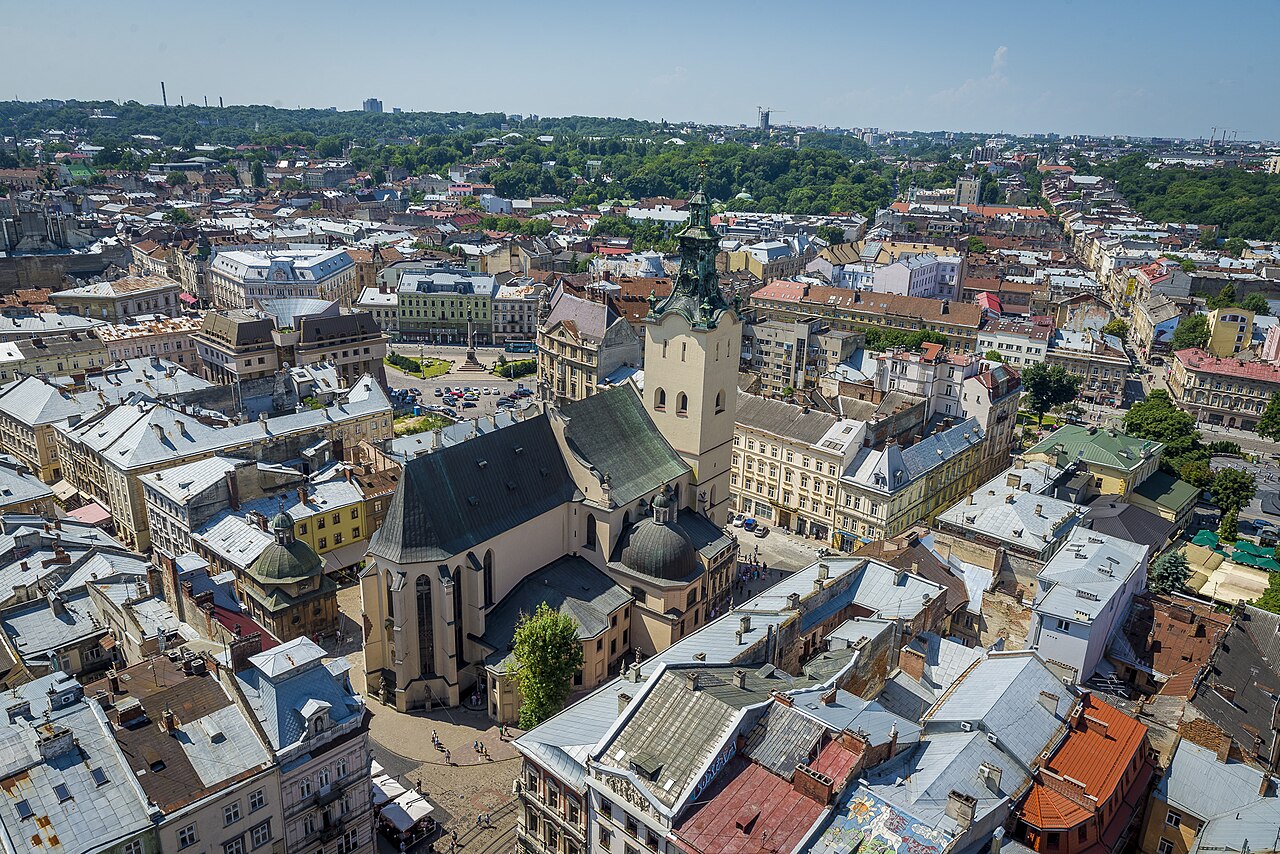
Lviv is the cultural capital of western Ukraine, a city of cobblestoned squares, baroque churches, and cafe culture that feels more Central European than Eastern. Known variously as Lemberg, Leopolis, and Lwów through its Polish, Austrian, and Soviet pasts, the city wears its layered history openly — you can read it in the architecture as you walk from the Armenian quarter to the Habsburg boulevards. Since Russia's full-scale invasion of Ukraine in 2022, Lviv has also become a refuge for displaced Ukrainians from the east, and its character has shifted subtly — more crowded, more politically conscious, and in certain ways more alive.
The UNESCO-listed old town centres on Rynok Square, one of the finest market squares in Eastern Europe, surrounded by merchant townhouses from half a dozen different national traditions. The Dominican Church and the Armenian Cathedral stand within a few minutes' walk of each other, representing communities that shaped the city across centuries. The Lviv Opera House anchors the main boulevard west of the old town, a magnificent Neo-Baroque building that has been in continuous operation since 1900.
Lviv is also famously a coffee city — the legend (possibly true) is that the first coffeehouse in Central Europe was opened by a Lviv merchant — and the cafe scene today is lively, inventive, and cheap. Beyond the centre, Lychakiv Cemetery is worth a visit in its own right: a park-like Victorian burial ground with monumental sculpture and, increasingly, the graves of soldiers killed in the current conflict. High Castle Hill gives the best panoramic view of the city and its remarkable collection of church towers.