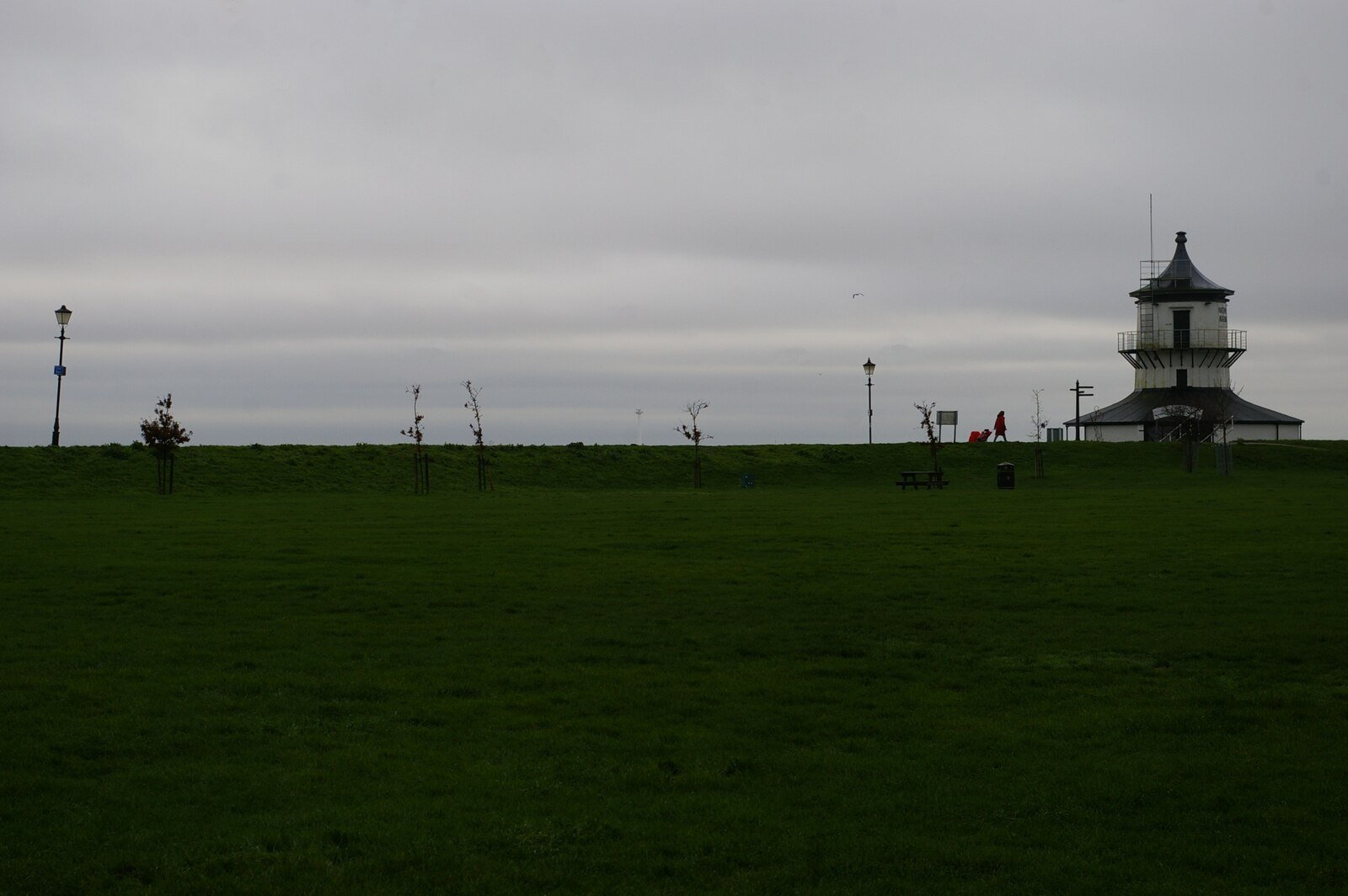
Harwich sits at the tip of a narrow peninsula where the rivers Stour and Orwell meet the North Sea, and it has been sending ships out into that sea for eight centuries. This is the port where Christopher Jones, captain of the Mayflower, was born and buried; where Drake, Hawkins, and Frobisher fitted out their Elizabethan expeditions; where Samuel Pepys served as MP and took a close interest in the Royal Navy's operations. Today Stena Line runs overnight ferries to the Hook of Holland from here, making Harwich the starting point — or finishing point — for a great many European road trips.
Most visitors drive straight off the ferry and head for London without stopping. That is a shame. The old town, a tight grid of medieval streets on the headland, has more to offer than a transit port deserves. The Treadwheel Crane of 1667 still stands in the former naval yard — the only surviving two-wheel man-powered crane in Britain, operated by workers walking inside the wheels like enormous hamsters. The Redoubt, a circular Napoleonic-era fort, looms behind the town. The Electric Palace, built in 1911 and still screening films, is one of the oldest purpose-built cinemas in the country with its original projection room and ornamental frontage intact.
Adjacent Dovercourt, a short walk south, is a quieter seaside resort with a Blue Flag beach, cast-iron lighthouse towers, and a gentler pace. If you are arriving on an evening ferry with nowhere to be the next morning, Harwich and Dovercourt together make a decent day.