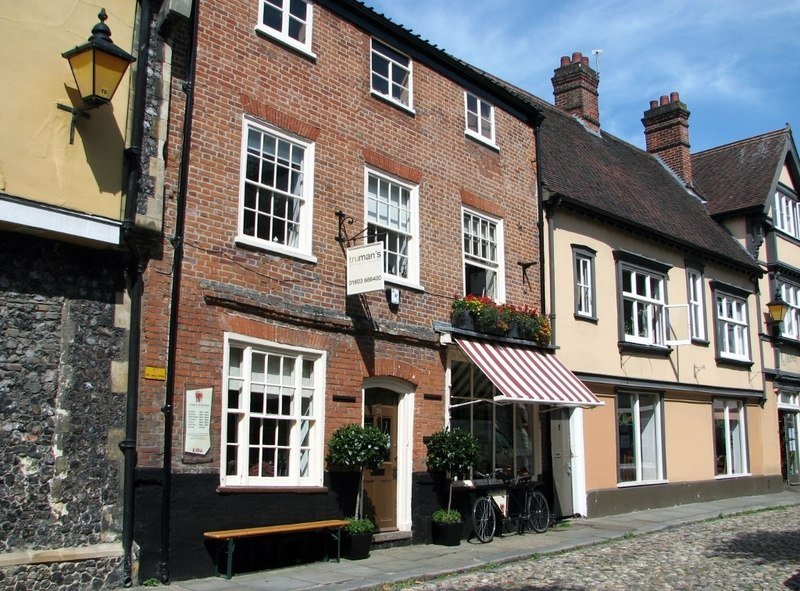
Norwich is the largest city in East Anglia, a medieval city that still wears its history unusually well for England. The old city centre is compact and largely intact, with 32 surviving medieval churches — more than any other city in northern Europe — along with one of the best-preserved Norman cathedrals in England, a castle that has sat on its mound since the twelfth century, and a market that has traded continuously since the eleventh century. The market is one of the largest open-air markets in England and remains genuinely busy and local.
The Cathedral Close, enclosed by a medieval wall, is an oasis of calm in the city centre — lawns, old stone buildings, and the cathedral itself with its extraordinary Perpendicular spire, the second-tallest in England. Norwich Castle, perched on an artificial mound at the city's heart, now houses the city museum, with a notable collection of paintings by the Norwich School of painters — Cotman and Crome among them — who were working in the Norfolk countryside in the early nineteenth century.
Norwich has a significant literary connection: Julian of Norwich, the fourteenth-century mystic and the first woman to write a book in English, lived and wrote here. Her cell attached to the Church of St Julian of Norwich can be visited. The city today has a university, a lively arts scene, and an independent character that is refreshing after more obviously tourist-oriented English cities.