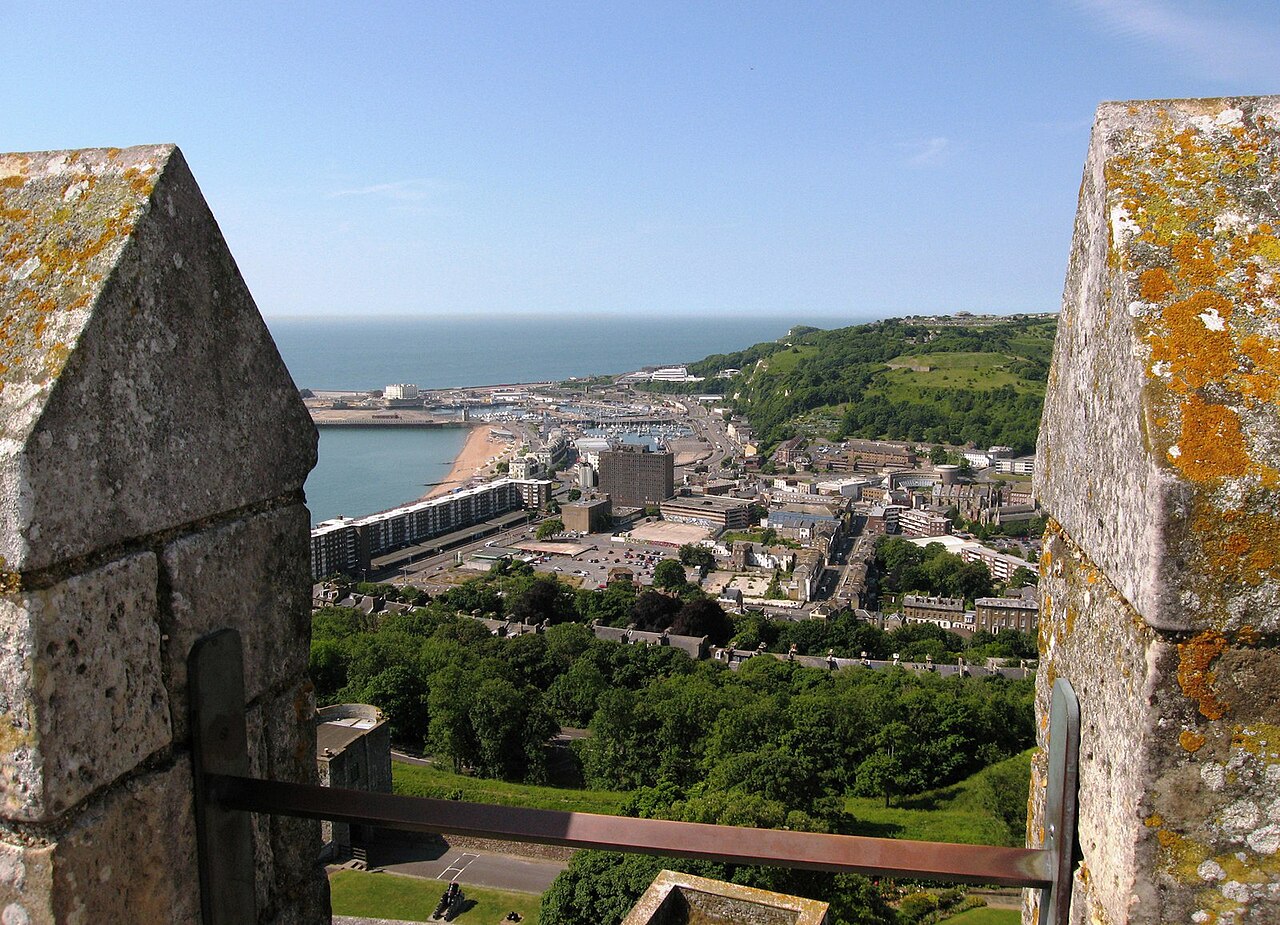
When you think of Dover, you probably think of white cliffs — those chalk faces rising dramatically from the sea, the first or last sight of England for centuries of travellers crossing the Channel. Dover is still the busiest passenger port in Europe, though the Channel Tunnel has taken much of the traffic and the town itself has seen better days.
Most people pass straight through, which is a mistake if you have a few hours. Dover Castle, commanding the clifftops above the harbour, is one of the finest medieval fortresses in England — its history stretches from the Iron Age through the Napoleonic wars to the Second World War, when the tunnels beneath served as the command centre for the Dunkirk evacuation. The White Cliffs are best appreciated from the National Trust visitor centre, with walks along the clifftop path toward South Foreland Lighthouse, where Marconi made the first cross-Channel radio transmission in 1899.
The town below is modest, but the Maison Dieu, an 800-year-old pilgrim hostel that is now the town hall, is worth a look, and Dover Museum houses a 3,500-year-old Bronze Age boat. The Roman Painted House preserves the finest Roman wall paintings north of the Alps. West of town, Samphire Hoe is a nature reserve built from Channel Tunnel spoil — a surreal piece of reclaimed coastline below the cliffs.