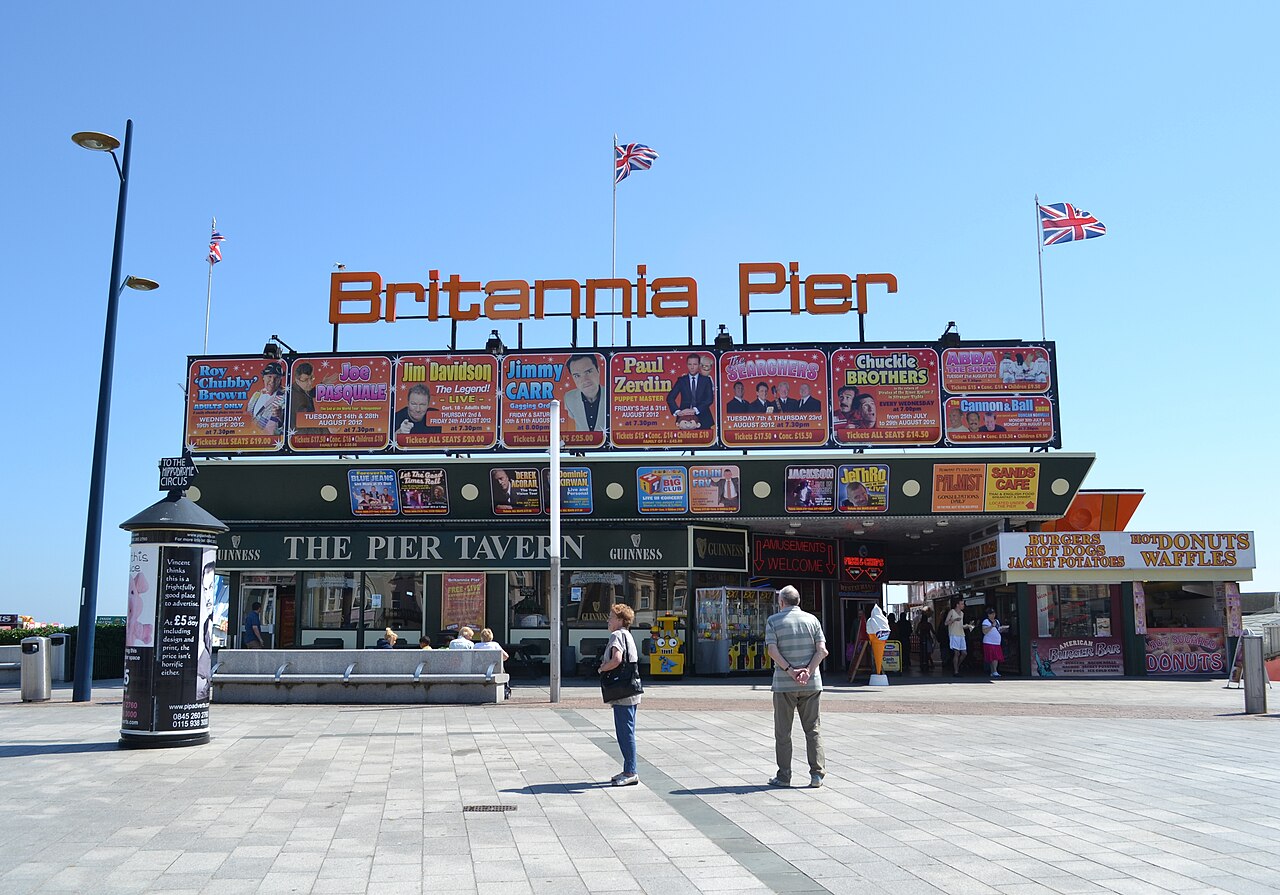
Great Yarmouth is the real deal when it comes to the traditional English seaside. The Golden Mile seafront has amusement arcades, chip shops, a pleasure beach, and all the cheerful tackiness you could want. If you grew up with bucket-and-spade holidays, this place will hit you right in the nostalgia. If you did not, it is a fascinating window into a very particular English tradition that stubbornly refuses to die.
Beyond the seafront, Great Yarmouth has more going on than most visitors expect. The town has genuine medieval bones, including sections of the old town wall and the Rows, a network of impossibly narrow lanes that once formed one of the most densely packed neighborhoods in England. Most were destroyed in the Blitz, but a few survive and are worth seeking out. The Great Yarmouth Row Houses and the Tolhouse, one of the oldest civic buildings in the country, give a sense of the town's long history as a herring port and trading centre. The Great Yarmouth Minster, the largest parish church in England by floor area, is nearby.
The Norfolk Broads, that network of rivers and shallow lakes that forms Britain's largest protected wetland, begins just inland from Yarmouth. You can rent a boat for the day from various operators along the River Bure, and within an hour you will be gliding past reed beds, windmills, and pubs accessible only by water. It is one of the most peaceful landscapes in England, and the contrast with the arcades on the seafront is almost comical.
Great Yarmouth's beach is genuinely good, wide and sandy with relatively clean water. The town gets busy in summer but never reaches the sardine-tin levels of some south coast resorts. If the weather turns, the Time and Tide Museum, housed in a Victorian herring curing works, and the Great Yarmouth Hippodrome — one of only two surviving Victorian circus buildings in Britain — are both solid options. The Lydia Eva, the last surviving steam herring drifter, is moored on the South Quay and open for visits.