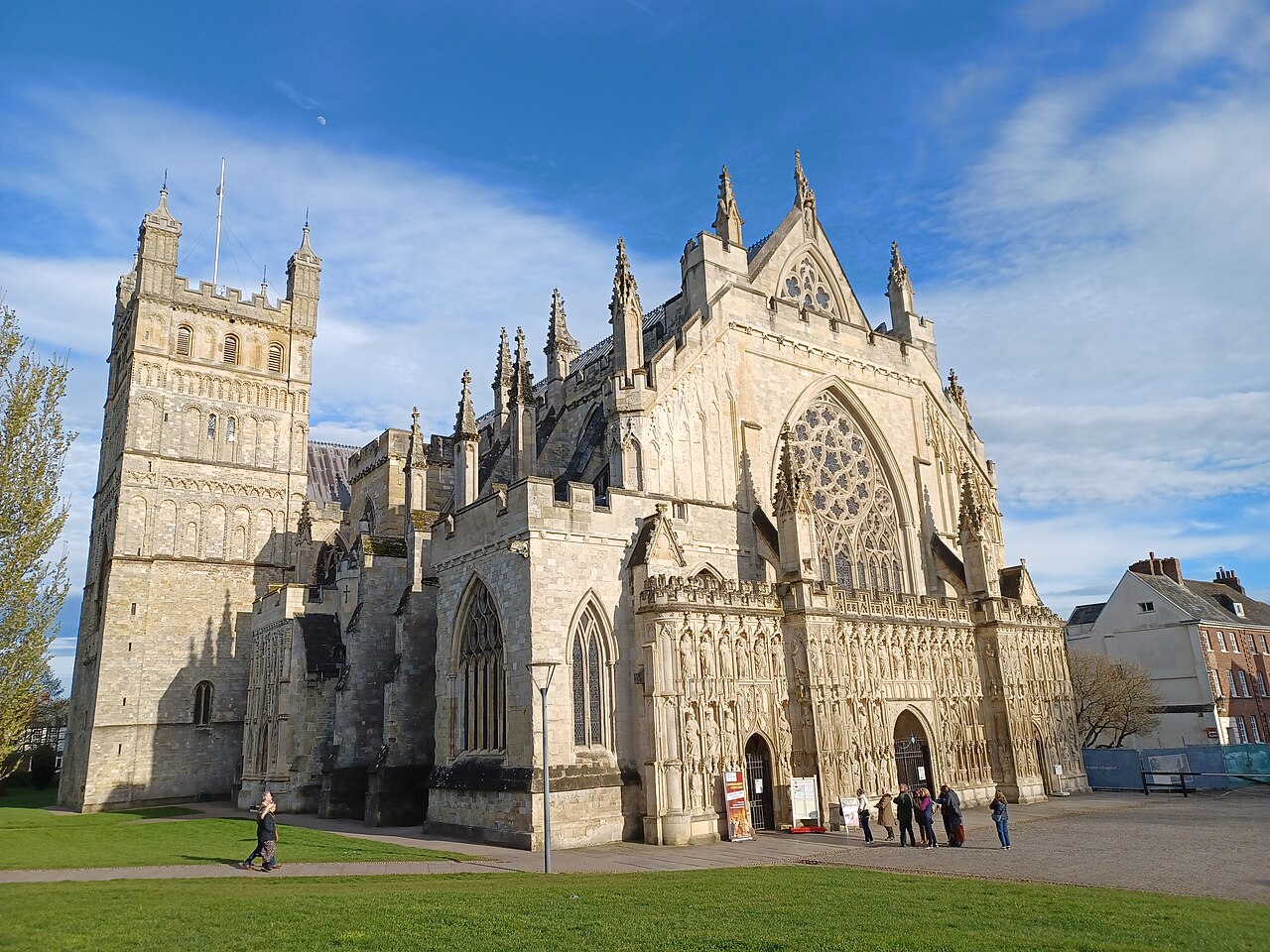
Exeter is Devon's county town, an ancient city that feels surprisingly lively thanks to its university and central position on the rail line between London and Cornwall. It is not coastal and does not sit in a national park, so it gets fewer tourists than much of Devon, but it deserves more attention than it gets.
Exeter Cathedral is the centrepiece. Its Decorated Gothic interior has the longest unbroken stretch of Gothic vaulting in the world, and the Cathedral Close — a quiet green space surrounded by medieval and Georgian buildings — is one of the most attractive in England.
Exeter Quayside along the Exe is worth a wander. The old Custom House and warehouses have been converted to cafes and shops, and the area has a pleasant, slightly bohemian feel. Below the streets, the medieval underground passages — built to carry lead pipes for the city's water supply — can be toured on guided visits.
The Royal Albert Memorial Museum on Queen Street is one of England's best free regional museums, covering natural history, world cultures, and fine art. The city's Roman walls — remnants of the legionary fortress Isca Dumnoniorum, founded around 55 AD — survive in remarkable condition, with sections standing over five metres high near Northernhay Gardens.
Exeter's Ship Canal, built in the 16th century to bypass a weir, predates the Canal Age by two centuries and is still navigable for small boats today.