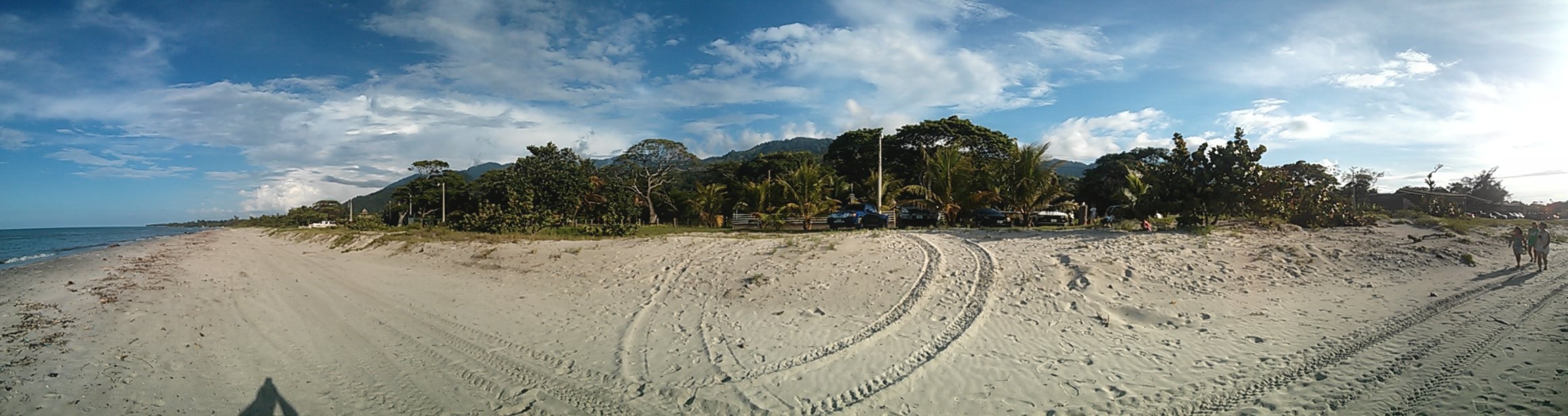
Corozal is a small Garifuna village on the Caribbean coast of Honduras, about 13 km east of La Ceiba along a stretch of beach road. It is one of the most accessible Garifuna communities in the country, making it a good introduction to a culture that most travelers have never encountered.
The Garifuna are descendants of West African and indigenous Carib peoples who were exiled from the island of St. Vincent by the British in 1797 and settled along the Caribbean coast of Central America. They maintain their own language, music, and culinary traditions. In Corozal you will hear Garifuna spoken alongside Spanish, and the rhythms of punta drumming carry from the beach on weekend evenings.
The village sits directly on the sand, with coconut palms and simple wooden houses facing the sea. There is no tourist infrastructure to speak of — no hotels, no tour offices — but you can find home-cooked Garifuna food if you ask around. Cassava bread, fried fish, and coconut-based stews are staples. The beach itself is pleasant and uncrowded. Sambo Creek, the next village along the coast, makes a good short excursion.