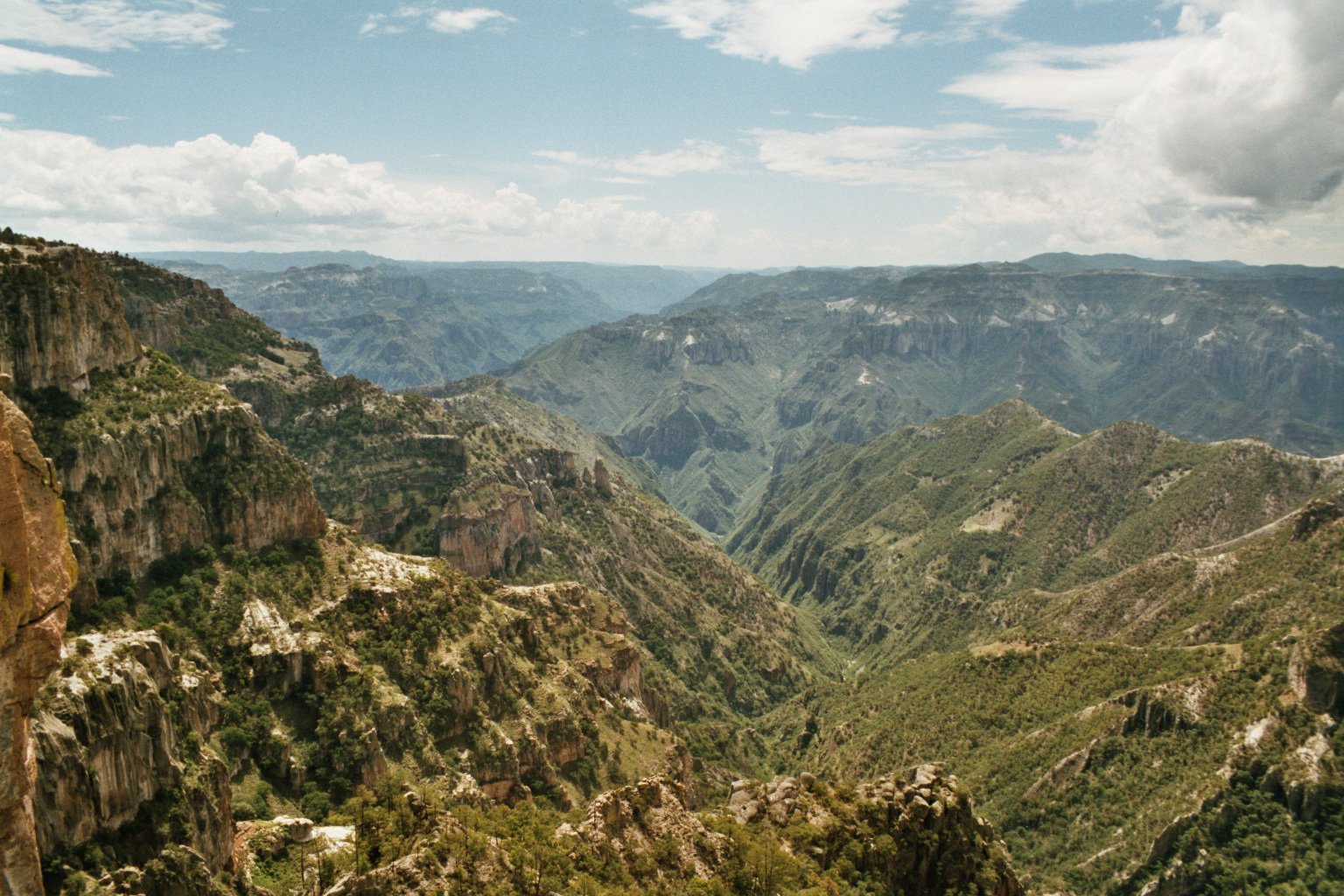
Copper Canyon — Barranca del Cobre — is not one canyon but a network of more than 20, carved into the Sierra Madre Occidental in the state of Chihuahua. Together they cover a vast area, deeper and four times larger than the Grand Canyon in the United States. The name comes from the greenish copper colour of the canyon walls.
The best way to see it is aboard the Chepe — the Chihuahua al Pacífico railway, which runs from Los Mochis on the Pacific coast to the city of Chihuahua, crossing 37 bridges and passing through 86 tunnels along the way. The most dramatic section lies between El Fuerte and Creel, where the train climbs through pine forests and crosses dizzying gorges. Board in Los Mochis early in the morning to see this stretch in daylight.
Creel, a small lumber town at 2,300 metres, is the main base for exploring the canyons. From here you can visit the Batopilas road (a hair-raising descent to a colonial mining town at the bottom of the canyon), the Basaseachic waterfall, and several Rarámuri (Tarahumara) communities. The Rarámuri people have lived in these canyons for centuries, and their culture — including the famous ultra-distance running tradition — is one of the most distinctive in Mexico.
The canyon rim gets cold in winter, with occasional snow, while the canyon floors are subtropical. The best months to visit are October and November, when the air is clear and temperatures are comfortable at both elevations.