Maruata
©
Maruata

Maruata

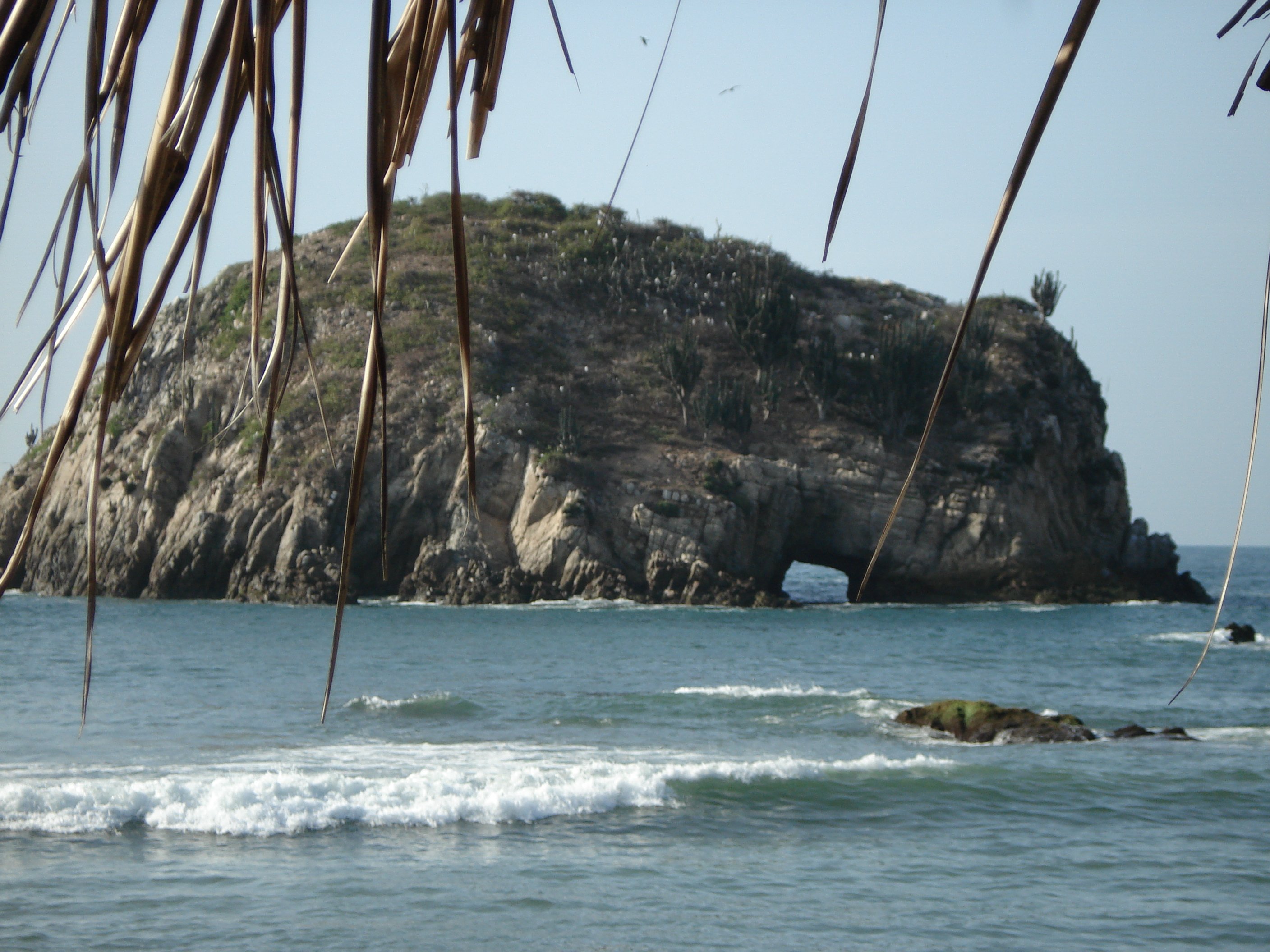
Tiny Michoacán fishing village with remote Pacific beaches, rock monoliths, and sea turtle nesting sites.

Maruata is a tiny fishing village hidden along the Michoacan coast, known mainly to backpackers, campers, and Mexican students willing to trade comfort for one of the most beautiful and remote beaches on the Pacific coast of Mexico.

The village has two main beaches. Playa Maruata looks out onto a sheltered bay — calm enough for swimming and a major sea turtle nesting site, with a small sanctuary working to protect eggs from poachers. The second beach, Playa de los Monolitos, surrounded by weathered rock monoliths, faces the open Pacific and gets full-force rollers that break directly on the sand.

Accommodation is bare-bones: a handful of palapas with beds, and beyond that, camping on the beach. There is a small convenience store in town, but do not count on it for anything specific — food spoils quickly in the heat and humidity. A few beach restaurants serve tortillas, beans, fried fish, cold beer, and Coca-Cola.

There is no direct bus service. Take any bus heading to Lazaro Cardenas and tell the driver you want to stop at Maruata. From the drop-off point it is a short walk of about a kilometre through town and across a stream to reach the beach.

Guide

Getting There

There is no direct bus to Maruata. Take any second-class bus running along Highway 200 toward Lázaro Cárdenas and tell the driver you want to get off at Maruata. The drop-off point is on the highway; from there it is about one kilometre through the village to reach the beach. Buses running in both directions along this coast pass through several times a day, but schedules are loose — ask locally once you arrive about departure times for when you want to leave.

The nearest large town is Lázaro Cárdenas, about 90 kilometres south, which has a bus terminal with connections to Manzanillo, Colima, and Mexico City.

Guide

When to Go

The dry season from November to April is the most comfortable time to visit. Temperatures are warm rather than brutal, and you are unlikely to get rained out. The rainy season runs from June through October and can produce heavy downpours; the road in from the highway can become difficult after sustained rain.

If you want to see sea turtles nesting, plan a visit between September and January, though the height of the nesting activity is usually October and November. Arrive at the beach after dark and walk quietly — the turtles come ashore in the hours after midnight.

Christmas and Semana Santa (the week before Easter) bring a surge of Mexican domestic tourists, particularly students. For the quietest experience, avoid those windows.