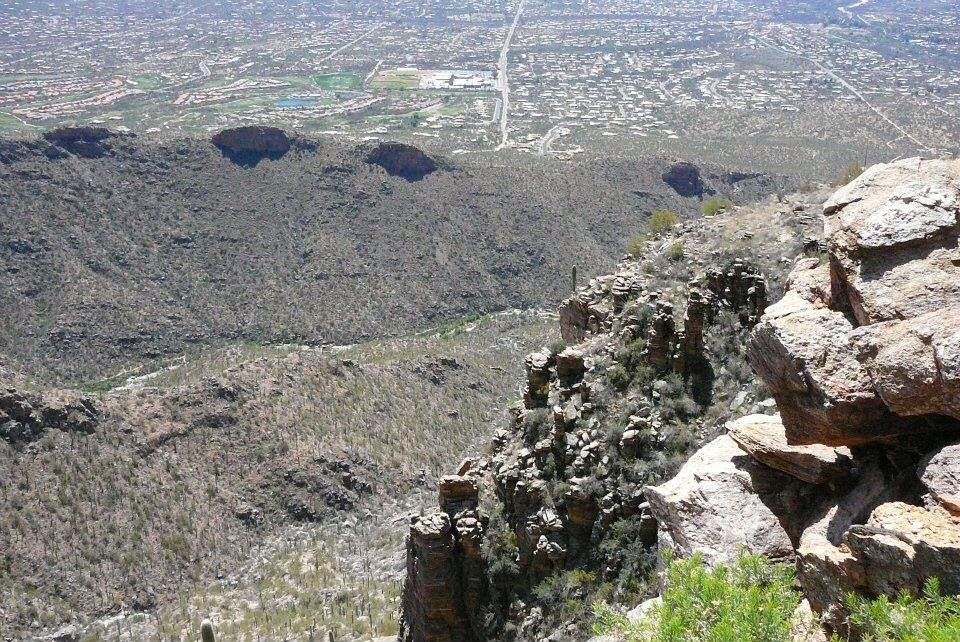
Tucson is Arizona's second-largest city, the home of the University of Arizona, and the southwestern desert town that has held on to more of its own character than any other place in the state. Surrounded on all sides by mountains and saguaro forests, the city sits in the upper Sonoran Desert at 2,400 feet, with cooler nights and sharper light than Phoenix.
Mexican Sonora is closer here than the rest of the United States. Spanish, Tohono O'odham and English mix in the markets, the food is among the best in any American city — Tucson was the first UNESCO City of Gastronomy in the US — and barrio neighbourhoods of low adobe houses survive south of downtown. The Mission San Xavier del Bac, nine miles south of town, is the oldest intact European structure in Arizona and one of the most beautiful colonial churches in North America.
The headline draws are outdoor: the Arizona-Sonora Desert Museum west of town (zoo, botanical garden, and natural history museum in one), Saguaro National Park with its forests of giant cacti, and Sabino Canyon in the Santa Catalinas. For history, the Presidio and the historic Hotel Congress anchor downtown, where John Dillinger's gang was famously caught in 1934.
Tucson also has a deep astronomy scene — the Kitt Peak observatory southwest of town, Mount Lemmon SkyCenter, and the giant mirror lab under the football stadium — and a thriving low-rise downtown built around Congress Street and Fourth Avenue. The Gem and Mineral Show every February takes over half the city; the Rodeo is a hundred years old; and on summer evenings the smell of creosote bush after a monsoon storm is something you remember for a long time.
The summer heat is real — 100°F is normal from June through August — but the dry climate means it can drop twenty degrees at night. Visit between October and April if you have a choice.