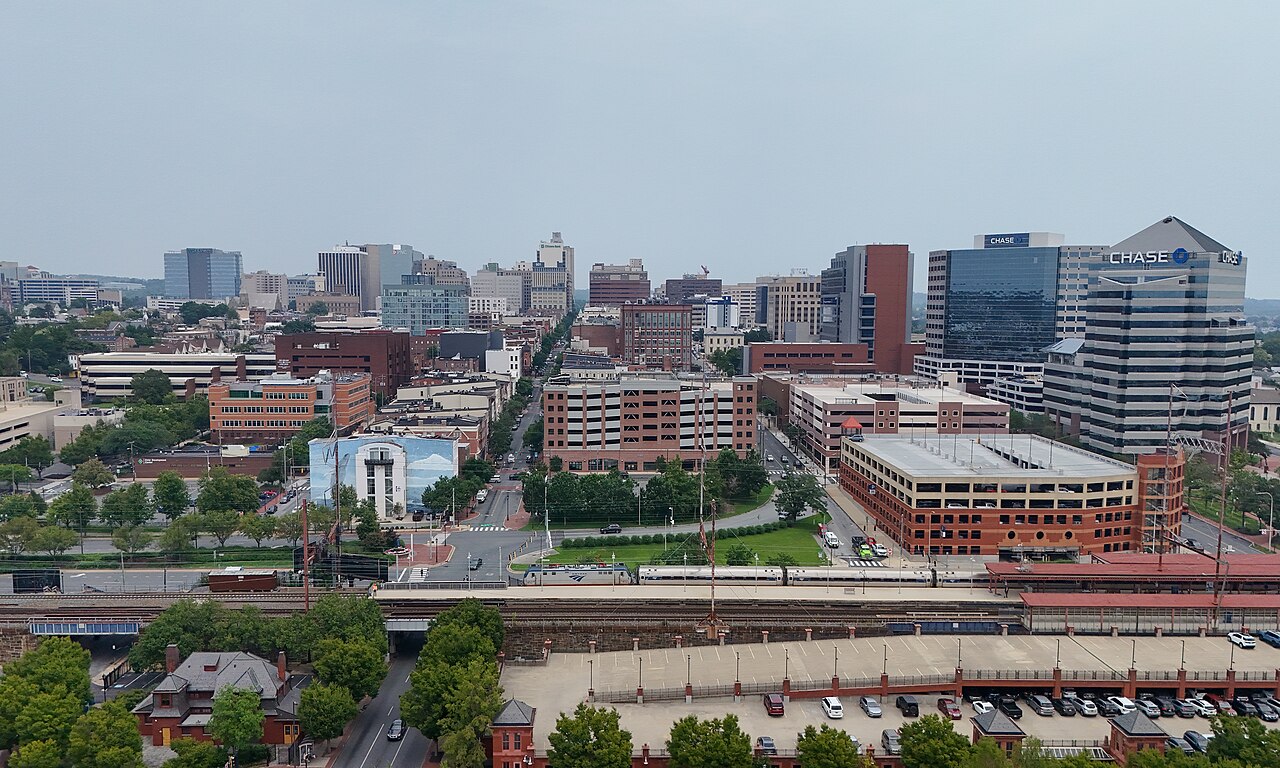
Wilmington is Delaware's largest city, sitting along the I-95 corridor roughly equidistant from Philadelphia, Baltimore, and Washington, DC. Founded in 1731 as Willingtown, it grew around the confluence of the Delaware, Christina, and Brandywine rivers — first as a colonial shipping port, then as a milling centre. The rapid flow of the Brandywine attracted E.I. du Pont, who established his gunpowder mills here in 1802, launching the DuPont company that shaped the city's fortunes for two centuries.
Today Wilmington is known primarily as a corporate hub — Delaware's business-friendly incorporation laws mean that over half of Fortune 500 companies are incorporated here, and the famously unremarkable Corporation Trust Center on North Orange Street is the registered address for several hundred thousand of them. For visitors, the Brandywine Valley is the main draw: the Hagley Museum preserves the original DuPont powder works along the river, Winterthur houses one of the country's finest collections of American decorative arts, Nemours is a Versailles-inspired du Pont mansion, and the spectacular Longwood Gardens is a short drive over the Pennsylvania border.
The Delaware Art Museum holds the largest Pre-Raphaelite collection outside the UK, and downtown clusters around Rodney Square and the cast-iron Grand Opera House on Market Street. The Riverfront development along the Christina River has brought restaurants and entertainment to what was once industrial waterfront, while Old Swedes Church — in continuous use since 1699 — anchors the older Swedish-American Riverside neighbourhood.