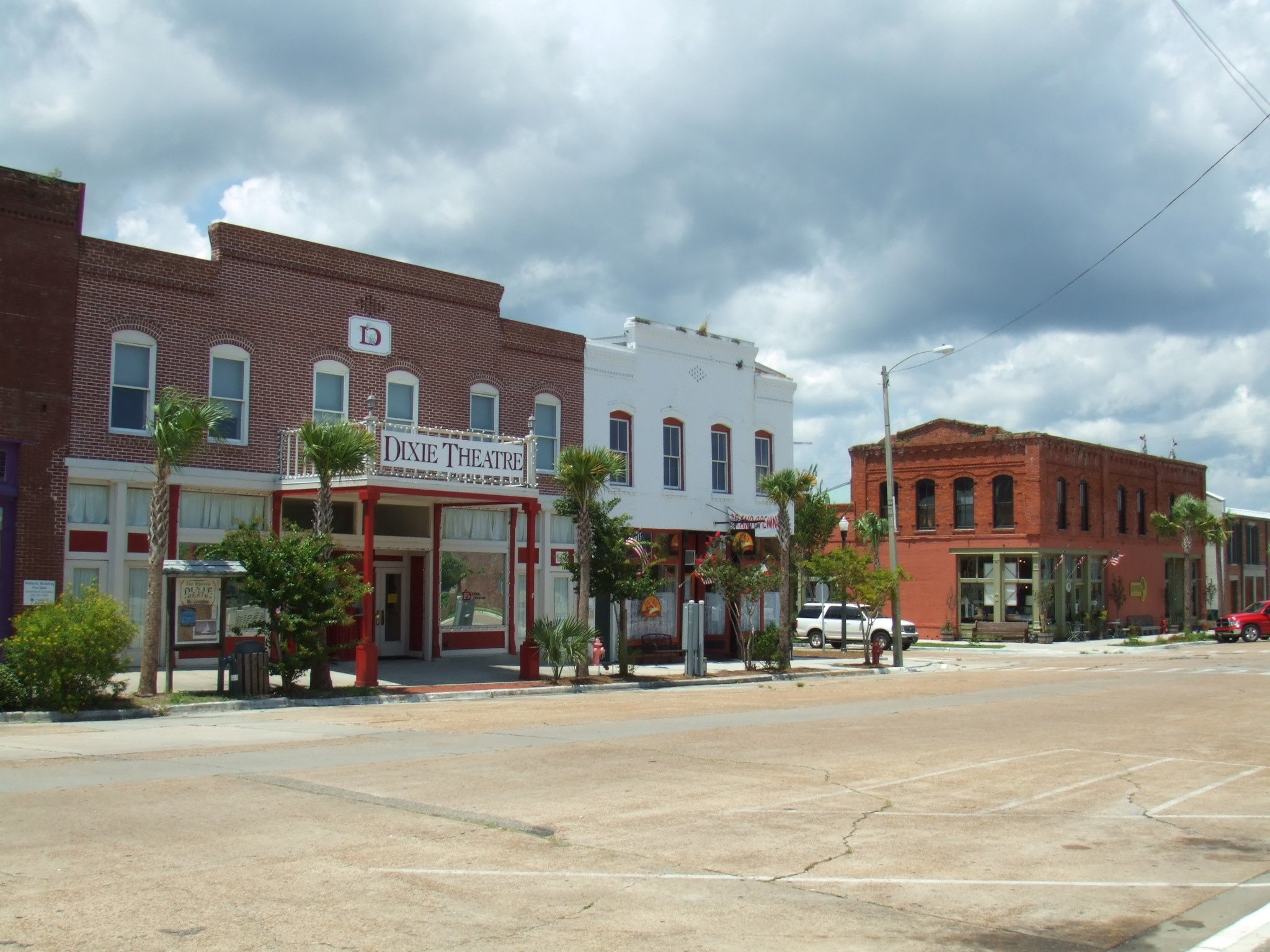
Apalachicola sits where the Apalachicola River meets the Gulf of Mexico, a small, salt-weathered town of around 2,000 people that has spent the past two centuries either booming or surviving. In the 1830s it was the third-busiest cotton port on the Gulf. After the Civil War it pivoted to sponges, then lumber, then oysters — and for most of the twentieth century, the oysters were what built the place. Apalachicola Bay produced 90 percent of Florida's oysters until the bay collapsed in 2012; commercial harvesting has been closed for years and only began returning in limited form recently.
What remains is one of the most intact 19th-century waterfront towns on the Gulf. The compact downtown, walkable in twenty minutes, holds Greek Revival merchants' houses, the original 1838 Trinity Episcopal Church shipped down piece-by-piece from New York, oyster warehouses converted to restaurants, and Riverfront Park where shrimp boats still tie up. The whole grid is a registered historic district, and unlike most preserved Southern towns it does not feel staged.
The town's quiet star is John Gorrie, the local doctor who in 1851 patented the first mechanical refrigeration machine while trying to cool a yellow-fever ward. The John Gorrie Museum State Park tells the story — modern air conditioning, in a real sense, began here. Other museums and house-museums fill out a day; the Orman House and the Maritime Museum are both worth time.
What you eat in Apalachicola matters. Oysters are back on menus, though now often farmed rather than wild-harvested; the Apalachicola variety, briny and sweet, remains distinctive. Pair them with Gulf shrimp and a beer at any of the half-dozen seafood joints downtown. Across the John Gorrie Memorial Bridge lies St. George Island, a long barrier island of empty beach and a state park at the eastern end — the proper way to spend an afternoon after a morning in town. Stay overnight if you can: the place quiets after sunset in a way that the rest of Florida no longer does.