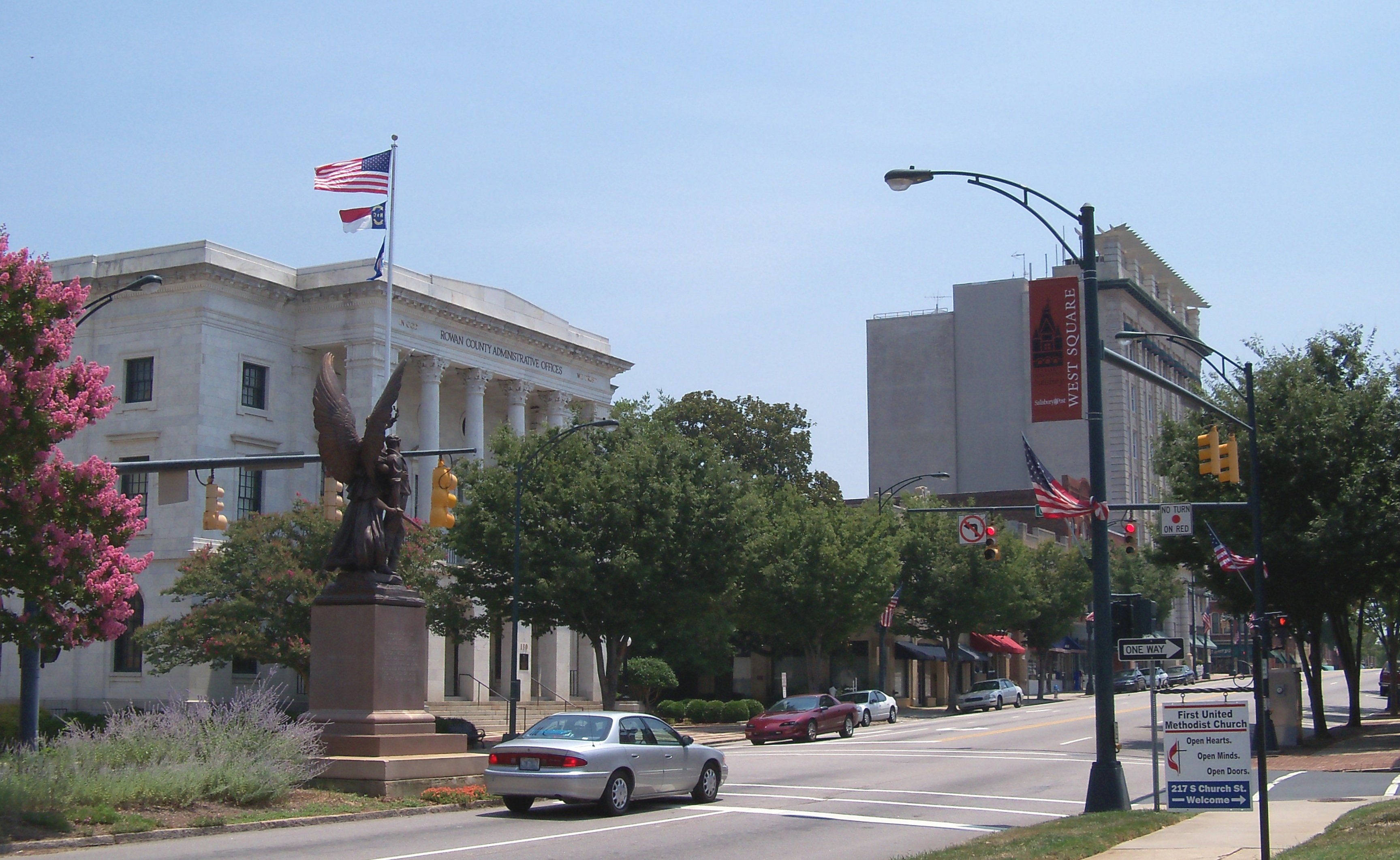
Salisbury was once the largest city in western North Carolina and the leading edge of the American frontier -- the jumping-off point for pioneers, visionaries, and more than a few scoundrels. As a major center of trade and politics in the eighteenth and early nineteenth centuries, the town played an outsized role in the state's history.
The coming of the railroad in 1859 further boosted the economy, and the town's prosperity from that era is preserved in its well-maintained historic district. Salisbury was twice occupied by enemy troops: by British General Cornwallis during the Revolutionary War in 1781, and by Union General Stoneman at the end of the Civil War in 1865.
Today, the downtown is walkable and full of antique shops, restaurants, and well-preserved architecture. The thirty-block Salisbury Historic District is the heart of it, anchored by the Rowan Museum and a handful of restored Federal and Victorian houses including the Josephus Hall House. The somber Salisbury National Cemetery, on the site of the Confederate prison camp, is essential for anyone interested in the Civil War.
Salisbury is also the home of Cheerwine — the cherry-flavoured soda invented here in 1917 — and the surrounding countryside includes wineries worth a day trip from Greensboro or Charlotte.