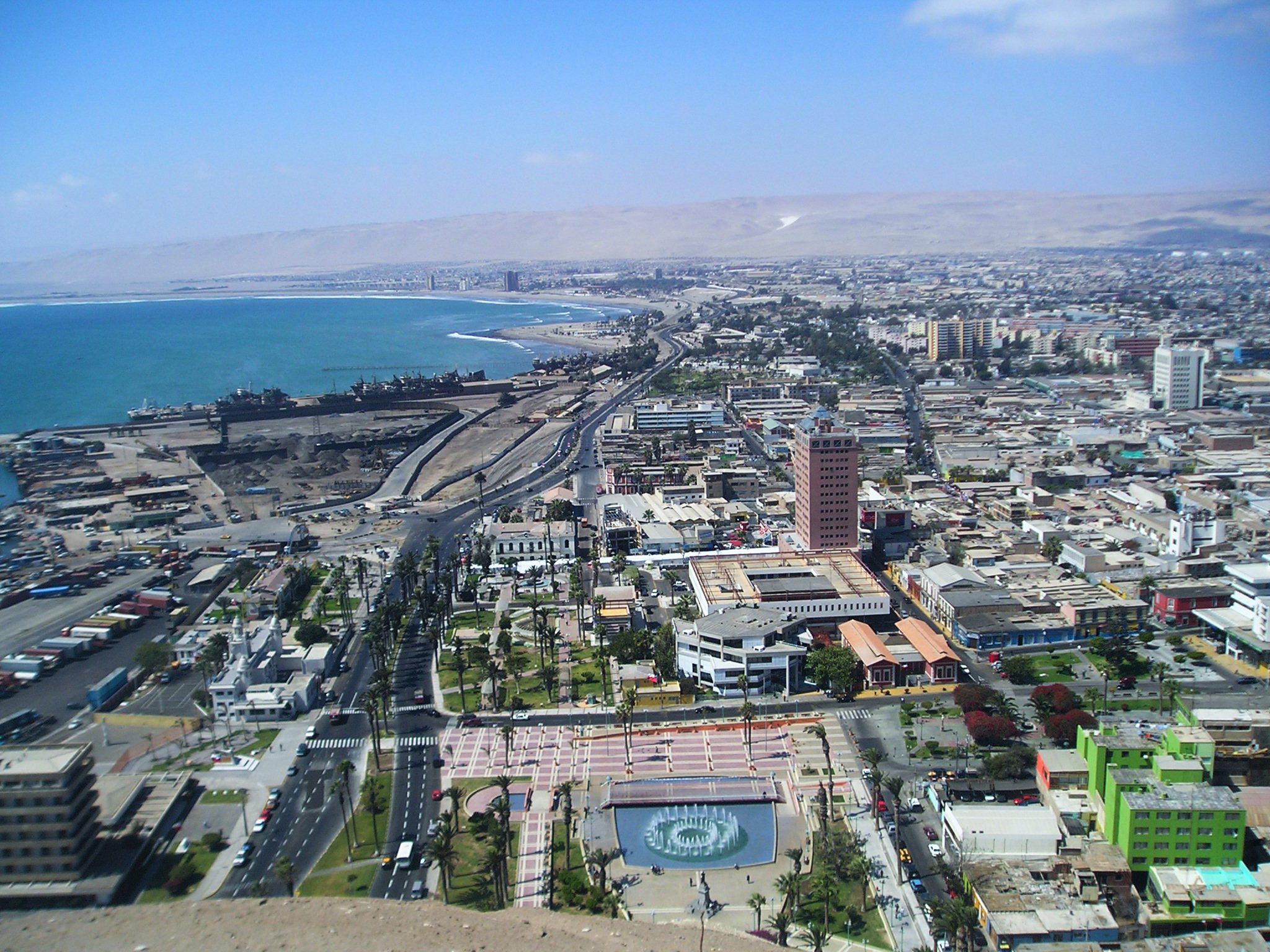
Arica sits in the far north of Chile, just a few kilometers from the Peruvian border, and holds the distinction of being one of the driest places on earth. Decades can pass without a drop of rain. It is a city that exists despite the desert, sustained by the sea, the Rio San José, and steady cross-border trade.
The town itself is pleasant and unhurried. The landmark most visitors photograph is the Iglesia San Marcos, a prefabricated iron church designed by Gustave Eiffel and erected in 1876 — one of three such structures he shipped to South America. The Morro de Arica, a dramatic cliff rising directly from the waterfront, offers sweeping views over the city and the Pacific. It was also the site of a decisive battle in the War of the Pacific in 1880.
Arica has good beaches and is popular with Chilean surfers. The Azapa Valley, just a short drive inland, is a green oasis threading through the desert, known for its olives and pre-Columbian mummies at the Museo Arqueológico San Miguel de Azapa. To the east, the road climbs rapidly into the Andes toward Parque Nacional Lauca, one of the finest altiplano landscapes in South America.
The border crossing into Tacna, Peru is busy and straightforward — many travelers pass through Arica as a transit point, but it rewards a day or two of genuine attention.