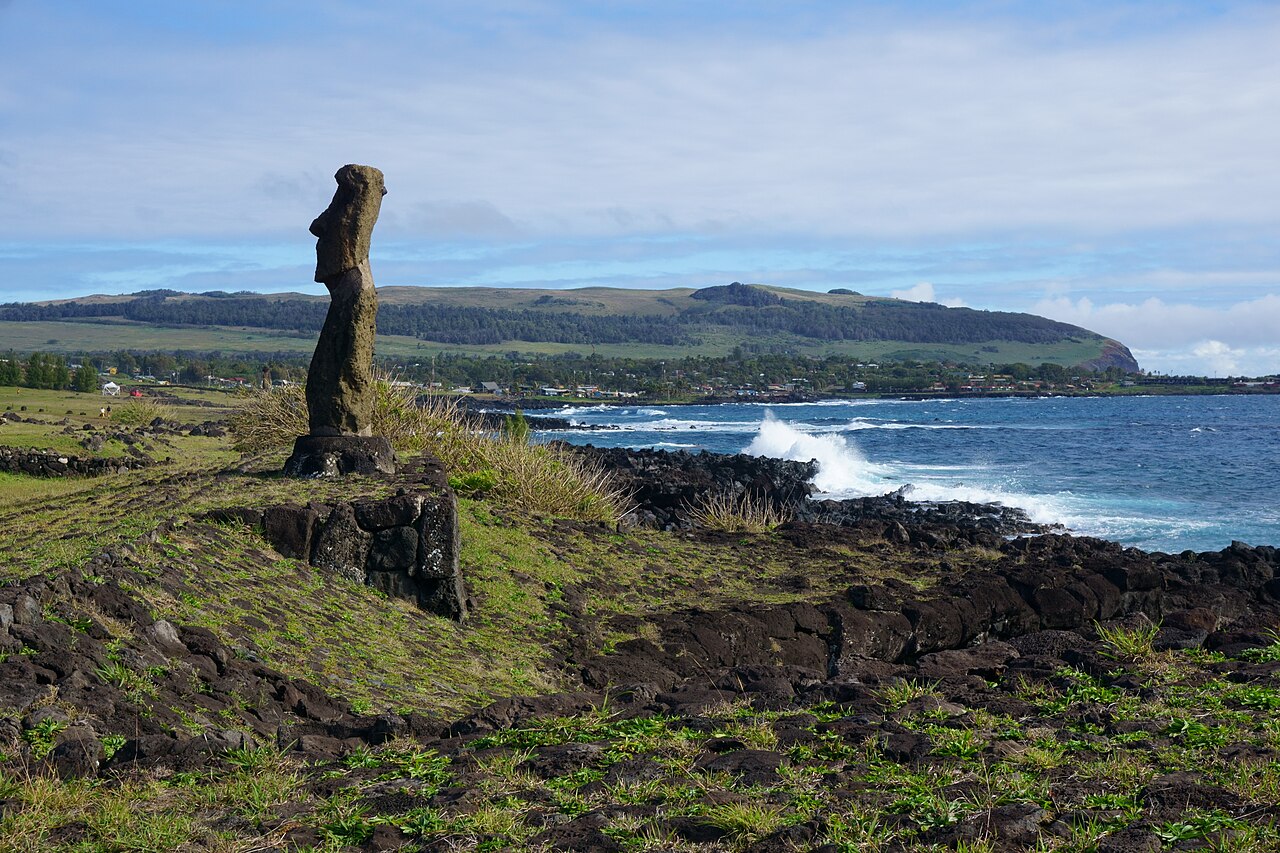
Easter Island — Rapa Nui, to the people who live there — is the most remote inhabited place on Earth. It sits alone in the south Pacific, 3,700 kilometres off the coast of Chile and more than 2,000 kilometres from the nearest other inhabited island. To get there you fly five hours from Santiago on the only airline that makes the trip. And when you land on the small triangular volcanic island, you find yourself surrounded by nearly a thousand giant stone heads — the moai — left behind by the Polynesian society that lived here between about 1200 and the 17th century, and that became one of the most famous cautionary tales in human history.
The moai are astonishing. They are also only part of the story. Ahu Tongariki, on the island's eastern coast, has fifteen of them lined up in front of the sea, their enormous backs to the Pacific, and in the right light it feels genuinely like being on another planet. The quarry at Rano Raraku, on the slopes of the volcano where all but the very earliest moai were carved, still holds nearly 400 statues in every stage of completion — some finished and walking away from the quarry, some half-emerged from the rock, one 21 metres long lying on its back unfinished. Ahu Tahai, on the west coast just outside Hanga Roa, is the one everyone goes to for sunset, the figures silhouetted against the orange-and-violet sky. And Orongo, on the rim of the Rano Kau crater at the south-western tip of the island, was the ceremonial centre of the later birdman cult — a strange, atmospheric clifftop village overlooking a sheer drop to the ocean and the three offshore islets where, every spring, a new leader was chosen by whoever could swim out and bring back the first sooty tern's egg.
Beyond the archaeology, the island is smaller and gentler than you expect — rolling volcanic grassland, wild horses grazing between the stones, a handful of red-sand and white-sand beaches (Anakena is the picture-postcard one, with palm trees and moai in the background), and the single dusty town of Hanga Roa, where most of the island's 8,000 people live. Four or five days is about right: enough to see the main sites, hike the Rano Kau crater, and spend an evening at one of the small restaurants eating fresh tuna and watching the stars come out over the ocean. Rent a small car or quad bike — the island is only 24 kilometres long and you can see most of it from the road.
Rapa Nui is expensive by South American standards, because everything except the fish has to be flown or shipped in. It is worth the money. Bring cash (the ATMs run dry), bring layers (the weather turns fast), and go before the island gets any more crowded: the Chilean government has been tightening visitor quotas since 2018, and the trajectory is clearly toward limiting numbers further.