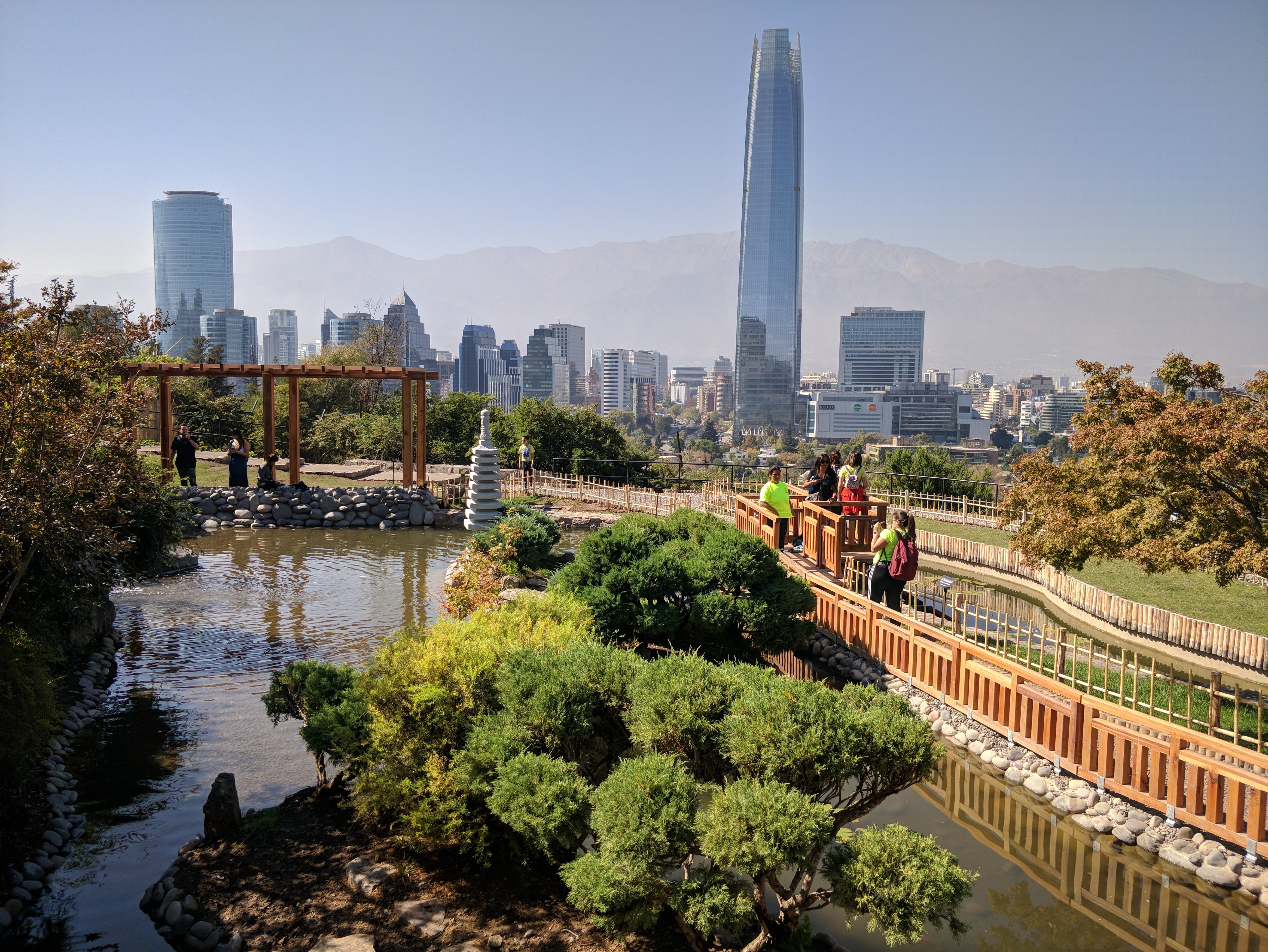
Santiago de Chile sits in a wide valley at 520 metres, with the snow-capped Andes rising to more than 6,000 metres immediately to the east — on clear winter days you can see the mountains from almost anywhere in the city, and the sight of a modern metropolis of seven million people backed by that wall of rock and ice is genuinely dramatic. It is not the prettiest Latin American capital (Lima, Buenos Aires, and Bogotá all have more colonial charm), and the air quality can be grim when the smog gets trapped in the valley. But Santiago has energy, excellent food, a strong cultural scene, and the kind of practical competence that makes it one of the easiest cities on the continent to navigate.
The centre of the city is the Plaza de Armas, the old colonial square with the cathedral, the post office, and the Museo Histórico Nacional. From there, Barrio Lastarria and Barrio Bellavista are the two neighbourhoods most worth exploring: Lastarria is the artsy, café-filled quarter south-east of the centre, with the Museo de Bellas Artes and the GAM cultural centre; Bellavista, across the Mapocho river at the foot of Cerro San Cristóbal, is the nightlife and restaurant district, and home to La Chascona, the Santiago house of Pablo Neruda. Take the funicular up Cerro San Cristóbal for the panoramic view — on a clear day the entire Andes cordillera is visible from Aconcagua to the Maipo volcanoes.
Santiago's food scene has become one of the best in South America. The Mercado Central, the 19th-century iron-framed fish market by the river, is the classic lunch stop — eat a plate of congrio frito (fried conger eel) or pastel de jaiba (crab pie) at one of the stalls in the centre, avoiding the tourist-priced restaurants around the edges. The Museo Chileno de Arte Precolombino and the Museo de la Memoria — which documents the Pinochet dictatorship — are essential. The Palacio La Moneda, bombed during the 1973 coup, is the physical centre of Chilean political history.
Day trips from Santiago are exceptional. Valparaíso, the colourful, crumbling port city an hour and a half west, is a UNESCO World Heritage site and a must. The ski resorts of Valle Nevado, La Parva, and El Colorado are barely an hour into the mountains. The Bahá'í Temple of South America, one of the most remarkable buildings completed in the Americas in the 21st century, is 30 minutes east of the centre.
The city's barrios are best understood as neighbourhoods with distinct characters: the historic Santiago Centro, the creative Barrio Italia, the bohemian Barrio Brasil, the upscale Providencia, the politically engaged Ñuñoa, and the wealthy Las Condes and Vitacura to the east.