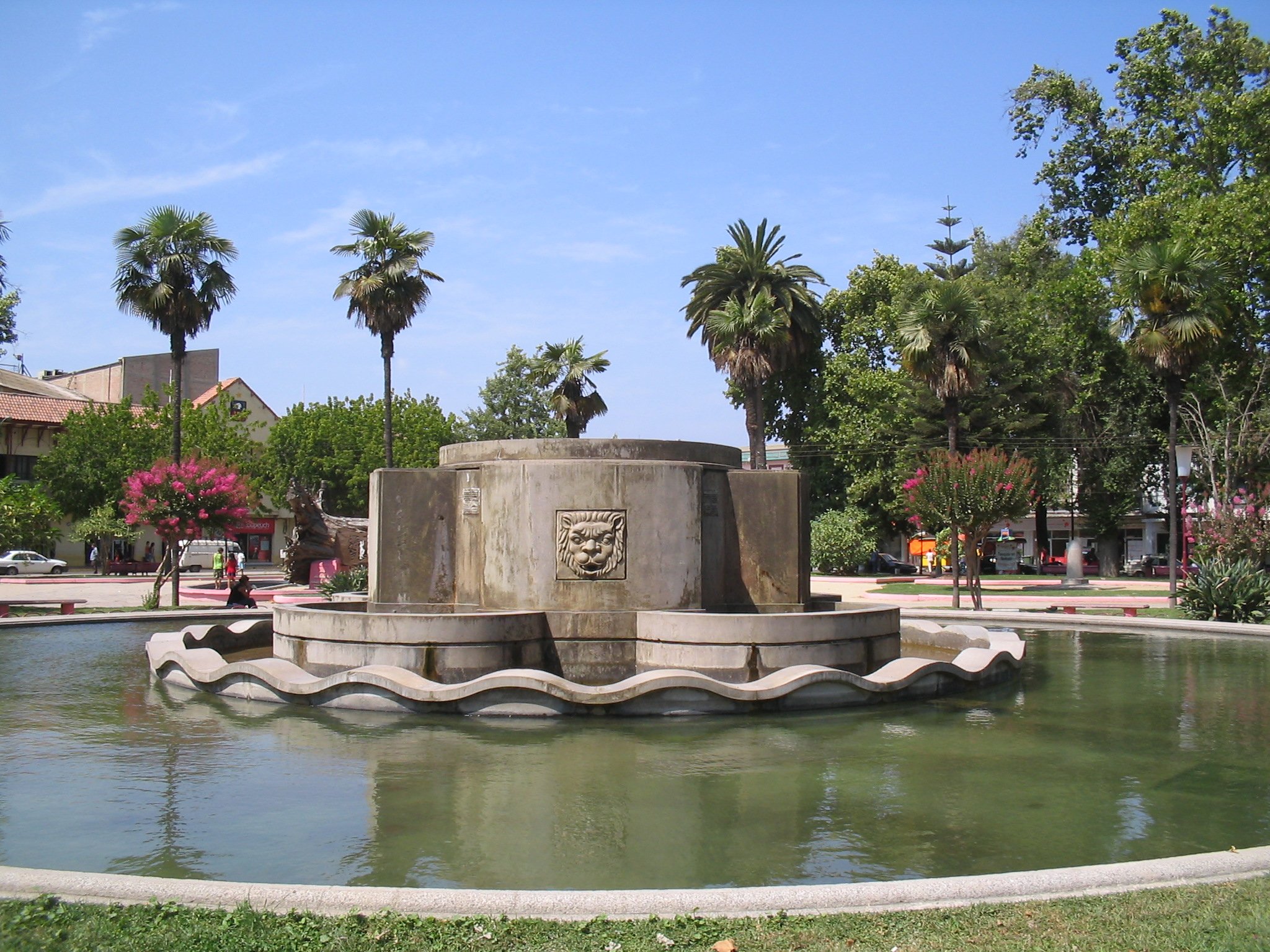
Quillota is a small agricultural city in the Aconcagua River valley, in Chile's Valparaíso region, about 120 km northwest of Santiago and 60 km from Valparaíso. It is the largest city in the valley and the capital of both the Quillota Province and the Quillota commune. The surrounding farmland — including the satellite areas of San Isidro, La Palma, Pocochay, and San Pedro — is known above all for avocado and cherimoya cultivation, and the city functions as the commercial hub for this productive agricultural zone. Quillota is connected to the nearby city of La Calera by the small town of La Cruz.
The valley has been inhabited for thousands of years. Before Spanish colonization, the area was home to peoples of the Bato and Lleo-Lleo cultures, later influenced by the Mapuche and Diaguita, who introduced the Aconcagua pottery tradition. Diego de Almagro passed through in 1536, and Pedro de Valdivia, arriving in 1540 as Governor of Chile, established farms and settlements throughout the valley. Quillota was formally founded as a city in 1717 under the name Villa de San Martín de la Concha de Quillota, by Bishop Luis Romero and Governor José Santiago Concha y Salvatierra.
Today Quillota is a quiet regional city without major tourist attractions, but it makes a convenient stop between Santiago and the coast, and the surrounding valley is pleasant and green. The Aconcagua River Valley itself is worth a slow drive or a cycle through — roadside stalls sell fresh cherimoyas and avocados at near-orchard prices. The Iglesia San Martín de Tours on the Plaza de Armas is the city's colonial heart, while the Estadio Municipal Lucio Fariña Fernández hosts lower-league football with genuine local atmosphere on match days.