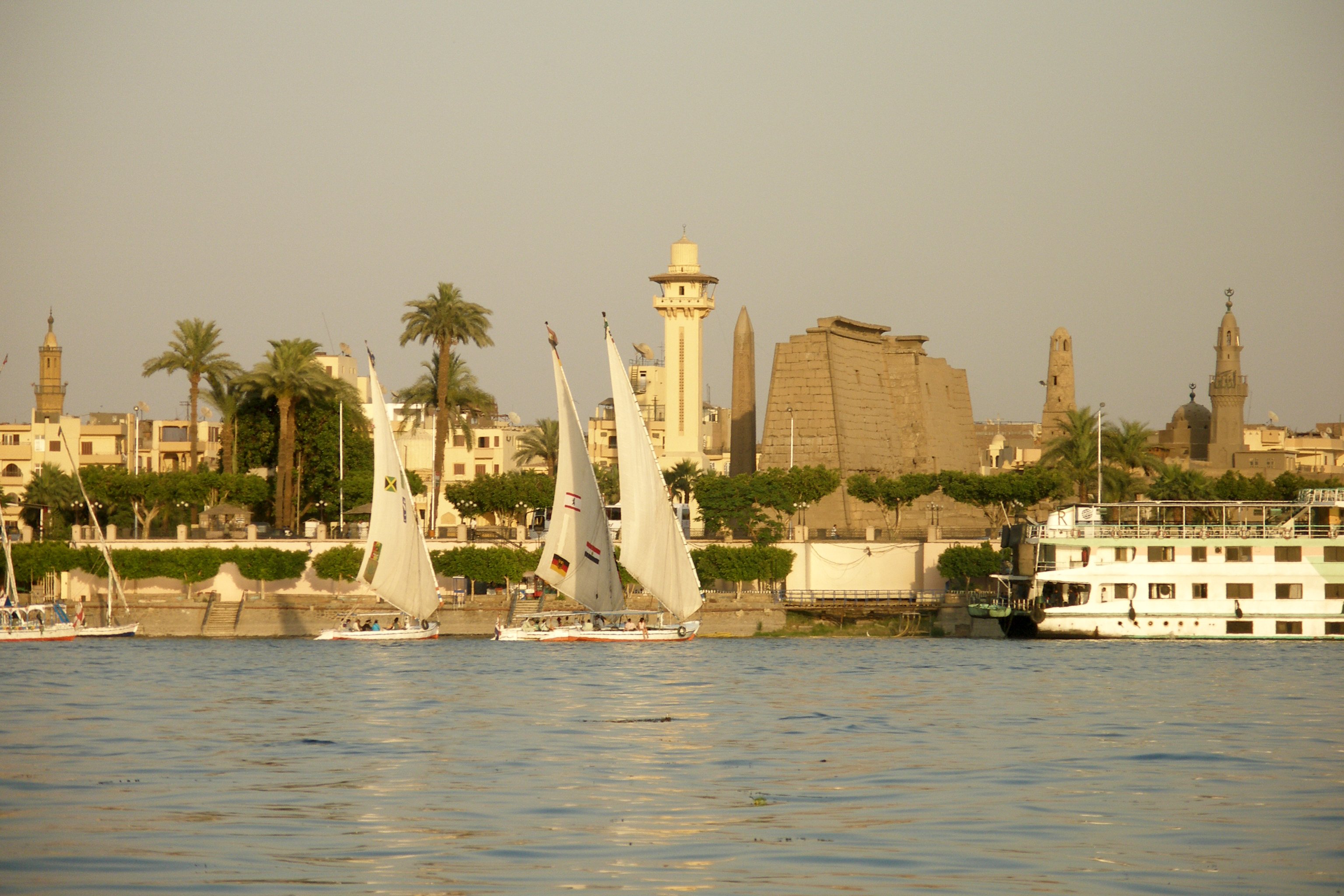
Luxor is built on top of ancient Thebes, and the weight of that history is everywhere. This was the capital of Egypt during the New Kingdom — arguably the most powerful civilization in the ancient world — and what remains is staggering: two enormous temple complexes on the East Bank, and across the Nile, an entire necropolis carved into the limestone cliffs of the West Bank. Few places on earth have this density of monumental architecture.
The Nile divides everything here. The East Bank is the living city, where Luxor Temple sits right on the Corniche and the vast complex at Karnak is a 20-minute walk away along a partly-excavated Avenue of Sphinxes. The West Bank is quieter, more agricultural, and still overwhelmingly ancient: the Valley of the Kings, the Valley of the Queens, the Temple of Hatshepsut, and the Colossi of Memnon are all within a few kilometers of each other.
The modern city is functional and not particularly charming, but it has everything you need. The tourist infrastructure is well-developed, which also means persistent hassle from vendors and touts near the main sites — it's worth accepting early on and not letting it ruin the experience. Prices for almost everything are negotiable.
Plan for at least two full days: one for each bank. Early starts are rewarded — the light is better, the heat is manageable, and the sites are quieter before the tour groups arrive. A hot-air balloon ride at sunrise over the West Bank is genuinely worth doing if conditions allow. The Luxor Museum and the Mummification Museum on the East Bank Corniche fill the gaps between outdoor sights.