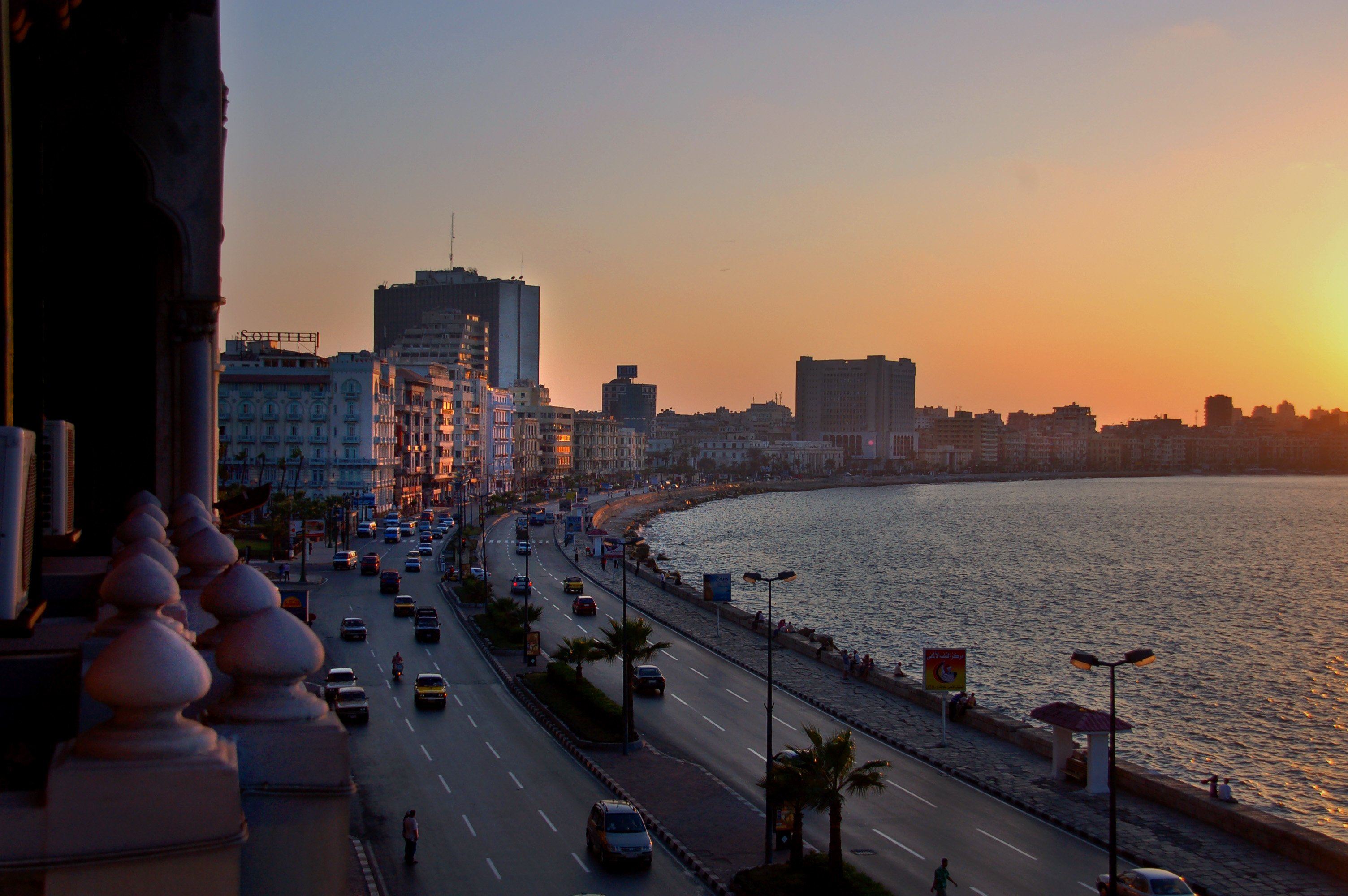
Alexandria is Egypt's great Mediterranean city -- a place where ancient history, faded European elegance, and modern Egyptian life collide along a curving seafront corniche. While most visitors to Egypt head south to the temples and tombs, Alexandria rewards those who turn north.
Founded by Alexander the Great around 331 BC, the city quickly became the intellectual capital of the ancient world. The great Library, the Lighthouse (one of the Seven Wonders), the scholars Euclid and Eratosthenes -- all belonged to Alexandria. Under the Ptolemies it was the most important center of Greek culture anywhere, and under Rome it remained Egypt's window to the Mediterranean. The Arabs arrived in the seventh century, but by then the Library had already been destroyed (twice, in fact -- so it was not the Arabs, as popular myth insists).
Today Alexandria is a city of more than five million people, Egypt's main port and its second city. The corniche stretches for miles along the waterfront, lined with crumbling art deco buildings and busy cafes. The atmosphere is distinctly different from Cairo -- cooler, breezier, more relaxed, with a Mediterranean sensibility that sets it apart from the rest of the country. In summer, Egyptians from Cairo and the Delta flood in to escape the heat, packing the beaches and fish restaurants.
The city's ancient treasures are mostly underground or underwater. You can dive to see the remains of Cleopatra's royal quarter and fragments of the Lighthouse scattered across the seabed. On land, the Roman theater at Kom el-Dikka, the eerie Catacombs of Kom el-Shoqafa, and the towering Pompey's Pillar give a sense of the city's layered past. The Citadel of Qaitbey, built on the very site of the ancient Lighthouse, is the city's most recognizable landmark. And the new Bibliotheca Alexandrina, opened in 2002, is a striking piece of modern architecture that consciously echoes the city's scholarly heritage.
But Alexandria is not just a museum. The fish restaurants along the corniche serve some of the best seafood in the Middle East. The old cafes -- places like Cap d'Or with its marble bar and French songs crackling from an ancient tape player -- preserve a vanishing world. The souks around Midan Tahrir are lively and authentic. And the beaches, while crowded in summer, stretch for miles in both directions.