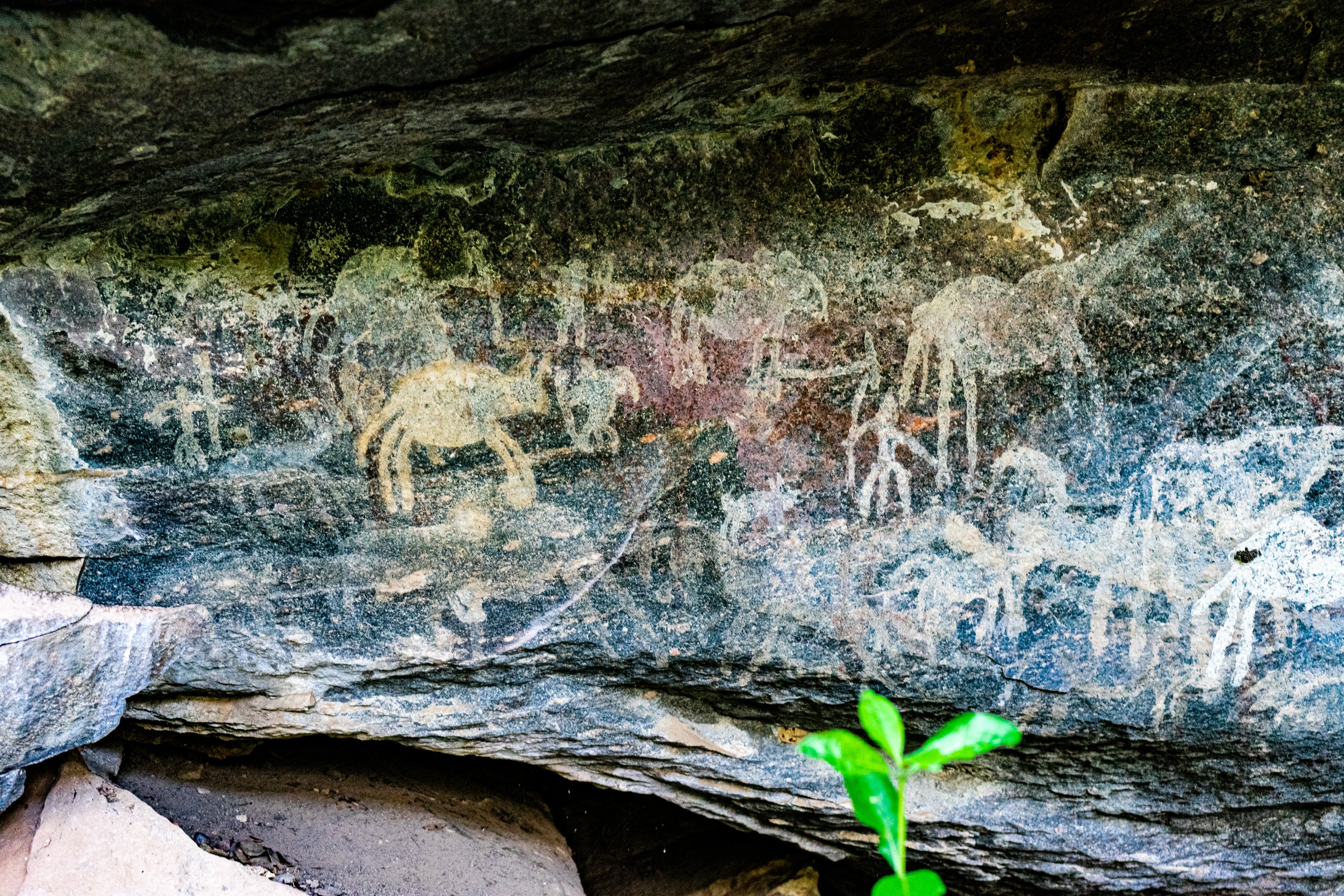
Kondoa (or Kondoa-Irangi) is a small, quiet town on Tanzania’s Central Plateau, strung along the old caravan route between the Indian Ocean and Lake Tanganyika. Most travellers pass through on the long road between Arusha and Dodoma without stopping. They are missing something. Thirty kilometres north of town, in the granite overhangs of the Irangi Hills, lies one of the most remarkable concentrations of prehistoric rock art in Africa — a UNESCO World Heritage Site that most visitors to Tanzania have never heard of.
The town itself is low-built and dusty, predominantly Muslim, and entirely unhurried. A 3 km road leads west from the main highway, crossing the Kondoa River on a narrow bridge — don’t photograph the bridge, as the police station has a clear view of it. Children greet foreigners with “Good morning, teacher!” at any hour. The artesian spring that made this a crucial watering point for nineteenth-century caravans still flows somewhere in the town centre. The German colonial buildings east of the bridge — including the substantial post office — now house district government offices.
The Irangi Hills surrounding the town are home to the Sandawe people, one of the last click-language-speaking communities in East Africa, with linguistic ties to the San of the Kalahari that stretch back tens of thousands of years. It was their ancestors who painted the thousands of images — animals, human figures, and ceremonial scenes — that cover the rock shelters near Kolo. Permits and a compulsory guide are arranged at the Department of Antiquities office in Kolo village.
The hills are also notable for dramatic, unsettling scenery: the Irangi Hills badlands near Haubi, accessible by four-wheel drive via the Gubali turn-off, show what decades of accelerated erosion have done to overgrazed hillsides. The ravines are deep enough and strange enough to constitute a real spectacle. The Haubi Catholic mission provides a reliable landmark and a welcome rest stop.
In April 1916, the town was briefly the pivot of the East African Campaign, when General Jan Smuts’s South African forces captured it and were then pinned down for weeks by German Schutztruppe firing from the escarpment above. The Battle of Kondoa Irangi is local legend; the ridgeline above the central market is where the German guns were positioned. Kondoa repays a day or two of slow attention.