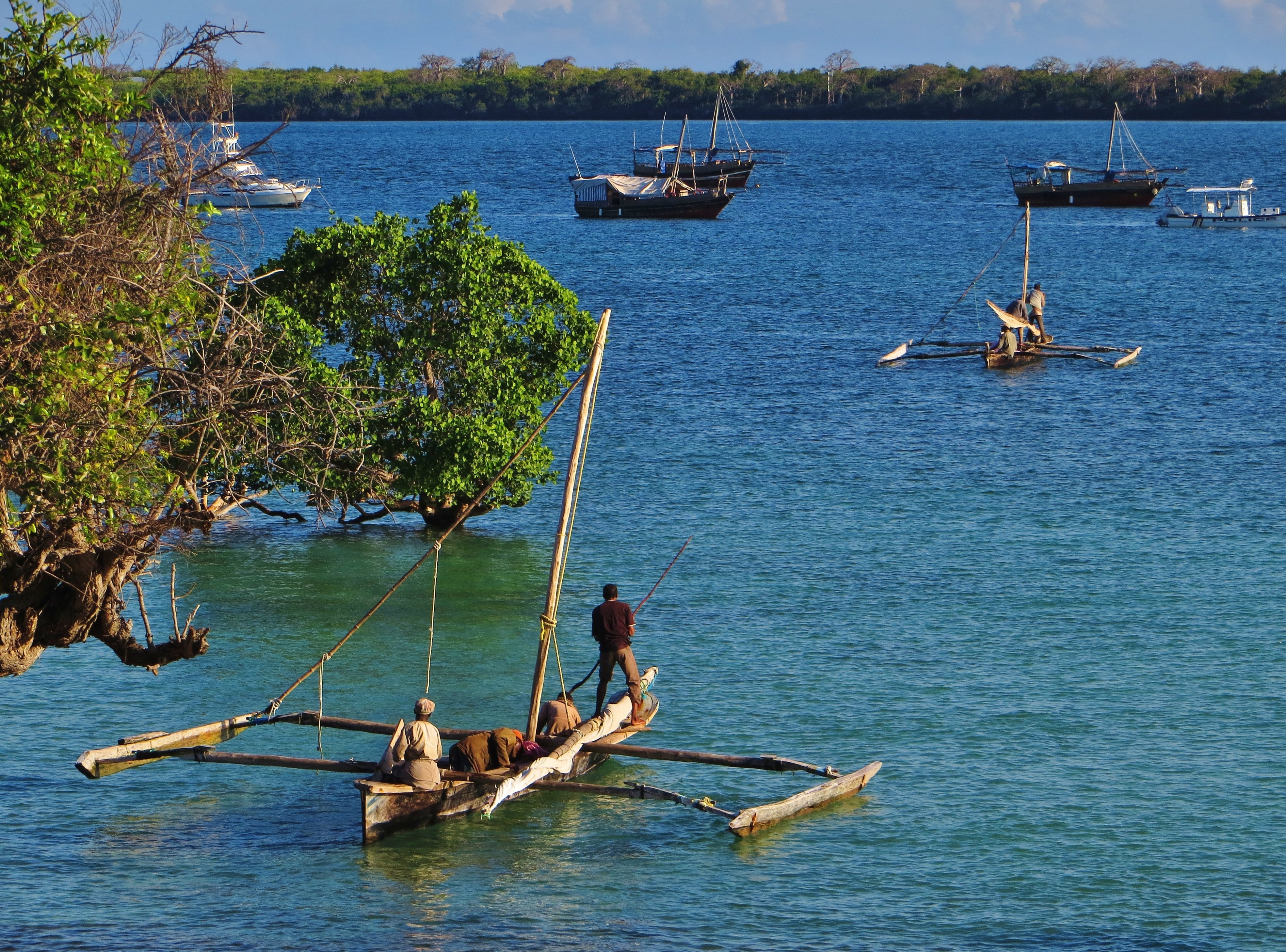
Tanzania's Swahili Coast stretches for more than 800 kilometres along the Indian Ocean, from the Kenyan border in the north to the Mozambique border in the south. For centuries it was one of the most cosmopolitan stretches of coastline in the world — a meeting point of African, Arab, Indian, and later Portuguese and German influences — and the evidence is still visible in the architecture, food, and culture of the coastal towns.
The coast is defined by its Arab-influenced Swahili trading towns: Bagamoyo, Kilwa Kisiwani (a UNESCO World Heritage Site with the ruins of a medieval Swahili city), and Tanga to the north. Many of these towns reached their peak during the 19th-century ivory and slave trade, and the carved doors and crumbling stone buildings that remain are a direct legacy of that era. A second medieval town, Songo Mnara, sits just south of Kilwa and is one of the best-preserved Swahili towns anywhere.
The beaches are excellent — white sand, warm water, and far less crowded than Zanzibar. Mafia Island, protected within a marine park, offers superb diving and snorkelling with far fewer divers. Pemba, to the north, is similarly quiet, with mangroves, clove plantations, and good diving along its reef walls.
Saadani National Park, just north of Bagamoyo, is Tanzania's only coastal wildlife reserve — a rare place where you can watch elephants, giraffe, and buffalo against a backdrop of the Indian Ocean. It sees relatively few visitors and is genuinely worth the effort.
Getting around the coast independently requires patience. Ferries and occasional bus services connect the main towns, but schedules are unreliable and distances are large. The reward is a stretch of Tanzania that feels genuinely off the beaten track.