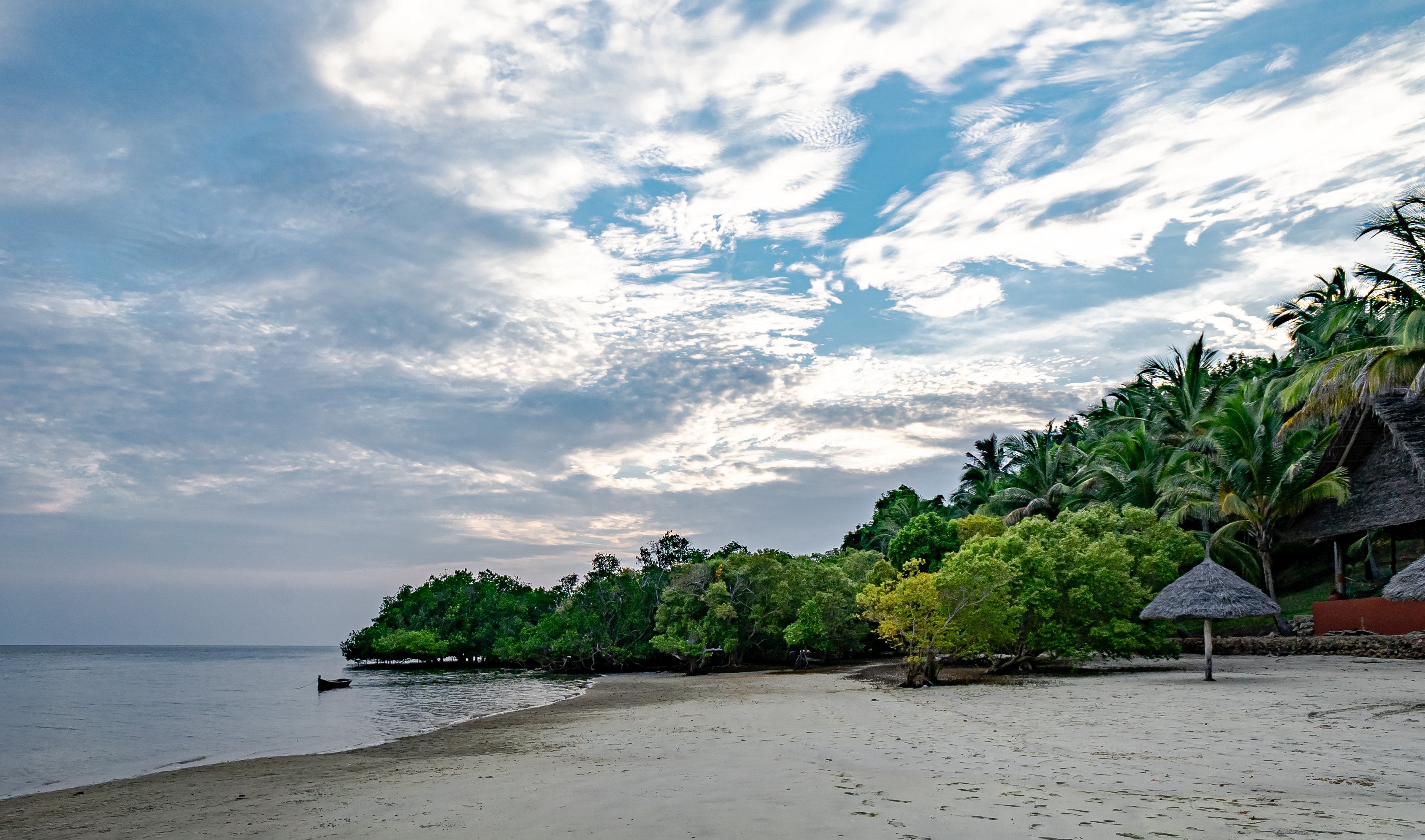
Low-key Tanzanian island south of Dar es Salaam, centred on Chole Bay and its protected marine park.
Mafia Island sits about 130 km south of Dar es Salaam in the Indian Ocean, and it is deliberately, pleasantly off the beaten track. There are no big resort hotels, no nightclubs, and very little tourist infrastructure — which is exactly the point. People come here for the water.
Chole Bay, Mafia's deep-water anchorage, forms the heart of the Mafia Island Marine Park. Its natural horseshoe shape shelters calm beaches and a lagoon that fills with whale sharks between October and March. Beyond the bay, the reefs open up into some of East Africa's best diving: coral gardens, dramatic walls, and shelves teeming with fish that have never seen much pressure from divers. The visibility is often exceptional.
On land, the island is quiet. The village of Kilindoni handles most of the logistics — a small market, a handful of guesthouses, a dhow harbour. The ruins of an Arab-Swahili settlement at Kua on the neighbouring island of Juani are worth the short boat ride for anyone interested in the coast's medieval trading history.
Guide
Getting There
Mafia Island is served by small-plane flights from Dar es Salaam, operated by Coastal Aviation, Auric Air, and Tropical Air. The flight takes 30–40 minutes. Flights are small (Cessna Caravan size) and luggage limits are strict — most airlines allow 15 kg total, including hand luggage. Book well in advance during whale shark season (October–March).
By sea, the journey from mainland Tanzania is possible via boat from Nyamisati to Kilindoni, but the crossing takes about 4.5 hours each way and the boat service is irregular. Most visitors fly both ways.
The island has no ATM. Bring cash — US dollars are widely accepted at lodges, Tanzanian shillings everywhere else. Credit cards are not accepted at most places. The internet is slow and intermittent.
Guide
When to Go
October to March is the prime season. This is when whale sharks congregate in Chole Bay, the sea is calm, and the rains are minimal. December through February is peak season; book flights and lodges months in advance.
April and May bring the long rains (masika). Many lodges close, flights become unreliable, and the seas can be rough. Avoid this period.
June to September is the short dry season. The whale sharks have typically moved on, but diving conditions can be excellent — calm seas, good visibility, and fewer visitors. This is the best time to come if marine life other than whale sharks is your priority, and prices are lower.
November is increasingly popular: the whale sharks have arrived, prices are not yet at peak, and the island is relatively quiet.