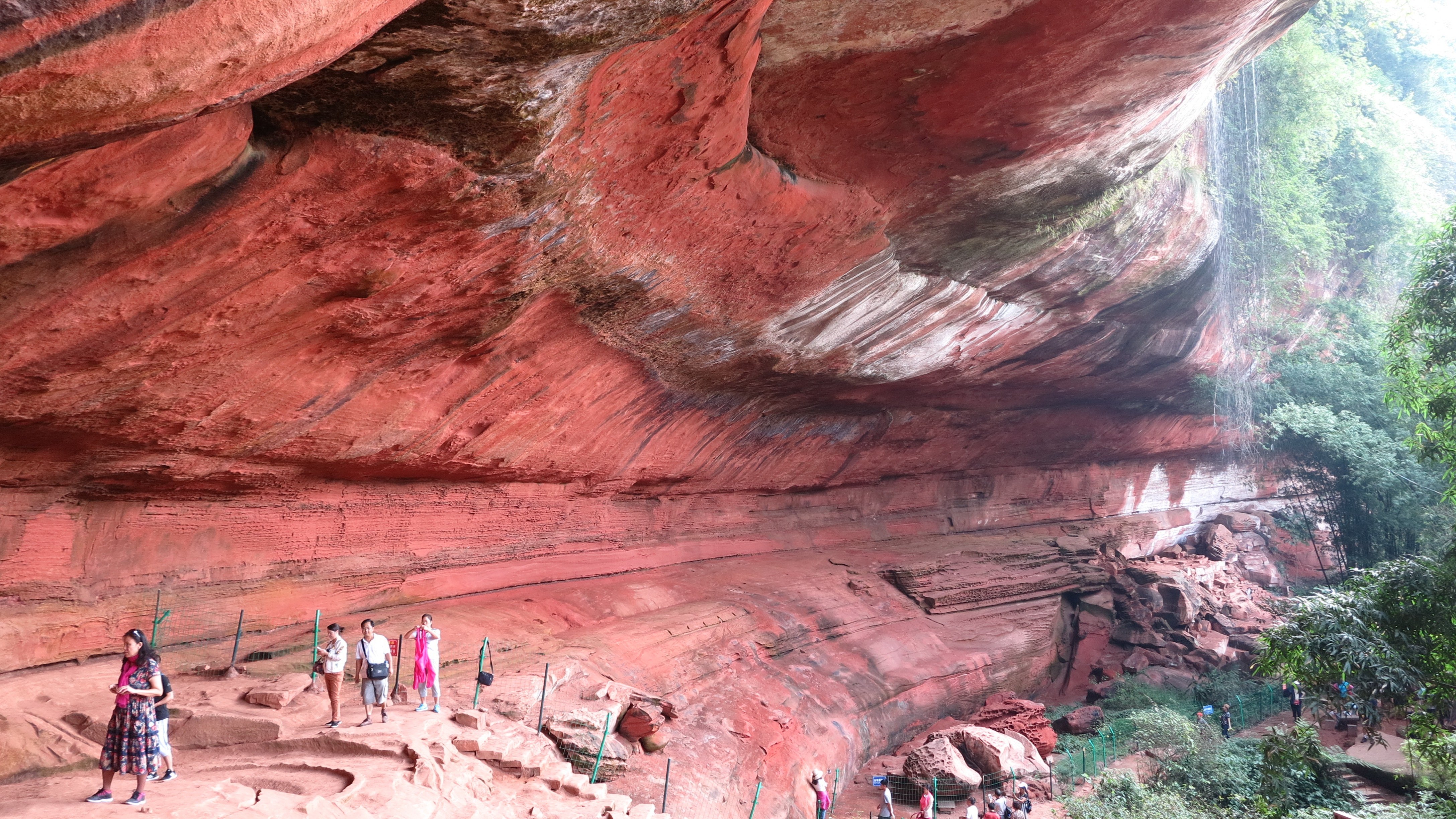
Chishui occupies the far north of Guizhou where the province meets Sichuan, at a lower elevation than most of the plateau — subtropical rather than temperate, and wet enough to support bamboo on a scale that turns the landscape green in a way that the limestone karst country further south doesn't. The city administers a UNESCO World Heritage landscape, the Chishui component of the China Danxia designation, which covers around 27,000 hectares of red sandstone formations cut through by river gorges and waterfall systems.
The Danxia geology here is the southern China variant: red Cretaceous sandstone and conglomerate, weathered and eroded into steep cliffs, rounded knobs, and river canyons over millions of years of tectonic uplift. The red rock against the bamboo forest — the Zhuyehai Bamboo Sea covers 87,000 hectares of the surrounding hills — produces a colour combination that doesn't quite fit the usual template of Chinese landscapes. The Sidonggou scenic area concentrates the most accessible waterfall systems, where the Danxia cliff faces are interrupted by cascades coming down from the plateau above. The longest drop in the area falls over 70 metres.
The Chishui River itself is historically significant: the Battle of Chishui in early 1935 was part of the Long March maneuver that the Communists executed in this region before the Zunyi Conference (see /asia/china/guizhou/zunyi), crossing the river four times in six weeks to confuse and exhaust the pursuing Nationalist forces. The battle demonstrated the mobile guerrilla strategy that Mao had just been empowered to implement, and the river valley is dotted with commemorative markers for visitors interested in that history.
Chishui is most easily reached from Zunyi (about 200 kilometres to the south) or from Luzhou in Sichuan to the north. The journey from Guiyang takes about four to five hours by road, which keeps the area less visited than more accessible parts of the province. The bamboo forest walks and Danxia viewpoints require at least two days to cover properly.