Guiyang is the capital of Guizhou and the obligatory transit hub for the province, though most travelers pass through faster than they should. The city sits at around 1,100 metres elevation, which gives it a temperate climate while the rest of subtropical China swelters: cool summers, mild winters, and a near-constant gentle overcast that the locals call "heavenly weather." It's a genuinely liveable city — not a showcase like Chengdu or Chongqing, but honest about what it is.
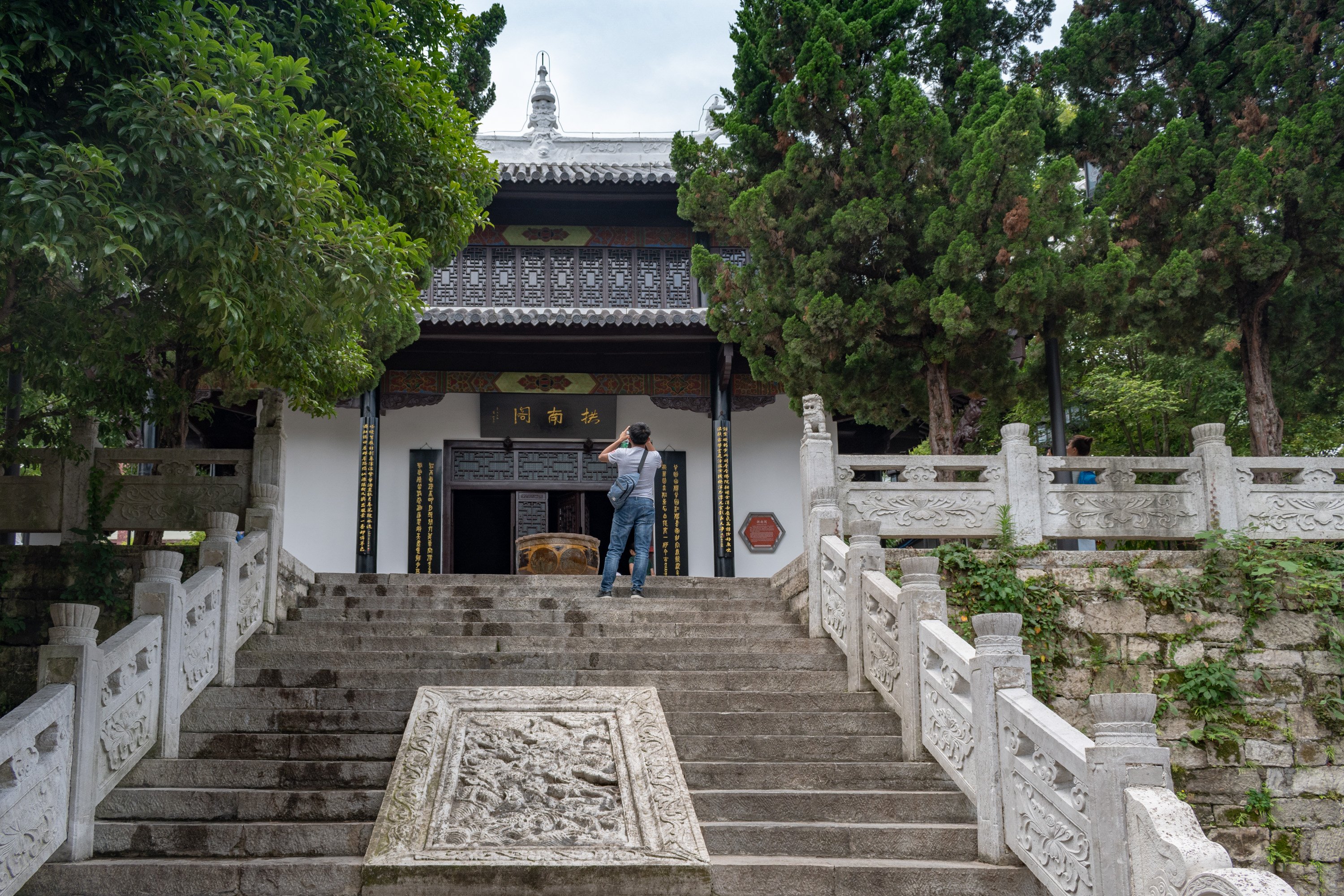
The single most photographed spot in Guiyang is Jiaxiu Pavilion, a three-storey Ming Dynasty tower perched on a boulder in the Nanming River. The name means "scholar who came first in the imperial examination," and there's something touching about this city planting its aspirations in the middle of a river. Qianlingshan Park, north of the centre, is where locals actually spend their time: a forested hill with a Qing Dynasty monastery at the top, wild macaques that have learned to steal snacks with professional efficiency, and tea gardens partway up. Hongfu Temple at the summit is working monastery, not a tourist performance.
The food in Guiyang deserves more attention than the city typically gets. Guizhou cuisine is one of the least-known of China's major regional styles, built around sour fermented flavours rather than the oily richness of Sichuan. Suan tang yu — sour fish hotpot made with fermented tofu and wild greens — is the signature dish; a proper version bears no resemblance to what restaurants elsewhere call "sour fish soup." The street food around Zhongshan Road runs to rice noodles in broth spiked with chilli oil, thin rice-flour pancakes called silk babies wrapped around pickled vegetables, and a dozen variations on grilled skewers. The Guizhou Provincial Museum has the best introduction to the province's extraordinary ethnic diversity.
Guiyang has good high-speed rail connections to Chongqing (about two hours) and Kunming (about two and a half), which makes it a logical base for exploring the province. For day trips, Qingyan Ancient Town (see /asia/china/guizhou/qingyan) lies 29 kilometres south — a walled Ming-era settlement that has held its form better than most. The metro system, built from scratch in the 2010s, covers the main districts adequately and costs almost nothing.