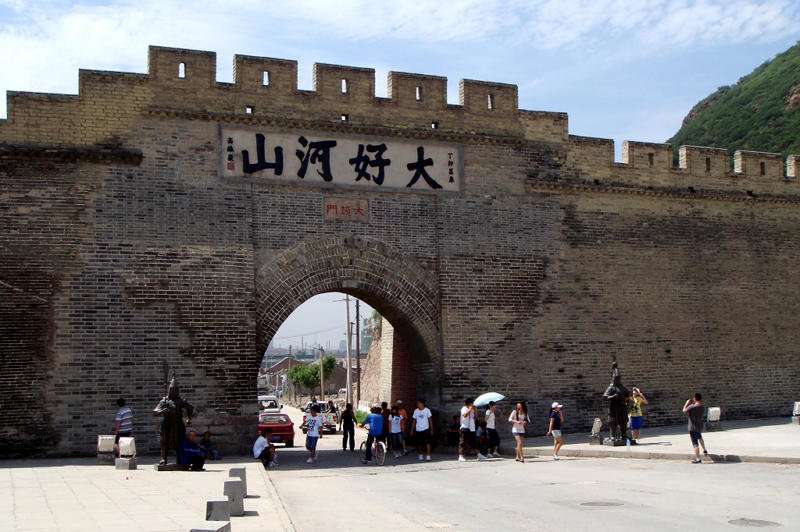
Zhangjiakou sits at one of the natural gateways through the mountains that separate the North China Plain from the Mongolian Plateau, and it has played that geographic role for centuries. The Dajingmen gate, built around 1644 at the northern end of the old city, marks the spot where the Great Wall crosses the Mongolian borderland — not a dramatic clifftop section but a working military passage through which enormous quantities of trade goods and livestock moved during the Qing dynasty. By the nineteenth century the city had Russian merchants with permanent warehouses outside the gate, buying tea and silks for the overland route north.
The Chongli ski resorts, about ninety minutes to the northeast, transformed the city's identity when they hosted the Nordic and freestyle skiing events of the 2022 Beijing Winter Olympics. The ski resorts built for those games are now among the most developed in China, with a range of runs and modern lift infrastructure. Winter weekends attract crowds from Beijing, but the off-peak seasons on either side are quiet and the conditions are reliable from December through March. The Grassland Sky Road west of the city offers a driving route through rolling uplands with views that change dramatically between the yellow summers and the bleached winters.
For a historical counterpoint to the ski lifts, the Xuanhua district south of the city centre contains one of the oldest and least-visited Buddhist temple complexes in Hebei. The Xuanhua Huayan Temple there holds a library pavilion of exceptional quality, with carved wooden bookshelves that date from the Liao dynasty. Most visitors to Zhangjiakou miss it entirely in favour of the ski runs, which is their loss.
The city is three hours from Beijing by fast train, making it a reasonable winter sports destination without an expensive flight. In summer the cooler temperatures — the elevation runs high — draw cyclists and hikers who find the North China Plain stifling.