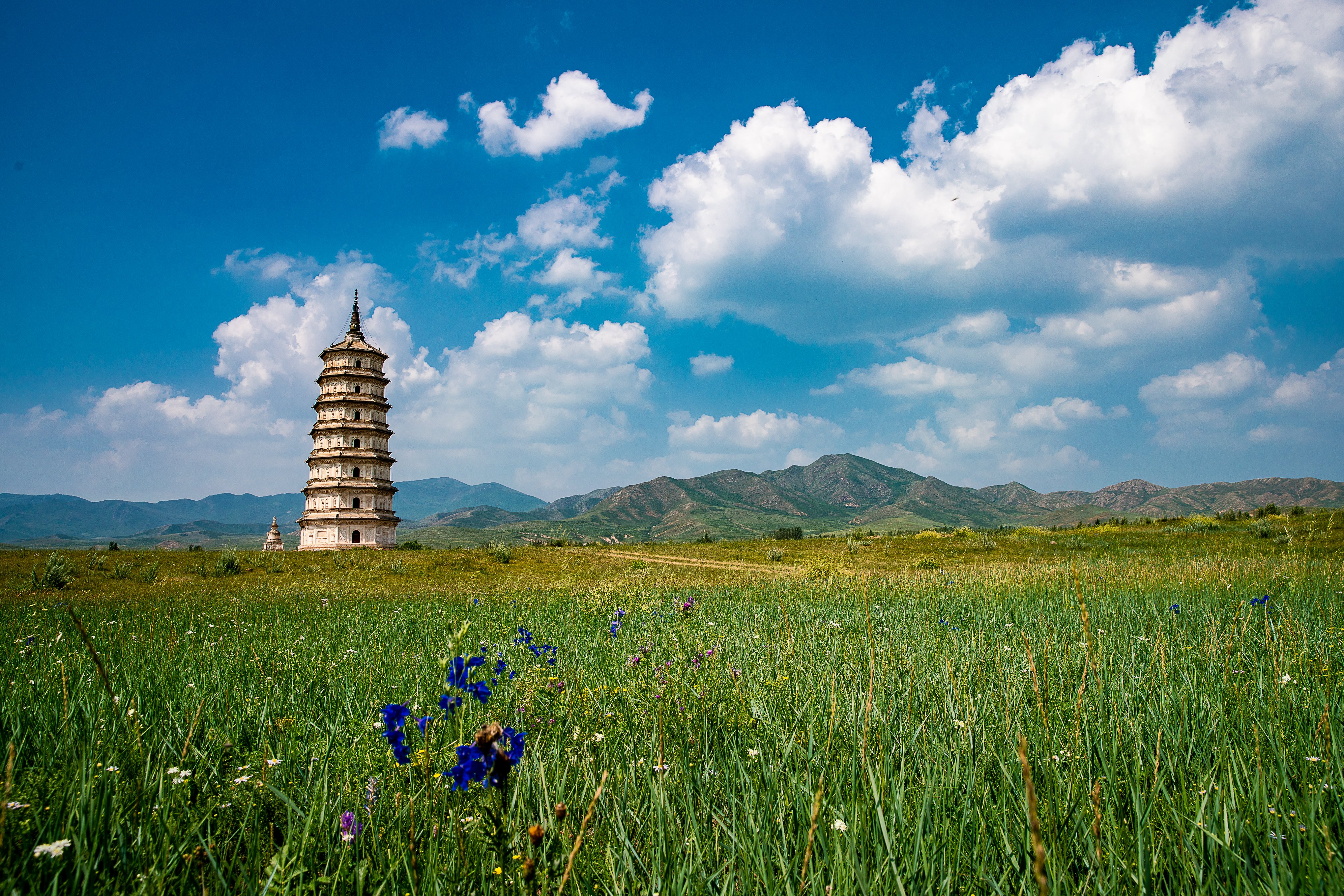
Chifeng sits in the southeastern corner of Inner Mongolia, closer culturally and geographically to Manchuria than to the grassland heartland further west. It is a large prefecture-level city with a mixed Han and Mongolian population, and its main draw for travellers is the extraordinary geology and landscape of the surrounding Hexigten area — a UNESCO Global Geopark that ranks among the more rewarding off-the-beaten-path destinations in northern China.
The Arshihaty Stone Forest, about 200 kilometres northwest of the city centre, is the Hexigten UNESCO Global Geopark's signature attraction. It is not a forest in any conventional sense but a field of granite pillars, stalagmites, and eroded columns rising from the steppe, shaped by millennia of freeze-thaw weathering. The result is an alien landscape that rewards slow exploration on foot. The geopark also contains significant volcanic basalt formations, glacial landforms, and a large freshwater lake at Dali (not to be confused with the more famous Dali in Yunnan), which offers boat trips and decent birdwatching in the reedy shallows.
Chifeng itself has a compact old quarter where Mongolian food culture is still visible — hand-caught lamb, roasted whole sheep for large groups, and milk tea are standard fare in the city's better restaurants. The local red pottery tradition produces distinctive earthenware that has been made in the region for thousands of years, and the Chifeng Museum covers the Hongshan culture, an important neolithic civilisation whose jade artefacts were first identified near here.
Getting to Chifeng from Beijing takes about six or seven hours by direct bus or train, and the city has an airport (code CIF) with connections to Beijing and several other Chinese cities. The geopark sites require either a private car or joining an organised tour from the city; distances are significant, and public transport to the remote sections is limited. Summer is the right season, when the grasslands around the stone formations are green and the lake is accessible.