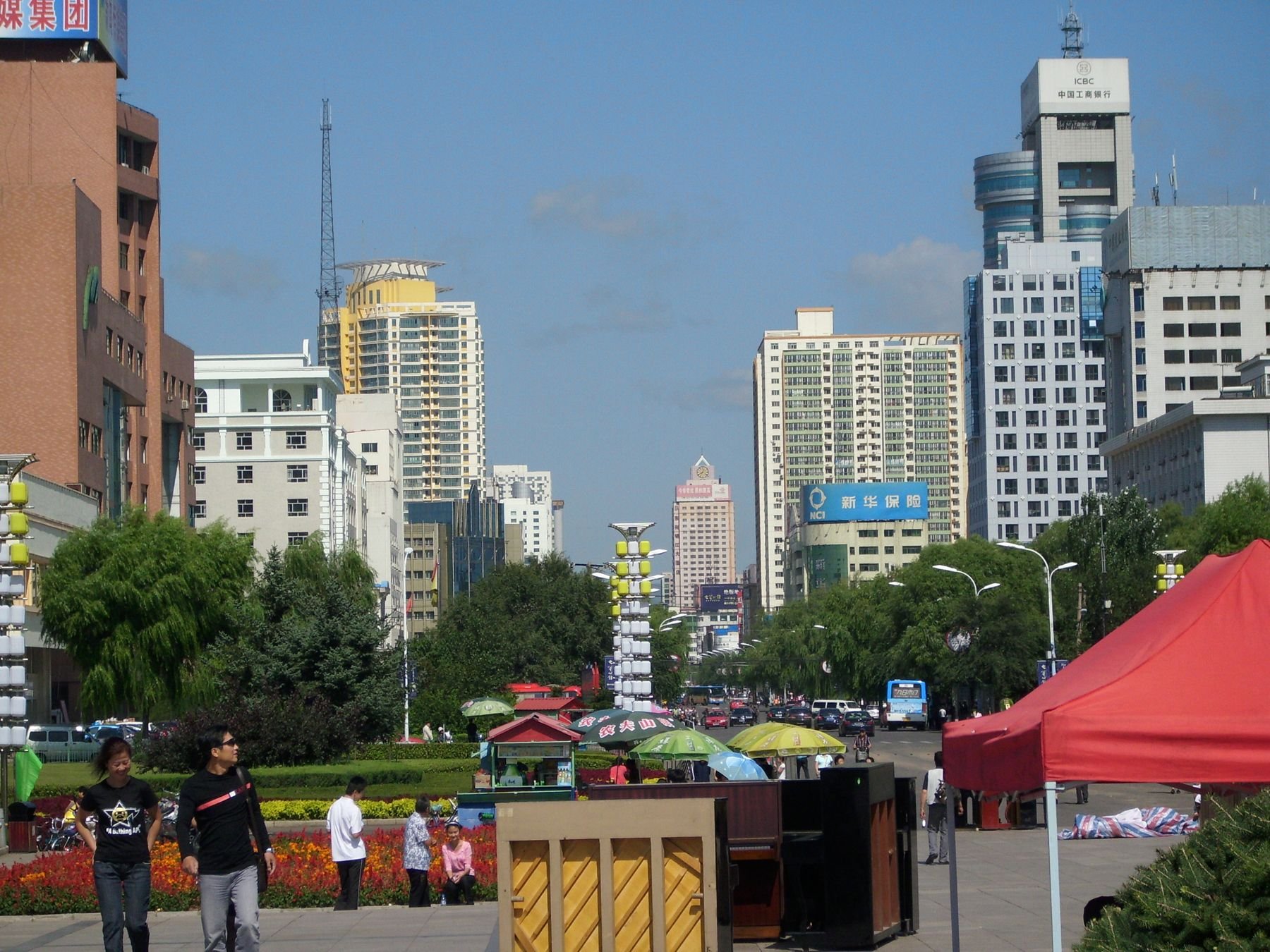
Eastern Heilongjiang city in the Mudan River valley, used as the gateway to volcanic Jingpo Lake.
Mudanjiang is the gateway to eastern Heilongjiang, a mid-sized city in the Mudan River valley that most visitors treat as a base for the surrounding landscapes rather than as a destination itself. That is fair: the city is pleasant but not remarkable. What lies around it, however, is excellent.
Jingpo Lake (Jingpohu), 90 kilometres south in the county of Ning'an, is the main reason to make the trip. China's largest mountain barrier lake — formed when lava flows dammed a river valley tens of thousands of years ago — stretches 45 kilometres through forested hills. The name means "Mirror Lake," which is accurate on calm days when the pine-clad shore reflects perfectly in the dark water. Boat trips, hiking trails, and a famous waterfall (Diaoshuilou, one of the largest volcanic waterfalls in Asia) fill a full day easily. In summer the lake is busy with Chinese tourists; in autumn the larch and birch forest around it turn vivid yellow.
Snow Town (Xuexiang), in the mountains about 200 kilometres southwest of Mudanjiang, is one of the most-photographed winter landscapes in China: a small mountain village where the snow falls so heavily from late October that the rooftops are buried under enormous mushroom-shaped drifts, and the pine trees are bowed double. It looks like a children's illustration of winter and is genuinely beautiful. Getting there in winter involves some planning, but tour operators in Mudanjiang and Harbin run regular trips.
The Bohai State site near Ning'an preserves the ruins of the capital of the Bohai Kingdom, which controlled much of northeast Asia from the 7th to 10th centuries before its destruction by the Khitan. The site museum has good exhibits on a kingdom that is largely forgotten outside the region.
Mudanjiang connects to Harbin by high-speed rail in under two hours, and has direct train connections to Beijing.
Guide
Getting There
Mudanjiang is well connected by rail, which is the most convenient approach from most of Heilongjiang.
By high-speed rail: The most comfortable option is the high-speed train from Harbin, which covers the distance in under two hours. This service is frequent and reliable, making a day trip from Harbin technically feasible, though an overnight stay is far more rewarding.
By conventional rail: Direct train services connect Mudanjiang to Beijing and other major cities, including overnight sleeper services. The Mudanjiang Hailang International Airport also has direct flights to a handful of Chinese cities for those arriving from further afield.
By bus: Buses connect Mudanjiang to Suifenhe (the Russian border crossing, about 130 kilometres east) and to other regional towns. The bus station is centrally located and the services are reliable.
Guide
When to Go
The timing of a Mudanjiang visit is almost entirely determined by Snow Town and Jingpo Lake — and these two attractions favour opposite seasons.
Winter (December–February) is the peak season for Snow Town, when the village's legendary snowfall is at its deepest. Temperatures in Mudanjiang itself drop to -20°C or lower; that is cold, but the city has good indoor infrastructure and the journey to Snow Town is perfectly manageable in the right clothing.
Summer (June–August) is when Jingpo Lake is most accessible and attractive. The water is navigable, the forest is green, and the boat trips run frequently. The waterfall is at its most powerful after the spring snowmelt. Mudanjiang in summer is warm, occasionally hot, with temperatures reaching 30°C.
Autumn (September–October) offers an underrated window: Jingpo Lake's deciduous forest turns yellow and orange, the tourist crowds thin considerably, and the weather is clear and cool. This is arguably the best time to visit if you have flexibility.
Spring (April–May) is muddy and damp, and Snow Town's snowdrifts are melting. There is little reason to visit then unless you are passing through.