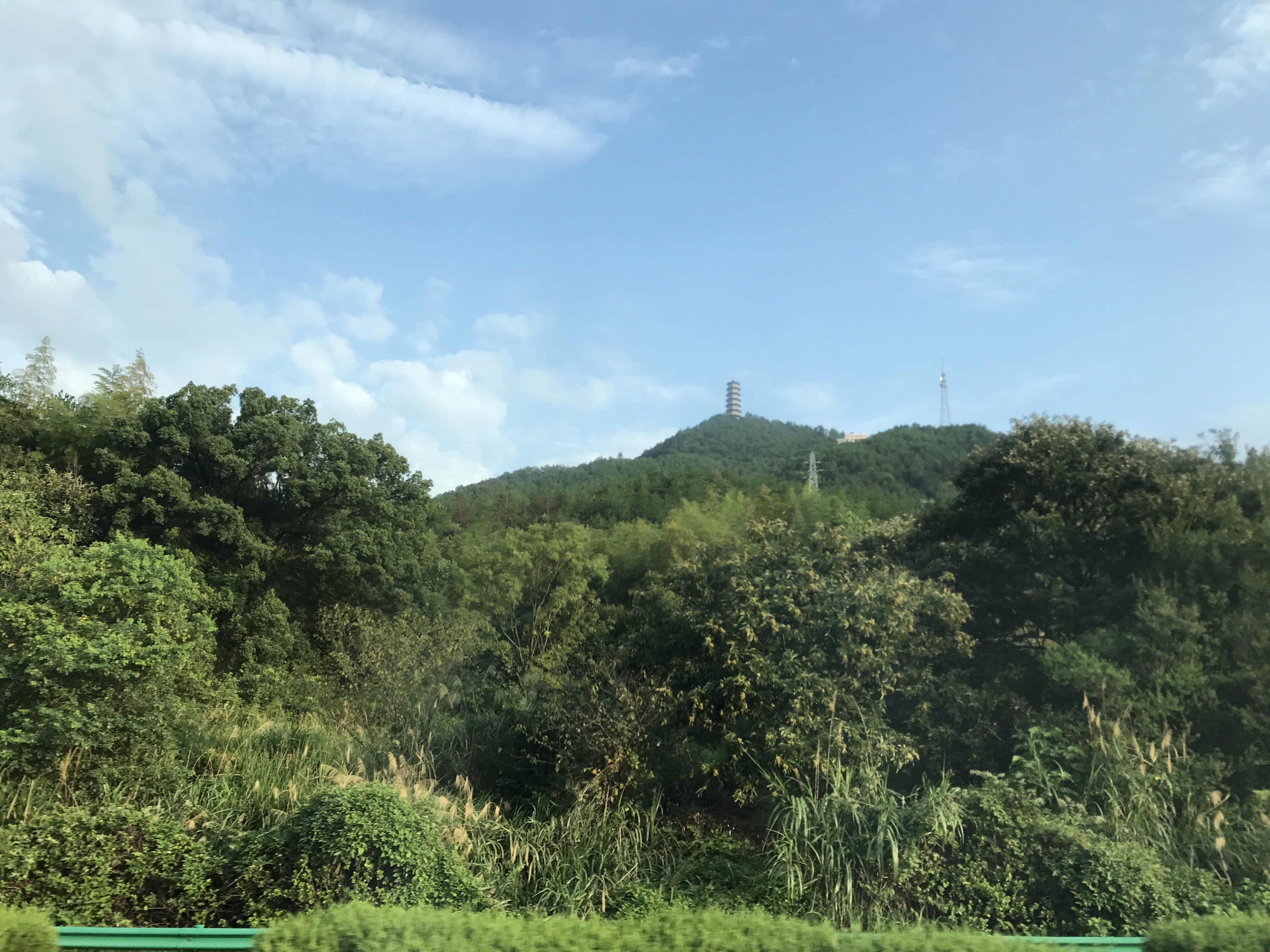
Huanggang occupies a long stretch of the Yangtze's north bank east of Wuhan, a prefecture of nearly six million people whose territory extends from the river plain up into the Dabie Mountains that form the border with Anhui and Henan. The city proper — historically called Huangzhou — has a layered literary history that most visitors overlook: this is where Su Dongpo, one of the most celebrated poets and essayists of the Song dynasty, spent four years in exile in the 1080s after running afoul of Wang Anshi's reform faction at court. He wrote some of his best-known work here, including the two Red Cliff rhapsodies that meditate on impermanence using the Yangtze river and the Battle of Red Cliffs as their frame. The Red Cliff site he describes is a riverside outcrop near the city, which may or may not be the actual battle site (Chibi, further upstream, also claims the honour), but the setting is evocative and the Yiai Lake Park, which incorporates a Su Dongpo Memorial Museum, handles the story well.
The Huangzhou Ancient City site preserves Song dynasty structures alongside later Ming and Qing architecture; it is a genuine historic quarter rather than a reconstruction, though it requires some patience to read. The broader prefecture is better known for its mountains than its riverside towns. Tiantangzhai, in Luotian County, is a mountain watershed area at nearly 1,730 metres with the quality of scenery — forested ridges, waterfalls, a glacial pond — that elsewhere in China would attract enormous crowds but here remains relatively quiet. Taohuachong in Yingshan County and Triangle Mountain in Xishui County are similarly rewarding for hikers.
Huanggang is also famous across China for a reason that has nothing to do with tourism: the annual National College Entrance Examination results from Huanggang's high schools are consistently among the highest in the country. The city has a reputation for academic rigour that is partly a source of local pride and partly a byword for a certain kind of pressured Chinese childhood.
The city is on the high-speed rail network east of Wuhan and makes a practical base for the Dabie Mountains. The river embankment and Yiai Lake are pleasant for an evening walk; the best food in the prefecture tends to be fish, particularly the river crabs from the Yangtze tributaries in autumn.