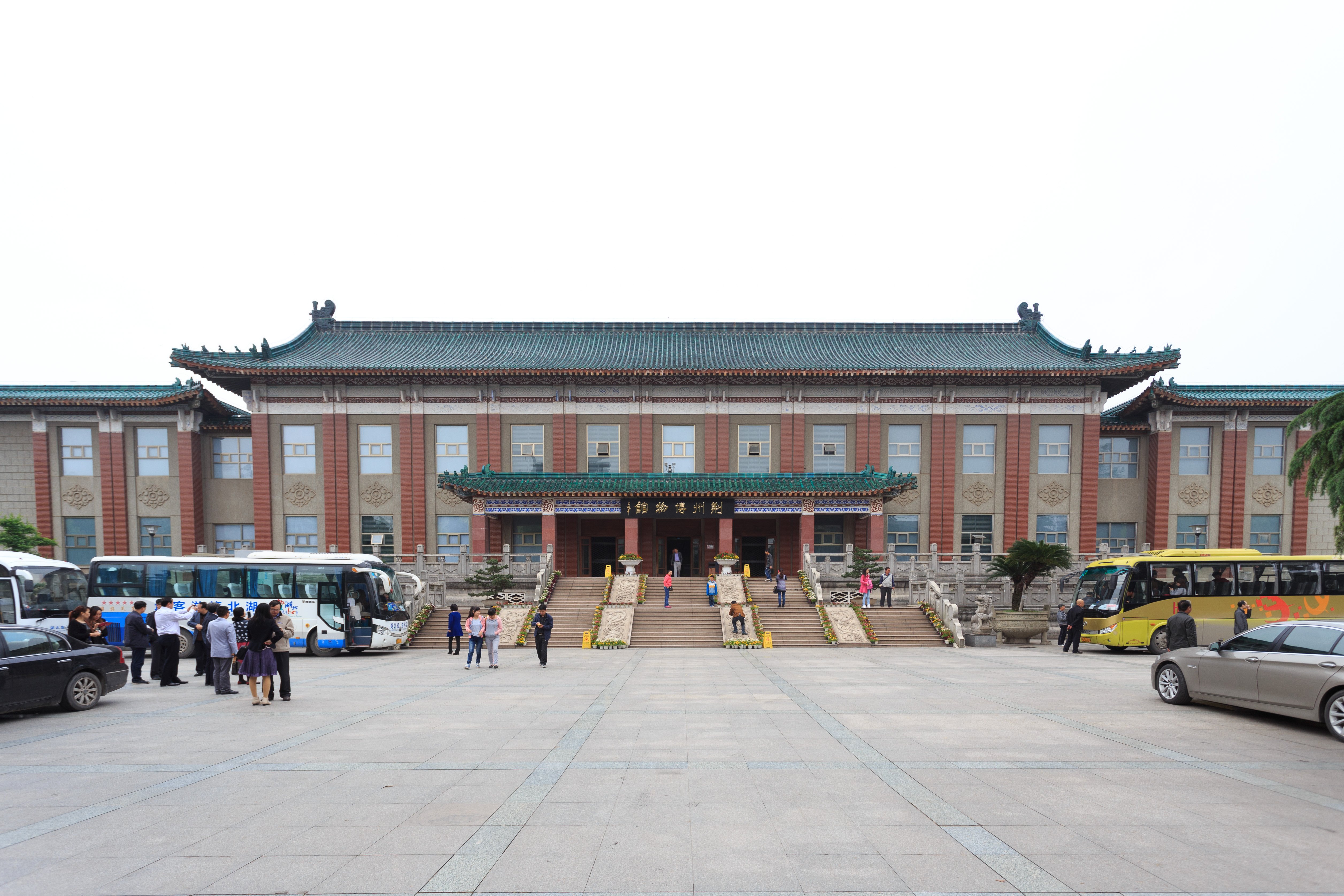
Jingzhou is one of those Chinese cities where the weight of history is impossible to ignore. For nearly four centuries, from around 689 BCE, this was Ying — capital of the State of Chu, one of the great powers of the Warring States period. The Chu left behind five city sites, over eight hundred ancient tombs, and a culture so distinct that modern archaeologists still treat it as a separate civilizational strand within ancient China. The Jingzhou Museum puts the best of it in front of you: Han-era silk garments woven with impossible delicacy, lacquerware from the Warring States period in near-perfect condition, and a two-thousand-year-old male corpse recovered from a Han tomb, preserved in enough detail to read the expression on his face.
The city walls are the other reason to come. What you walk around today is largely a seventeenth-century reconstruction, but the scale is still staggering — nine metres high, ten metres thick, circling ten kilometres with intact watchtowers and nine gates. The rampart path around the outside of the walls makes a good two-hour circuit. Jingzhou also sits deep in Three Kingdoms country: it was here that the general Guan Yu held the city for Liu Bei's kingdom of Shu, and his eventual loss of it to Eastern Wu gave rise to the proverb still used in Chinese today — "carelessness lost Jingzhou" — as a warning about complacency at the moment of success.
The broader prefecture sits in the middle of the Jianghan Plain, where the Yangtze spreads across flat farmland and the land is threaded with lakes and fish ponds. The region calls itself the "Land of Fish and Rice," which is accurate: the food leans heavily on freshwater fish, river crab, and lotus root dishes prepared half a dozen ways. The Guandi Temple, one of four major memorial sites to Guan Yu in China, is worth a look even for those indifferent to Three Kingdoms history — it is well-kept and rarely crowded in a way that similar sites in more tourist-heavy cities are not.
Getting here is straightforward: Jingzhou sits on the rail line between Wuhan and Yichang, making it a natural stop on a traverse of central Hubei. The old city is compact and walkable once you are inside the walls. The Chuwang Chariot and Horse Formation — a national archaeological park containing 138 burial tombs, 40 chariot pits, and over 200 sacrificial pits — is worth the short taxi ride out of the city centre if you have any interest in what elite Chu burial practice actually looked like.