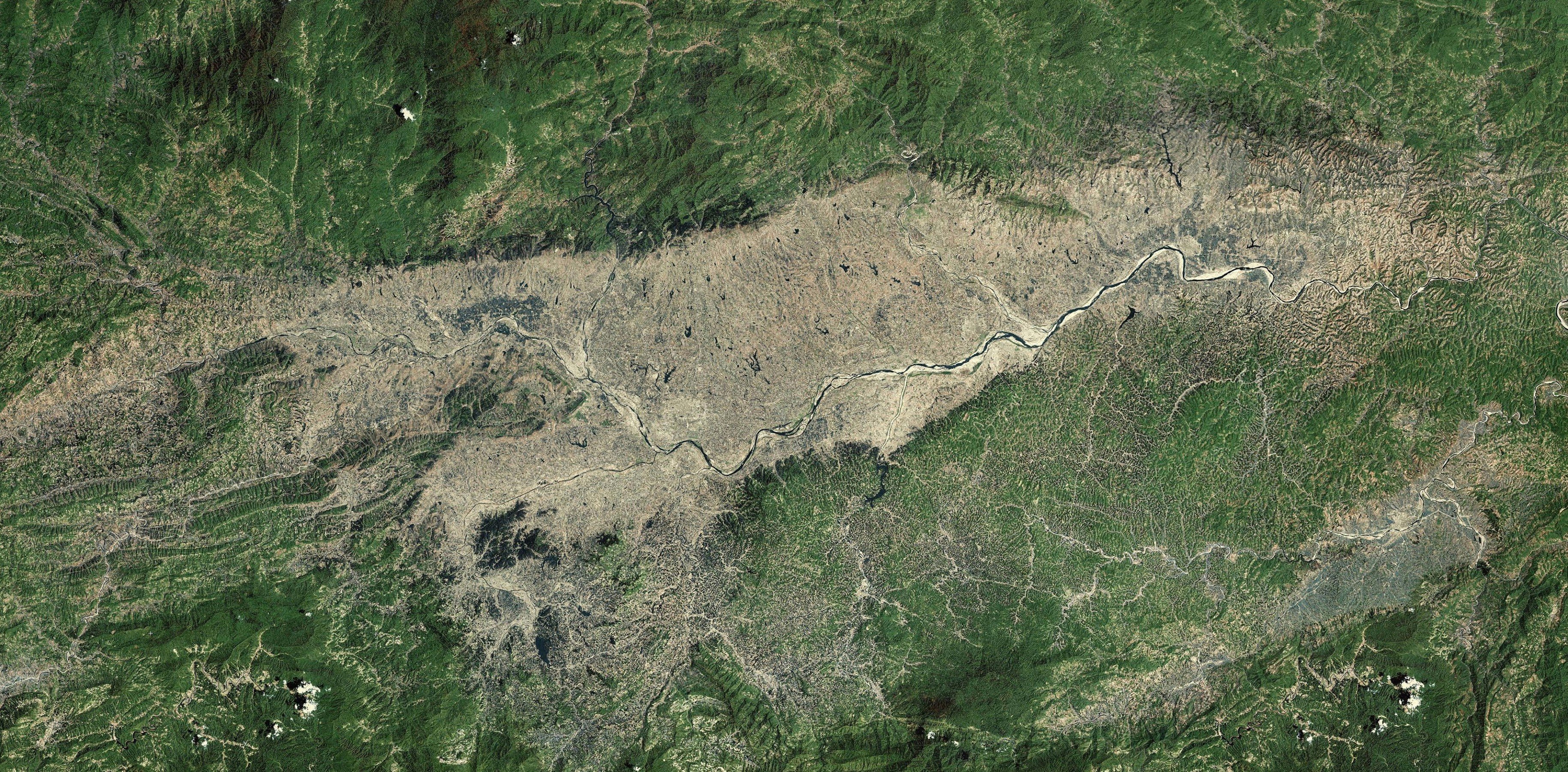
Fertile Han River valley city where the Han Dynasty name and Three Kingdoms memory converge.
Hanzhong sits in the Han River valley between the Qinling and Daba mountain ranges, geographically and climatically distinct from the rest of Shaanxi — warmer, wetter, more fertile. The Han Dynasty itself took its name from this valley, where Liu Bang established his base before defeating the Qin and founding the empire that shaped Chinese civilisation more than any other. Every major subsequent campaign for control of China has passed through here, and the Three Kingdoms period in particular left its deepest marks: Zhuge Liang, the brilliant strategist of the Shu Kingdom, used Hanzhong as his staging base for five northern expeditions, and his memory saturates the region.
The Wuhou Temple in nearby Mianxian County is the principal Zhuge Liang shrine and a serious pilgrimage destination; the Zhang Liang Memorial Hall in Liucheng County commemorates another Han founder. The Zhang Qian Memorial Hall in Chenggu honours the diplomat whose second-century BC journeys to Central Asia established the Silk Road — a less visited but genuinely important historical site. The Cai Lun Paper Culture Museum in Yangxian County, dedicated to the inventor of paper, is an underrated attraction.
In late March and early April, the rapeseed fields in the Han River valley fill with bloom, vast fields of yellow that have become a significant draw for Chinese photographers and tourists. The landscape is genuinely beautiful in this season, and the annual flower festival brings crowds but also enthusiasm. Mount Zibai, south of the city, offers more vertical scenery with ancient Taoist temples on steep forested ridges.
Hanzhong airport has direct flights to Beijing, Shanghai, and Guangzhou. The high-speed train from Xi'an takes about ninety minutes. The city is the logical base for southern Shaanxi, combining good infrastructure with easy access to a countryside that most visitors to the province never reach.
Guide
Getting There
Hanzhong is well connected by several means of transport. The high-speed train from Xi'an on the Yinchuan–Wuhan high-speed railway takes approximately ninety minutes and is the most convenient option from the provincial capital. Trains also run to Chengdu, making Hanzhong a logical stop on a Xi'an–Chengdu itinerary.
Hanzhong Chenggu Airport (HZG) has direct flights to Beijing, Shanghai, Guangzhou, Chengdu, and Shenzhen. The airport is about ten kilometres southeast of the city centre. Given the high-speed rail connection, flying from Xi'an is not necessary, but the airport is useful for connections to cities without direct rail links.
By road, Hanzhong is accessible on the G5 expressway from Xi'an (about three hours without traffic) and from Chengdu via the G5 to the west. The mountain routes through the Qinling are spectacular but slow.
Guide
When to Go
Hanzhong has a humid subtropical climate, significantly warmer and wetter than the rest of Shaanxi. Winters are mild by Chinese standards — rarely dropping below freezing in the valley floor — and summers are hot and humid. The Qinling Mountains to the north block cold winter winds and trap monsoon moisture.
Spring (March–April) is the peak tourist season, when the rapeseed fields are in bloom across the Han River valley. Accommodation fills up on weekends during this period and prices rise. Book ahead.
Autumn (September–November) is the other good season: cooler temperatures, clear skies, and the trees of the Qinling slopes changing colour. The Three Kingdoms sites are at their most atmospheric.
Summer (June–August) is hot, humid, and often rainy. The mountain scenery remains attractive but the valley heat can be enervating. Winter (December–February) is the quietest and cheapest time; the historical sites are largely uncrowded and the climate is tolerable, though some mountain roads may close after snowfall.