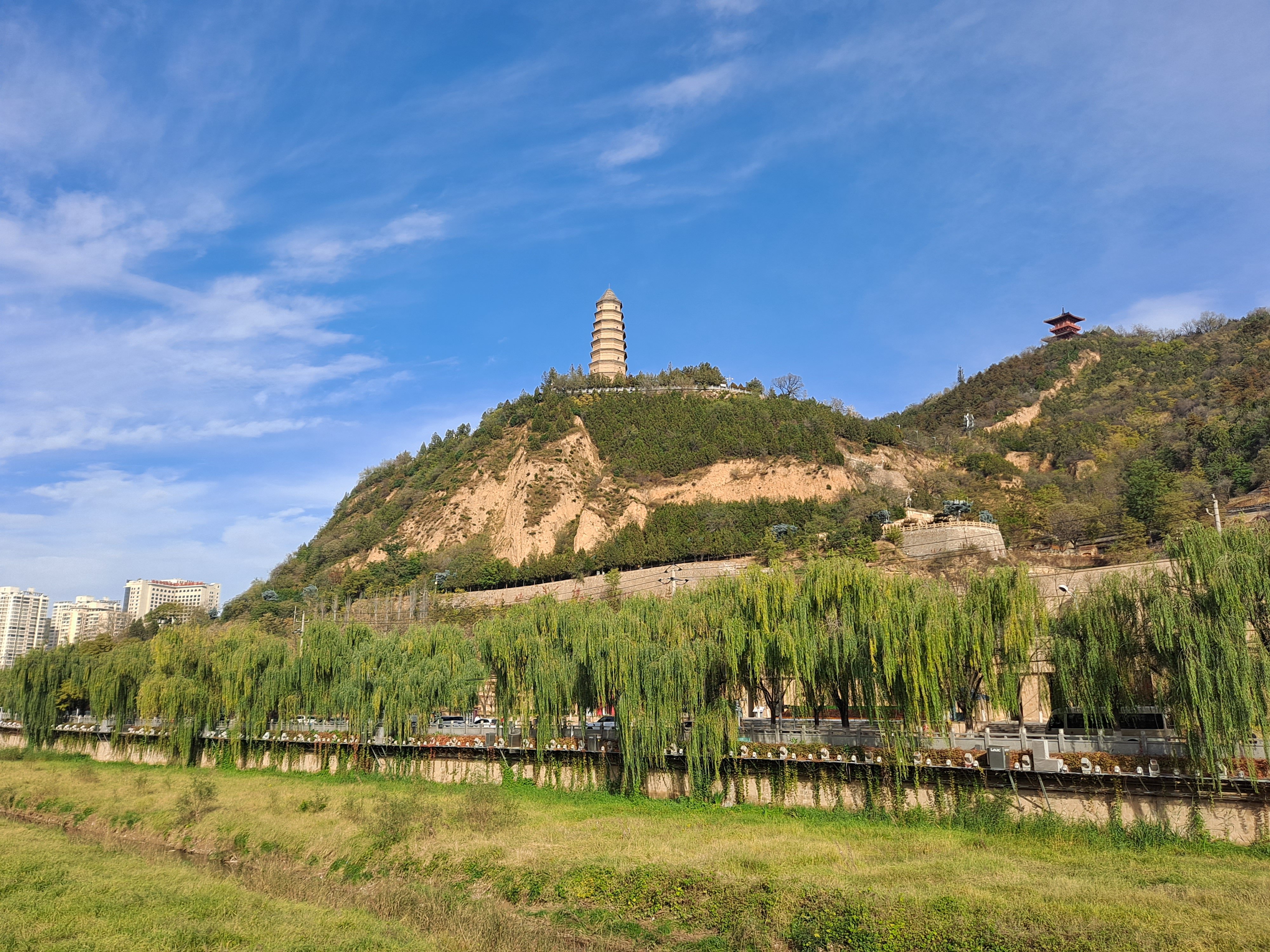
Yan'an is where the Chinese Communist Party came to rest after the Long March and where, between 1935 and 1948, it rebuilt itself into the organisation that would take power over all of China. Mao Zedong lived here in a cave dwelling. The Seventh Party Congress was held here. The doctrines that became Maoism were developed, argued over, and codified here. For Chinese visitors, particularly officials undergoing "patriotic education," Yan'an is a place of pilgrimage second in importance only to Mao's birthplace in Shaoshan. The scale of the commemoration — museums, pagoda, preserved residences, propaganda monuments — is impressive regardless of your politics.
The cave dwellings are the heart of it. The yaodong — the arched cave cut horizontally into a loess hillside — is the traditional dwelling form of this plateau, cool in summer and insulated in winter, and the Communist leadership lived in them out of necessity. Zaoyuan (Date Garden) preserves the residences of Mao, Zhu De, and other senior figures, with the original furnishings intact to an unusual degree. Yangjialing, where the Seventh Party Congress was held in 1945, has the most historically significant hall. The Yan'an Revolutionary Memorial Museum, a large and well-funded institution, covers the 1935–48 period comprehensively, with photographs, documents, and objects that give the era a particular texture.
Pagoda Mountain (Baota Shan), southeast of downtown, is where the iconic Yan'an Pagoda stands on its ridge — a Song Dynasty structure that became the visual symbol of the revolutionary base. The views from the summit extend across the characteristic Loess Plateau landscape: yellow earth cut into labyrinthine ravines, dotted with the dark mouths of cave dwellings.
High-speed trains connect Yan'an to Xi'an in about two and a half hours. The city also has its own airport, Yan'an Nanniwan, named after the agricultural production brigade that became a model of Communist self-sufficiency during the base-area years.