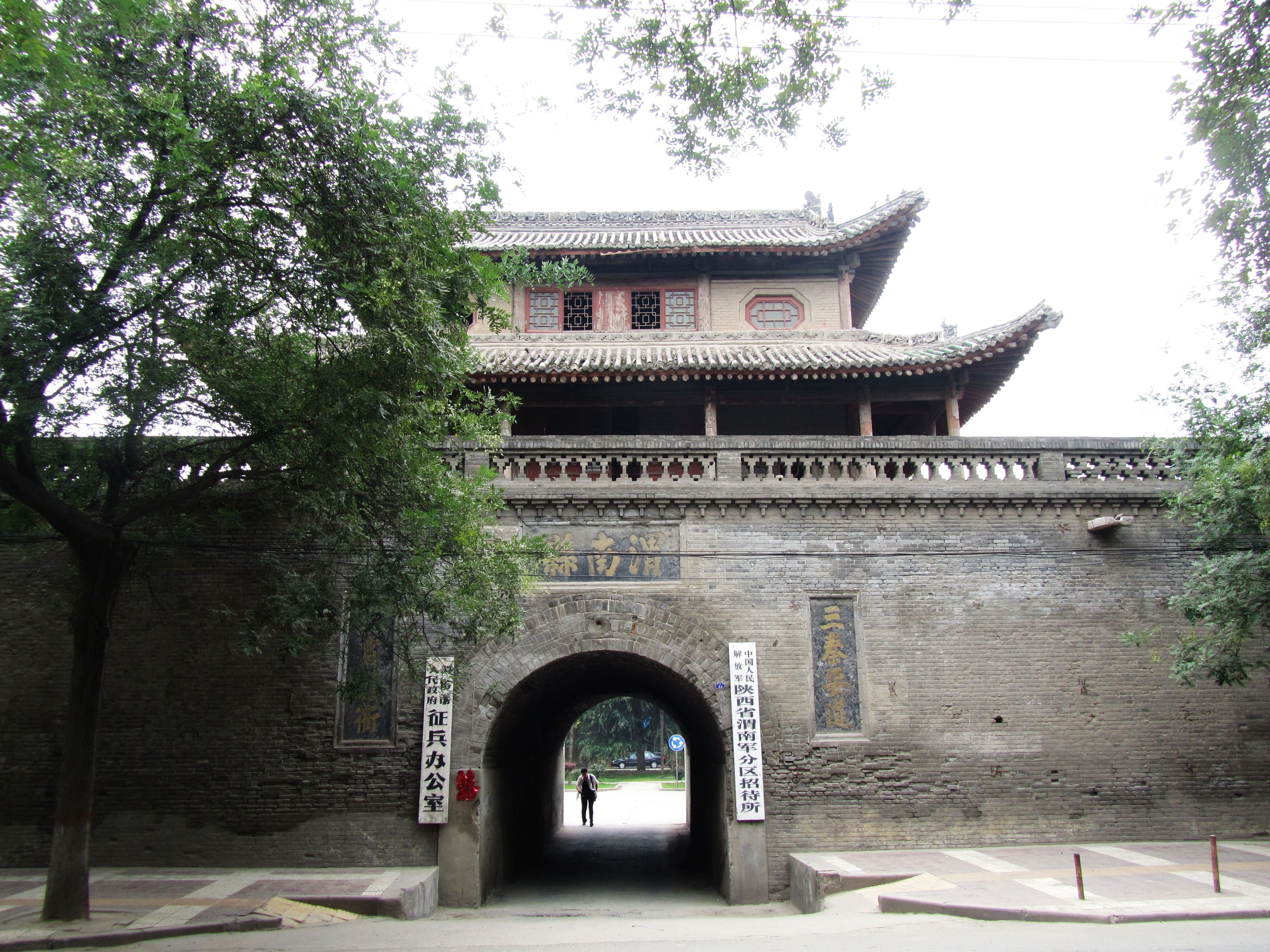
Weinan sprawls across the eastern Guanzhong Plain between Xi'an and Hua Shan, a large prefecture whose central city is less interesting than its surroundings. It is the administrative home of some of Shaanxi's most significant historical sites, including Hua Shan and several Tang Dynasty imperial tombs, and most visitors pass through it on the way to those destinations rather than stopping in the city itself.
The Qianling Mausoleum, outside Qian County in the western part of the prefecture, is the most architecturally compelling of the Tang imperial tombs: a double mound on a natural hillside, the joint burial place of Emperor Gaozong and his wife Wu Zetian, the only woman in Chinese history to rule as emperor in her own name. The tomb itself has never been excavated, but the Sacred Way approach — lined with stone officials, horses, and ostriches — is imposing, and the subsidiary tombs around the mound have been opened to reveal Tang wall paintings of unusual quality.
The Zhaoling Mausoleum, near Liquan, is the burial complex of Emperor Taizong, the Tang emperor widely considered the greatest in the dynasty's history. The famous Zhaoling Six Steeds — six bas-relief panels depicting the horses Taizong rode in battle — were originally here; four remain (the other two are in the University of Pennsylvania Museum). In the northeastern corner of the prefecture, the well-preserved Ming and Qing courtyard houses of Dangjia Village and the hilltop Sima Qian Temple above Hancheng are well worth the detour.
Weinan city is thirty to forty minutes from Xi'an by high-speed train, and Hua Shan is a further thirty minutes beyond. The prefecture is best understood as the eastern half of the Xi'an cultural region rather than as a separate destination.