Zibo was the capital of the ancient state of Qi for over six centuries during the Zhou Dynasty, and the ruins of the old city — earthen walls, palace foundations, ritual bronzes, and sacrificial horse pits — are substantial enough to anchor a dedicated museum that draws scholars of early Chinese civilization from around the world. The Qi state was one of the dominant powers of the Spring and Autumn and Warring States periods, and its political philosophy — more pragmatic and commercially oriented than Confucius's Zhou orthodoxy — shaped Chinese statecraft in ways that have never fully disappeared. Linzi, the ancient capital district, preserves the old city grid and is distinct from the industrial urban sprawl that most visitors see first.
The city has been making ceramics for 8,000 years, which gives its potters legitimate claim to a deep tradition — the Zibo Museum of Ceramics covers this span from Neolithic painted pottery through to the distinctive Boshan colored glassware produced for imperial patronage since the Ming Dynasty. Zhoucun Ancient Commercial Street, a remarkably intact Ming and Qing era market town absorbed into Zibo's urban fabric, offers more concentrated historic architecture than most Chinese cities of comparable size. The Great Wall of Qi, running through the mountains south of the city, predates the famous Qin wall by two centuries.
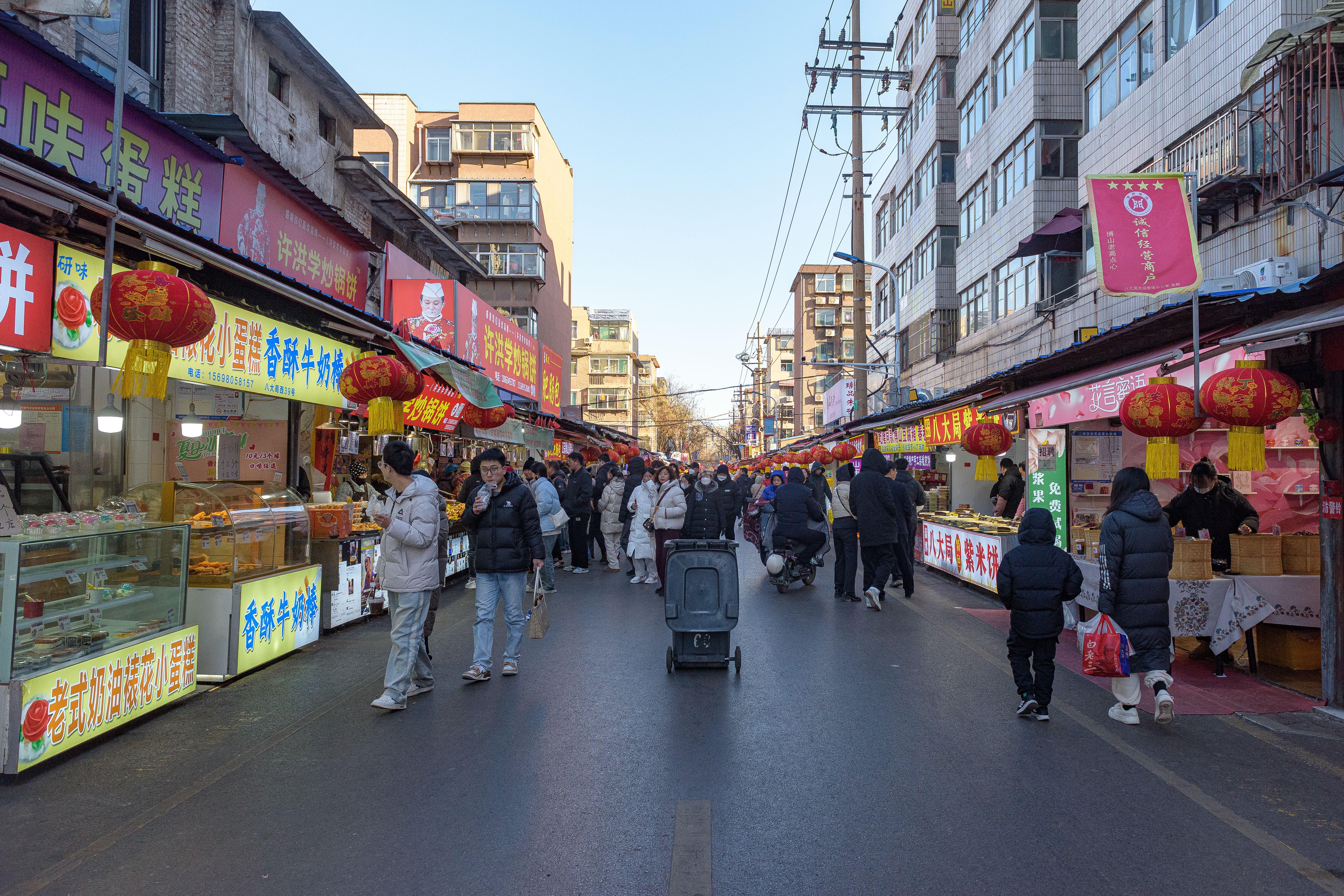
In 2023, Zibo became unexpectedly viral across Chinese social media due to its barbecue — small skewers grilled at individual table-side charcoal burners, wrapped in paper-thin flatbread with green onions and sauce. The phenomenon was genuine rather than manufactured, driven by university students who spread word of it online, and the city responded with remarkable grace, setting up street barbecue areas and welcoming the crowds. The food is excellent and unpretentious, and the episode says something interesting about how Zibo sees itself.