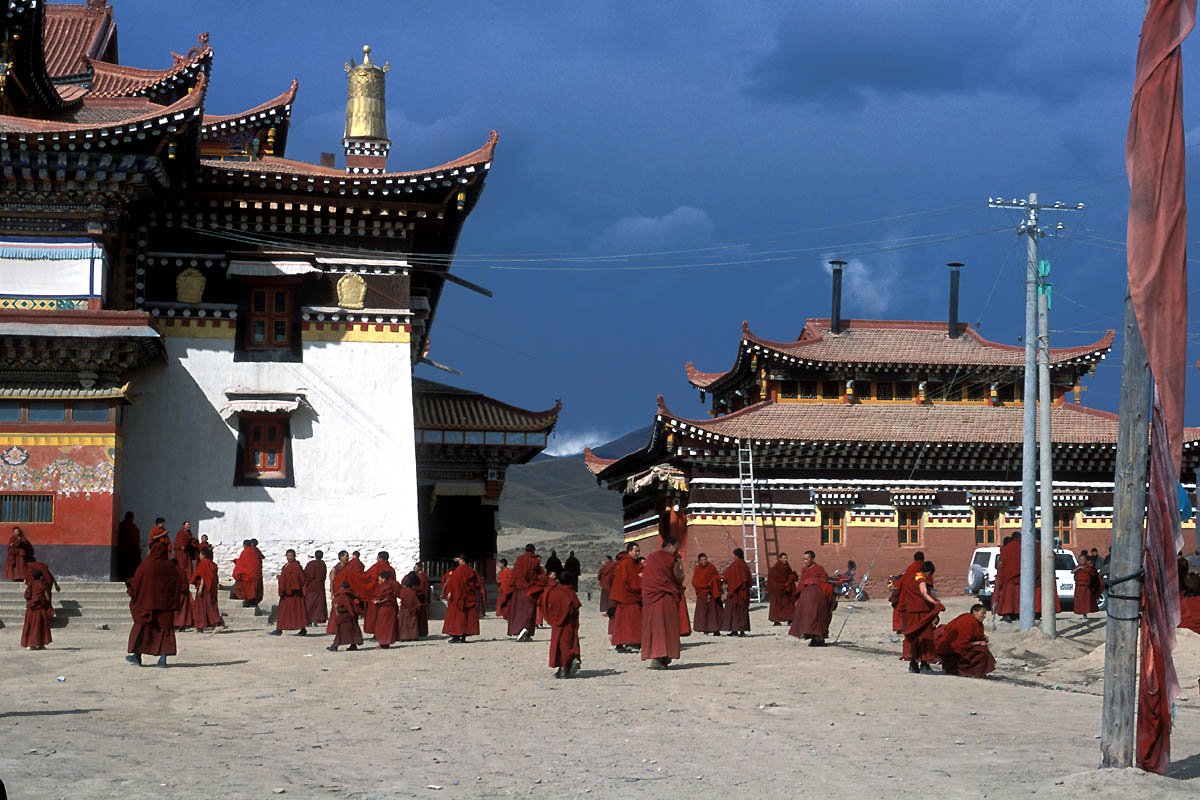
Aba — known in Tibetan as Ngawa — is the administrative seat of Aba Tibetan and Qiang Autonomous Prefecture, a vast high-plateau territory in the northwest corner of Sichuan Province. The prefecture covers roughly 84,000 square kilometres and sits where the eastern edge of the Tibetan Plateau spills down toward the Chengdu Plain, and the landscape shifts constantly between yak pastures, wetlands, mountain forests, and glaciated peaks.
The town of Aba itself is a modest administrative centre, but it sits in the middle of some of the most extraordinary scenery in China. About 70 per cent of the prefecture's population of around 900,000 are Tibetan and Qiang ethnic minorities, and Tibetan Buddhism is the dominant religion — the roadside is punctuated by prayer flags, mani stones, and white chortens. This is one of the most culturally Tibetan places accessible from mainland China without the special permits required for Tibet Autonomous Region.
The two great natural draws — Jiuzhaigou and Huanglong — lie within the prefecture and bring large numbers of visitors. Aba town functions mainly as a transit point and supply stop for travellers working their way across the plateau, but the Zoige grasslands to the north and Taktsang Lhamo monastery town nearby reward those who stay. In town, Kirti Monastery is one of the most important Tibetan Buddhist institutions in the Amdo region.
Note that tensions between local Tibetan communities and Chinese authorities have periodically made this area sensitive. Check current travel advisories before visiting, and be respectful of local religious practices and photography restrictions around monasteries.