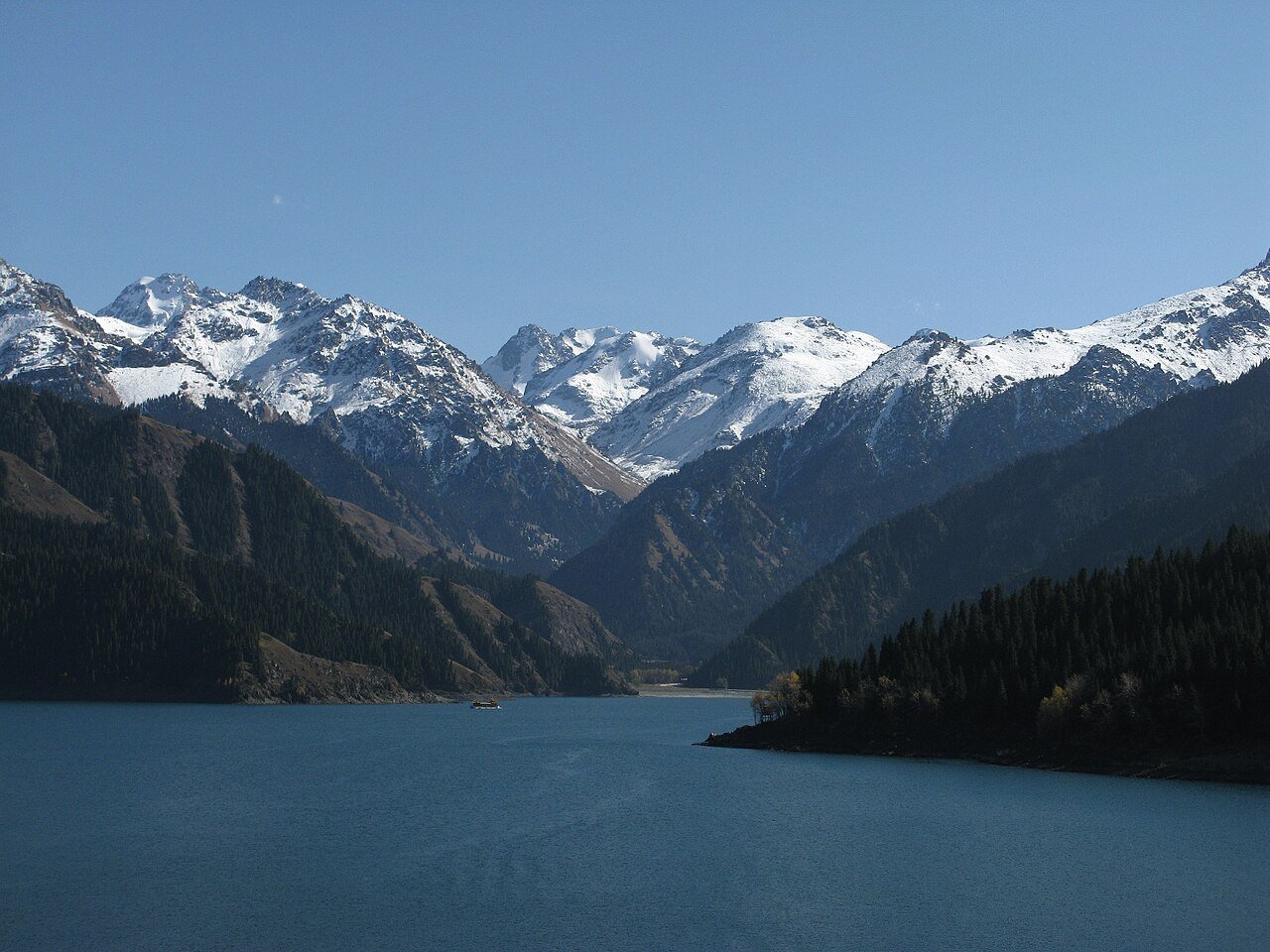
Tianchi — Heavenly Lake — sits at 1,907 metres on the northern slope of the Bogda Shan, a spur of the eastern Tian Shan range about 110 kilometres east of Ürümqi. The name was given by a Qing military commander in 1783, but the lake has been known much longer: in older accounts it appears as Yaochi, Jade Lake, and Kazakh herders have used the surrounding pastures for centuries before it became a formal tourist destination. The British-Indian writer Vikram Seth began his 1983 journey from Heaven Lake to Kashmir here, a route that gave the lake a small literary fame in the English-speaking world before Chinese tourism made it a major domestic attraction.
The lake itself is compact — under five kilometres long — and deep, a glacial formation that maintains a vivid blue through the summer months. Bogda Peak at 5,445 metres dominates the view to the south, snow-capped year-round and reflected in the water when the surface is calm. Spruce forests cover the slopes above the shoreline, and Kazakh families set up yurts in the meadows during summer to offer accommodation and horse treks. The landscape is genuinely alpine and substantially cooler than the Ürümqi basin below, which makes it a useful escape from the summer heat of the city.
The practical reality of visiting is that Tianchi is one of the most popular day trips from Ürümqi, and the infrastructure reflects this. There is a ticket gate, a cable car, a tourist bus that loops the shore, and considerable crowd pressure at weekends and holidays. The lake is best appreciated on weekday mornings in late May or early September, before the main summer rush or after it has thinned. Those who walk beyond the main viewpoints along the shore trail find themselves quickly in less-visited terrain, and the Bogda Shan trail system extends for days into the high country for serious hikers.
Getting to Tianchi from Ürümqi takes about ninety minutes by bus or shared taxi from the city's long-distance bus stations. The entry fee and cable car are additional costs; bringing your own food avoids the lakeside restaurants, which are serviceable but unremarkable.